King Charles and Queen Camilla’s royal beehives produce hundreds of jars of honey; the Queen’s own honey is sold to raise money for charity
King Charles III and Queen Camilla’s royal beekeeping activities are linking honey production with charitable fundraising and wider biodiversity efforts.
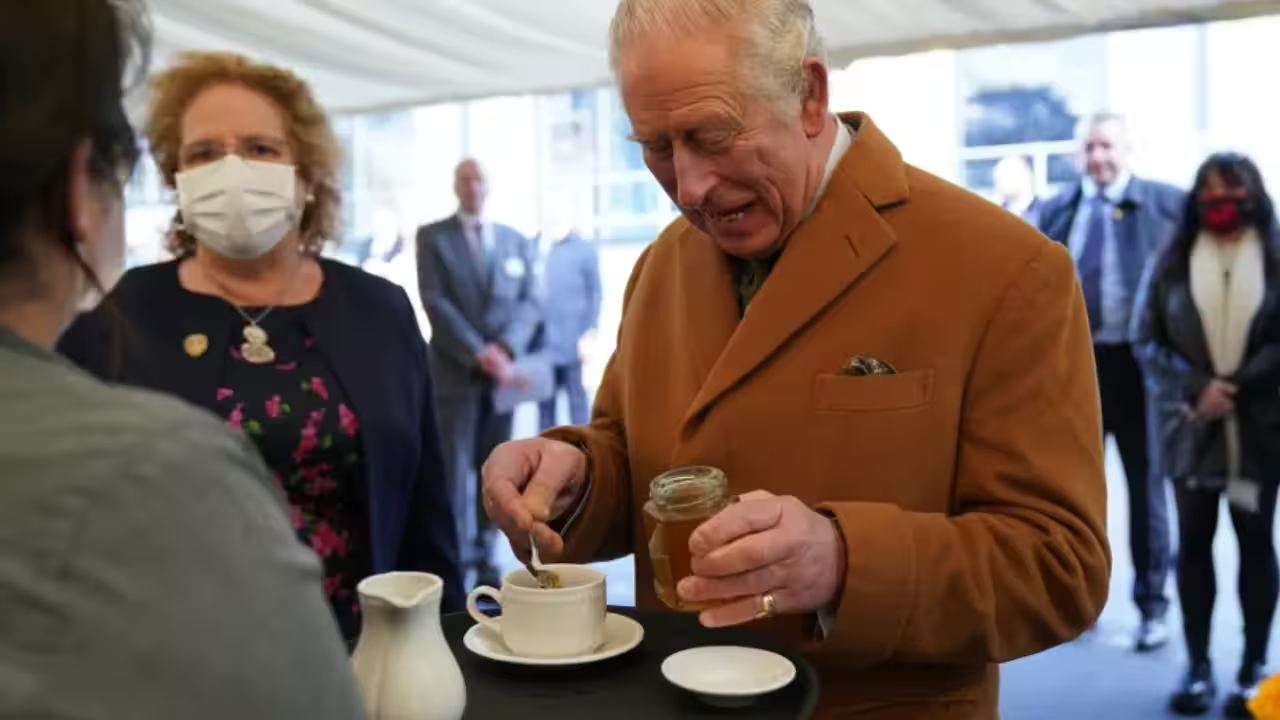
King Charles III and Queen Camilla’s royal beekeeping activities are linking honey production with charitable fundraising and wider biodiversity efforts. Buckingham Palace and Clarence House house six beehives between them, producing honey for use in royal kitchens, while Queen Camilla’s own honey, produced at her home in Wiltshire, is sold through Fortnum & Mason to raise money for charity. According to the Royal Family’s official website, she also supports Bees for Development, which works to reduce poverty and improve biodiversity in more than 50 countries. Bee-friendly flowers planted at Balmoral and Highgrove further support efforts to encourage wild bees and other pollinators across royal gardens.How do King Charles and Queen Camilla’s royal bees produce honeyBuckingham Palace is home to four beehives situated on an island in the middle of the garden lake, while Clarence House has two hives in its garden. The bees forage on the nectar plants growing on the island and throughout the gardens. The website reports that the colonies produce enough honey during the season for Buckingham Palace and Clarence House to be self-sufficient, with more than 300 jars produced in the previous year for use in the Palace kitchens.The honey is used by royal chefs throughout the year, including for guests attending official events, garden parties and receptions. The Royal Family website states that Buckingham Palace honey is often incorporated into honey madeleines, used as a filling for chocolate truffles or served in honey and cream sponge. The two Clarence House hives are home to more than 90,000 bees and produce around 40 pounds of honey annually, according to the same source. These details illustrate the role of beekeeping within the royal household, where honey is both a food ingredient and a product of the gardens maintained at royal residences.How does Queen Camilla’s honey support charitable causesQueen Camilla also produces honey at her home in Wiltshire, which is sold through Fortnum & Mason to raise money for charitable causes. The Royal Family's website identifies Mirabel, Nigeria's first Sexual Assault Referral Centre, as a beneficiary of funds raised through the honey. Queen Camilla became Patron of Mirabel in 2021, when she was the Duchess of Cornwall. The charitable proceeds from her honey production therefore connect her personal interest in beekeeping with support for an organisation providing a specialist service in Nigeria.Her involvement in beekeeping also extends to Bees for Development, where she became president in 2020 while serving as Duchess of Cornwall. According to the Royal Family, the charity works in more than 50 countries to reduce poverty and improve biodiversity by training beekeepers, developing networks of resources and protecting bee habitats. Its work places beekeeping within a wider programme involving livelihoods and environmental conservation. Queen Camilla's association with the charity complements her own honey production, linking the activity at her home with an organisation that supports beekeepers and promotes the protection of habitats.How does the royal family support bees and other pollinatorsThe royal family's activities also include measures intended to encourage bees and other pollinators. Bee-friendly flowers are planted at Balmoral and Highgrove to attract wild bees and other pollinating species. The planting forms part of the wider approach to the gardens, alongside the maintenance of beehives at several royal residences. The source does not quantify the effect of this planting on pollinator populations, but it identifies the flowers as a way of encouraging these species.Sandringham also has several beehives, with the honey's flavour varying according to where the hives are located when the honey is collected. The Royal Family website notes that the honey may carry notes of lime trees lining the roads at Sandringham, as well as heather and lavender. The differences reflect the range of flowering plants available to the bees at different locations. Together with the bee-friendly planting at Balmoral and Highgrove, the hives form part of the royal family's wider engagement with bees and the plants on which pollinators depend.How do King Charles and Queen Camilla support wildlife conservationThe royal family's support for animal welfare and conservation extends beyond honey production. King Charles and Queen Camilla became joint presidents of Elephant Family in 2014. The charity funds projects across Asia aimed at reconnecting forest fragments, preventing conflict and combating wildlife crime. Since 2002, it has funded more than 170 conservation projects and raised over £10 million through public art events. Although this work focuses on Asian elephants rather than bees, it reflects another part of the royal family's involvement in wildlife conservation.The royal beekeeping programme also sits alongside support for charities concerned with animal welfare, biodiversity and habitat protection. Queen Camilla's presidency of Bees for Development, the sale of her own honey for charitable fundraising and the planting of bee-friendly flowers at royal gardens are documented elements of that involvement. Beehives are a regular feature across royal residences, where they produce honey for household use while the wider charitable work supports beekeeping and habitat protection. Together, these activities show how honey production at royal homes is connected to charitable giving and the encouragement of bees and other pollinators.You use AI every day. Now get your AI Quotient. Take the AIQ test.
Topics in this story
Gathered from external sources. Rights to this text belong to whoever originally published it.