Venezuela is crying out for free elections. The US can make it happen.
Through Operation Absolute Resolve, the United States succeeded in disarming the dictator; now it is time to dismantle the dictatorship.
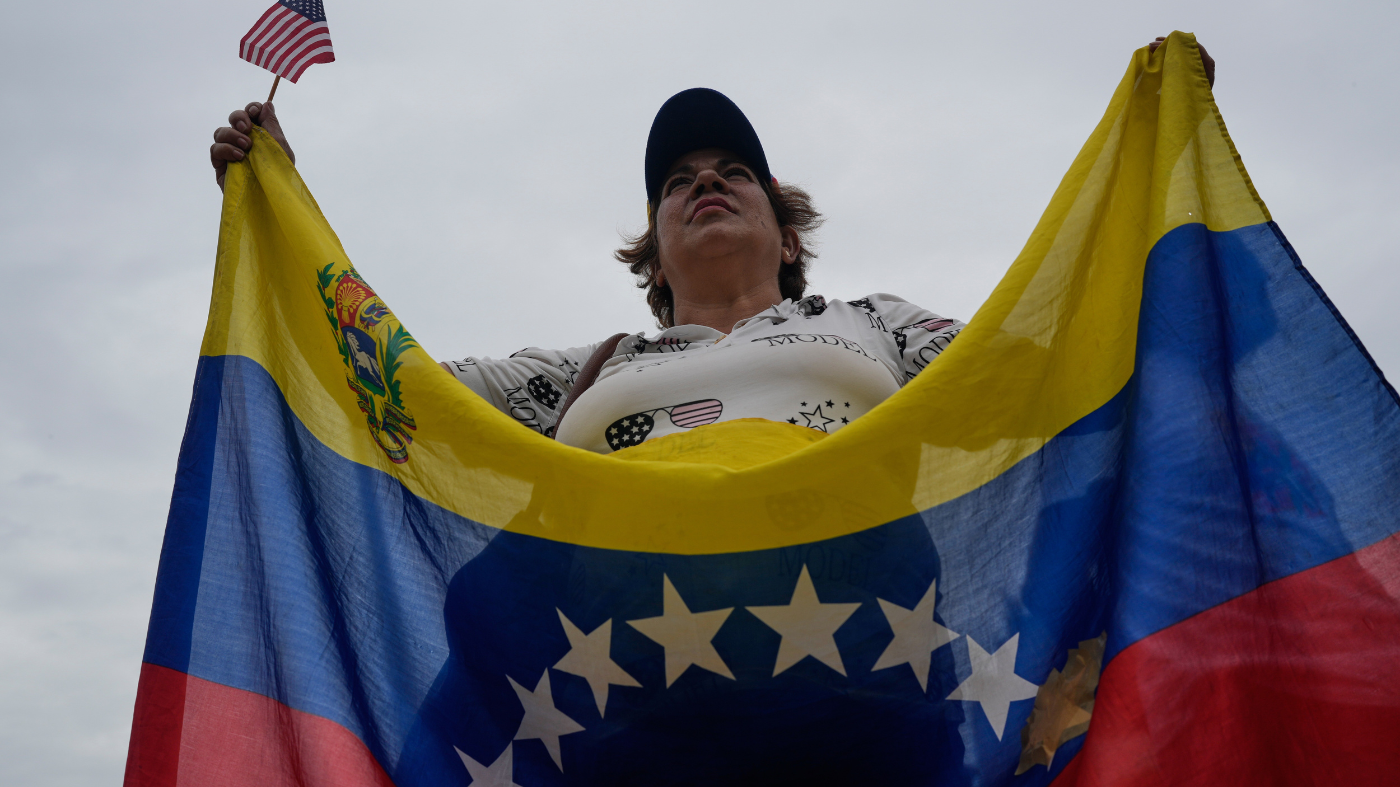
The Jan. 3 capture of Venezuela’s Nicolás Maduro marked a turning point. Operation Absolute Resolve demonstrated that Trump’s revival of Monroe Doctrine was in effect, and that drug traffickers were not above the law or beyond the borders. This extraordinary mission, carried out more than eight months ago, leaves an outstanding obligation: holding free, fair and transparent elections.
The U.S. oil agreement with Venezuela that ensures 65 billion barrels of proven oil reserves was a step in the right direction. It promotes investments and good paying jobs in Venezuela but also strengthens U.S. energy dominance and lower gas prices in the country. This strategic move ensures that bad actors like China, Russia and Iran will no longer profit from these invaluable resources.
After the successes of Operation Absolute Resolve and the historic oil deal, relations with Venezuela are at a crossroads. The U.S. must decide whether to strengthen a pragmatic business relationship with an illegitimate government, or to set a date for elections and support the resurgence of a prosperous, democratic nation.
Although the answer might seem simple, it is not always so. Authoritarian regimes often offer a false sense of temporary stability, whereas democracy is a complex and challenging process. Yet the latter is the right path for planting the foundations of lasting, deep-rooted prosperity.
In March 2016, President Barack Obama visited Cuba and chose to believe there was a difference between Raúl Castro and Fidel Castro — that the new dictator was someone with whom a pragmatic coexistence was possible. The famous Cuban thaw was a total disaster. That year alone, the Cuban dictatorship arrested 10,000 people and tightened its iron grip on power, all while receiving millions of U.S. dollars facilitated by the easing of restrictions under Obama’s pragmatic policies.
But the utopia of friendly relations with confirmed tyrants is nothing new. In the late 1990s, President Bill Clinton pursued a policy of more practical relations with Communist China. The prevailing belief was that greater trade openness would foster the growth of a middle class and drive a gradual shift toward democracy.
“The more we bring China into the world, the more the world will bring change and freedom to China,” Clinton said . The story ended badly; China remains a repressive dictatorship, but now with greater economic and military power.
There is a long history of pragmatic relations devoid of democracy or real change. They never had a happy ending. That is why elections in Venezuela are not merely an option, but the only path to ensuring that the outcome is not just a transaction, but a genuine transition.
Guyana , Venezuela’s small neighbor, is one of the fastest-growing economies in the world. According to the World Bank, real GDP growth in 2024 was 43.8 percent. It is estimated that this small nation will earn over $6 billion in oil revenue this year. It stands as an example of democracy and a reliable partner to the U.S.
According to the United Nations , Guyana’s recent general elections were more than just a civic exercise; they were an opportunity to strengthen public confidence in the democratic process. Indeed, prosperity and democracy are the right combination.
Delcy Rodriguez, a ruler never elected by the Venezuelan people, is not part of the solution; she is part of the problem.
Rodriguez knows that with each passing day, she must work to normalize her regime — not to relinquish power, but to hold on to it. To that end, her regime has handed over enriched uranium , released some political prisoners, minimally eased restrictions on the free press, and for the first time in 18 years, opened its doors to Human Rights Watch.
Venezuela’s interim government is willing to change as much as it needs to, so long as nothing actually changes.
Through Operation Absolute Resolve, the U.S. succeeded in disarming the dictator; now it is time to dismantle the dictatorship. The people of Venezuela want free elections. The U.S. has the power to make that happen, at the right time and in the right way.
It is time to finish the job. Let’s set the date.
Arturo McFields is an exiled journalist, former Nicaraguan ambassador to the Organization of American States, and a former member of the Norwegian Peace Corps. He is an alumnus of the National Defense University’s Security and Defense Seminar and the Harvard Leadership course.
Topics in this story
Gathered from external sources. Rights to this text belong to whoever originally published it.