In 1983, South Korea’s planned two-hour TV search for war-split families drew endless calls, so the show kept running for 138 days, leading to 10,189 reunions
In 1983, KBS launched a groundbreaking 138-day live broadcast to reunite families divided by the Korean War, resulting in over 10,000 reunions. Discover the powerful impact of this historic program.
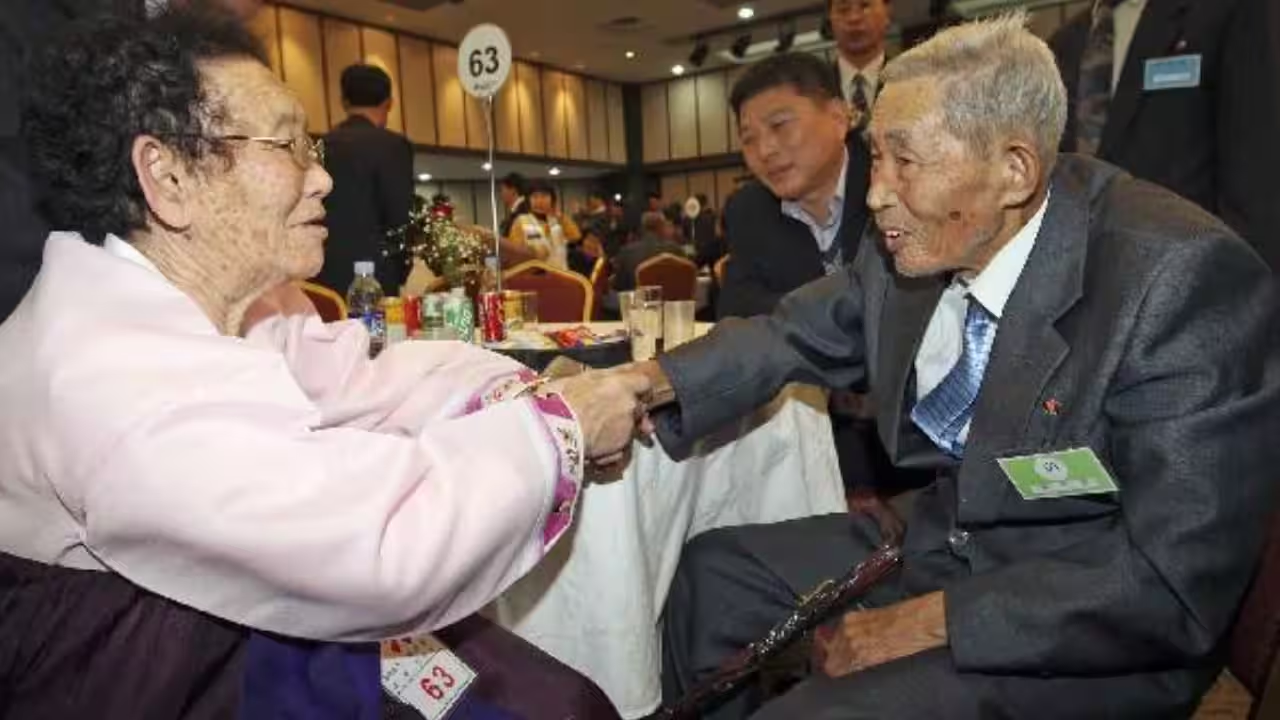
Decades after the fighting in the Korean War ended under a 1953 armistice, many South Korean families still did not know whether relatives separated by the war and by the division of the peninsula were alive. In 1983, KBS, South Korea’s public broadcaster, launched a special live program to help separated families reconnect. It was a simple procedure. Relatives would come to the broadcasting station, fill out an application, and appear on television holding a sign telling their story, while viewers could recognize them by name or face and contact them. The organizers of the program could not foresee what the reaction would be, and what was supposed to be a short one turned into a marathon.KBS planned a two-hour special after a June 1983 morning segmentThe nomination form that South Korea’s Cultural Heritage Administration submitted to UNESCO records how the broadcast began. KBS titled the segment “I still haven’t found my family,” and it aired on June 21, 1983, on the morning program Studio 830, as the UNESCO nomination form records. While looking for guests, KBS staff saw how much separated families longed for reunion. The same form records that KBS President Lee Won-hong approved preparations for a two-hour special on June 23, 1983, that an advertisement inviting participants aired on June 26, and that KBS planned to feature 200 people but, after receiving more than 1,000 applications within two days, selected 850 cases for television.KBS extended the June 30, 1983 broadcast after an emergency meeting on its first nightThe nomination application also explains the events of the first night. The phones rang without a break, and applicants who could not get through to KBS took taxis to the station to apply in person. During the broadcast, an emergency meeting was held, and the show ran two hours and 15 minutes longer to air all the applications received, according to the nomination form records.The archive register entry lists 10,189 reunions from 100,952 applicantsThe entry for the archive on the website of the International Center for Documentary Heritage gives the final tally. In total, the nomination form records 100,952 applications for reunion, 53,536 cases aired, and 10,189 reunions. The project used 1,641 production personnel. The register entry says the archive holds 20,522 items, including 463 videotapes with 453 hours and 45 minutes of broadcasts, along with documents and photographs, and that it was inscribed in 2015. The nomination form also says the final broadcast took place at 4 a.m. on November 14, 1983.A Gallup Korea survey in October 1983 found 88.8 percent of respondents cried.The UNESCO Memory of the World nomination form for The Archives of the KBS Special Live Broadcast “Finding Dispersed Families” records that Gallup Korea conducted a random survey of 1,450 households across South Korea from October 10 to 20, 1983. Among the respondents, 53.9% watched the show until 1 a.m. and 88.8% cried while watching the show. The form adds that applications by phone still exceeded 60,000 per day, and that from the third day onward volunteers, from students to housewives, helped applicants.A 2020 academic study examined why the broadcast stood apart.Ju-A Joung’s paper,The Emotions of the Square and South Korean War Refugees: Study on the KBS Special Live Broadcast “Finding Dispersed Families” in 1983, published in the Korean Citation Index, discusses the broadcast in the context of war refugees and humanitarianism.Its keywords place the analysis within the context of war refugees, humanitarianism, and the UNESCO recognition of the archive, which suggests the author treats the program as both a media event and a record of displacement.The paper focuses on the broadcast’s scale, since it ran for 138 days, from June 30 to November 14, 1983, and drew large crowds to Yeouido Square. The author says the participants were largely wartime refugees, especially defectors from the North and children separated during the war, and discusses how the programme became linked with anti-communist propaganda and depictions of humanitarian reunion.The first South-North family reunions followed in September 1985The effects were felt outside the studios as well. In July of 1983, the president of the South Korean Red Cross called for speedy negotiations with the North’s Red Cross, and the nomination form states that President Chun Doo-hwan said in August that the problem could not be put off any longer. A North Korean delegation came to visit KBS in May 1985, and the first reunions of South and North families occurred in September. The form says that by 2014, there were 18,523 people who had been reunited with their families.You use AI every day. Now get your AI Quotient. Take the AIQ test.
Topics in this story
Gathered from external sources. Rights to this text belong to whoever originally published it.