India has quantum talent. Now it needs labs
Vedika Khemani says India has excellent researchers and bright students, but its experimental science infrastructure, particularly in quantum physics,
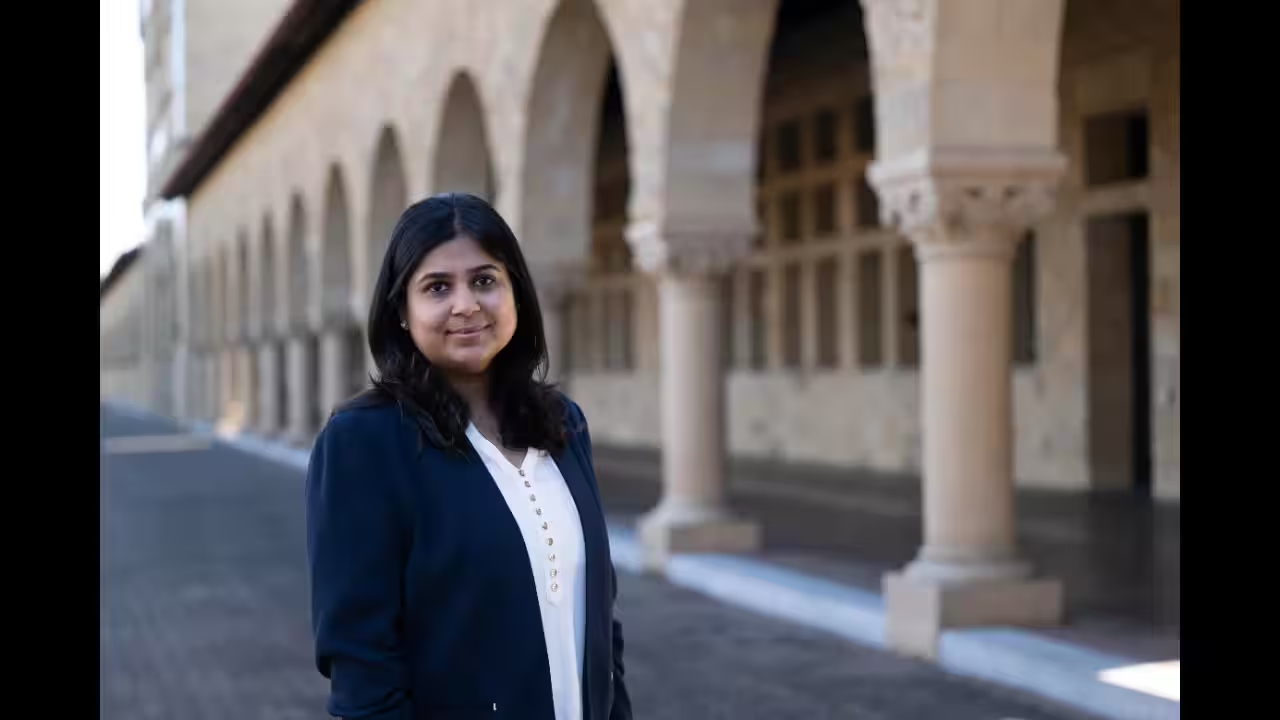
Vedika Khemani says India has excellent researchers and bright students, but its experimental science infrastructure, particularly in quantum physics, remains far behind what is needed to compete globally.Khemani, a theoretical physicist and associate professor at Stanford University and winner of the Infosys Prize 2024 in physical sciences, split her sabbatical between two institutions. She gave a public lecture at the International Centre for Theoretical Sciences (ICTS) in Bengaluru as part of a conference marking 100 years of quantum mechanics, and then spent two weeks at the Indian Association for the Cultivation of Science (IACS) in Kolkata, the city she had grown up in before moving to the US for undergraduate studies.She chose IACS because researchers there were working close to her own field, non-equilibrium dynamics. Her field sits at the frontier of condensed-matter and quantum physics. Much of conventional physics describes systems in thermal equilibrium, where temperature and pressure can be used to characterise the state of matter. Khemani studies systems of interacting quantum particles that never settle into such equilibrium.That can allow phenomena that conventional statistical mechanics would rule out. Her own doctoral work produced the idea of a time crystal, an exotic phase of matter that was once thought to be prohibited by equilibrium thermodynamics.The IACS researchers she worked with were studying another unusual phenomenon they call dynamical freezing. Their systems also appear not to reach thermal equilibrium, but in a setting quite different from the one Khemani had studied. “There’s no reason to believe that they should exist, but they’ve found this phenomenon,” she says. She and the researchers worked together to understand how it could happen and what the underlying physics might be.Engineered quantum systems used to build quantum computers are also systems that need to be controlled dynamically. If researchers can find ways to prevent information from leaking away into the environment, such behaviour could eventually help make quantum devices more robust and stable.Strong in theory, poor in experimental physicsKhemani says while there are excellent scientists in Indian institutions, they are generally under-recognised. She found the students at IACS curious, bright and capable of engaging seriously with difficult questions.She was particularly impressed by ICTS (part of Tata Institute of Fundamental Research - TIFR) in Bengaluru. “ICTS is world class. They have an international visitor program for scientists. They make everything seamless for such visitors, there's even housing. They have year-round conferences. It’s like attending a conference anywhere in the world,” she says.But she sees a major structural gap. Experimental physics, she says, is “very far lagging” in India, particularly in quantum science. Theory can often be done with a laptop and ideas. Experiments require expensive equipment, reliable infrastructure and funding that can be counted on over many years.In quantum laboratories, even a minor electrical fluctuation can destroy months of carefully prepared experimental work. Researchers need clean rooms, stable power and highly controlled environments. Stanford ensures that. India, Khemani says, needs similar infrastructure if it wants to compete in building quantum hardware, not just producing theoretical papers.Chinese investment in quantum science, she says, has enabled the country to produce research at a level that is beginning to challenge leading US institutions.The US model itself, she notes, relies heavily on govt funding for basic science. Companies such as Google, Amazon and quantum startups are now investing, but much of the fundamental science that enabled these commercial efforts was built through govt-backed research over many years. China is also making large govt investments in quantum.The researchers at IACS (Indian Association for the Cultivation of Science, Kolkata) were curious and bright, and I got good questions during my talk. Arnab Das is the faculty member there. I also worked with two students – Sagnik Chaudhuri and Anirban Das – and a student who used to be at IACS and who’s now a postdoc in Europe, Asmi Halder. I’ve had very good experiences working with them. Vedika Khemani, Associate Professor, Stanford UniversityFearless legend or grounded realist? Rate yourself on 11 categories in the Great Indian Confidence Survey – find out in 3–6 min
Topics in this story
Gathered from external sources. Rights to this text belong to whoever originally published it.