A Scottish family travelled from Florida to Britain for a holiday in 2025 but did not return; the UK Supreme Court considered whether one child should be sent back to the US
A family that travelled from Florida to the UK for a three-week holiday in July 2025 became embroiled in a legal dispute after the mother decided to
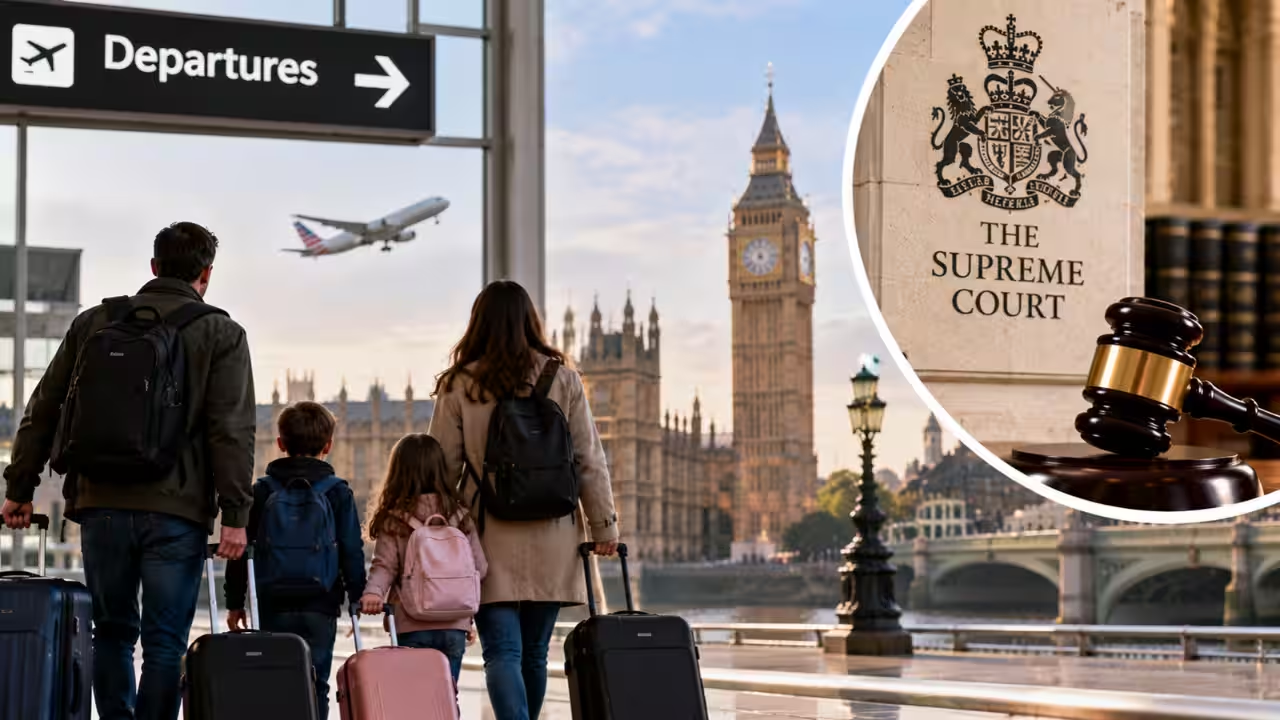
A family that travelled from Florida to the UK for a three-week holiday in July 2025 became embroiled in a legal dispute after the mother decided to remain in Scotland with their two children. The father sought their return under the Hague Convention, but the mother argued that returning them could expose them to psychological harm. The UK Supreme Court ruled on 9 September 2026 that the couple’s older son, who was 14 when proceedings began, should not be sent back to the US. The court held that his wish to return to Florida was relevant, but the evidence established a grave risk of psychological harm.Why did the UK Supreme Court consider a child’s return to the USAccording to the UK Supreme Court Judgement, the father brought proceedings under the Child Abduction and Custody Act 1985, which incorporates the Hague Convention on the Civil Aspects of International Child Abduction into UK domestic law. The Convention aims to secure the prompt return of children who have been wrongfully removed or retained in another country. The father argued that the children had been wrongfully retained in Scotland and asked the court to order their return to Florida.The mother opposed the application under Article 13(b) of the Hague Convention, which allows a court to refuse a return order where there is a grave risk that returning a child would expose them to physical or psychological harm or place them in an intolerable situation. The Supreme Court judgment recorded concerns raised by the mother about the family’s financial circumstances, housing instability, the children’s education and access to healthcare in Florida. She also argued that separation from her could affect the children’s psychological wellbeing and that a deterioration in her mental health posed a further risk.How did the child’s wishes influence the US return caseThe older child, identified in the judgment as H, supported his father’s application and expressed a clear wish to return to the United States. He wanted to continue his education there, in a system with which he was familiar, rather than remain in Scotland. The court considered his views as part of the proceedings, and he was separately represented throughout the case.In the earlier proceedings, Lord Braid of the Outer House of the Court of Session considered the child’s wishes alongside the other evidence. In his opinion dated 21 November 2025, he concluded that the mother had not established the Article 13(b) defence in relation to H and ordered his return to Florida. The judge considered that the child’s views were relevant to assessing whether the circumstances he would face on returning would be intolerable. The mother appealed that decision to the Inner House of the Court of Session.Why did a Scottish court refuse to return a child to the US in 2026In February 2026, the Inner House held that the lower court had erred in law by taking H’s views into account when assessing whether returning him to the United States would place him in an intolerable situation. It concluded that, without taking those views into account, the combination of circumstances he would face on returning created a grave risk under Article 13(b).The Inner House therefore allowed the mother’s appeal and refused to order H’s return to the US. It also considered whether the court should nevertheless exercise its discretion to order his return despite the risk identified. It declined to do so. The father and H subsequently appealed to the UK Supreme Court, raising questions about whether a child’s views could be considered when assessing the Article 13(b) defence and whether the lower court had been entitled to refuse a return order.Why were a child’s wishes not enough to settle the US return caseThe Supreme Court heard the appeal on 2 July 2026 and issued its judgment on 9 September 2026 under the neutral citation [2026] UKSC 32. It held that the Inner House had been wrong to conclude that H’s views were legally irrelevant when assessing whether returning him to the US would expose him to a grave risk of psychological harm or place him in an intolerable situation.The court confirmed that a child’s views can be taken into account in assessing the Article 13(b) defence. However, it also found that the child’s wish to return did not resolve the separate question of whether the circumstances he would face could expose him to serious psychological harm. His views were relevant to matters such as schooling and accommodation, but they did not address the potential harm arising from the risk that his mother might take her own life.Why did the UK Supreme Court find a risk of psychological harm to the childThe Supreme Court examined the evidence considered by the lower court, including the mother’s mental health and the potential impact on the children if her condition deteriorated. The judgment recorded that the mother had a history of depression and had attempted suicide in September 2025. Evidence from a clinical psychologist also addressed the potential psychological consequences for the children if their mother’s mental health worsened.The court concluded that the risk of psychological harm had to be assessed in light of the circumstances of the individual child. Although H had expressed a strong preference to return to Florida, the court found that his stated views did not negate the risk of serious harm if his mother’s mental health deteriorated or she died by suicide. It determined that the evidence supported the conclusion that returning him to the US would expose him to psychological harm that he could not reasonably be expected to tolerate.Why did the UK Supreme Court refuse to return the child to the USIn its conclusion, the Supreme Court held that the Article 13(b) defence had been established in relation to H. It found no basis for exercising the court’s discretion to order his return despite that defence. The court therefore dismissed the appeal and affirmed the Inner House’s decision refusing to order H’s return to the United States.The proceedings also concerned the couple’s younger son, identified as B, who was eight when the case began. The lower court had already refused to order his return to Florida after finding that the Article 13(b) defence was established in his case. No application for permission to appeal that decision was made to the Supreme Court. The final judgment therefore concerned the appeal relating to H and the legal question of how a child’s views should be considered when a court assesses the risk of psychological harm under the Hague Convention.You use AI every day. Now get your AI Quotient. Take the AIQ test.
Topics in this story
Gathered from external sources. Rights to this text belong to whoever originally published it.