In 1998, an Australian couple spent 11 years turning a forgotten 30-acre rainforest into a glow-worm attraction without cutting a tree
In 1998, Ian and Jennifer Moore stumbled upon a colony of glow-worms on an overlooked 30-acre stretch of rainforest on Tamborine Mountain, Queensland.
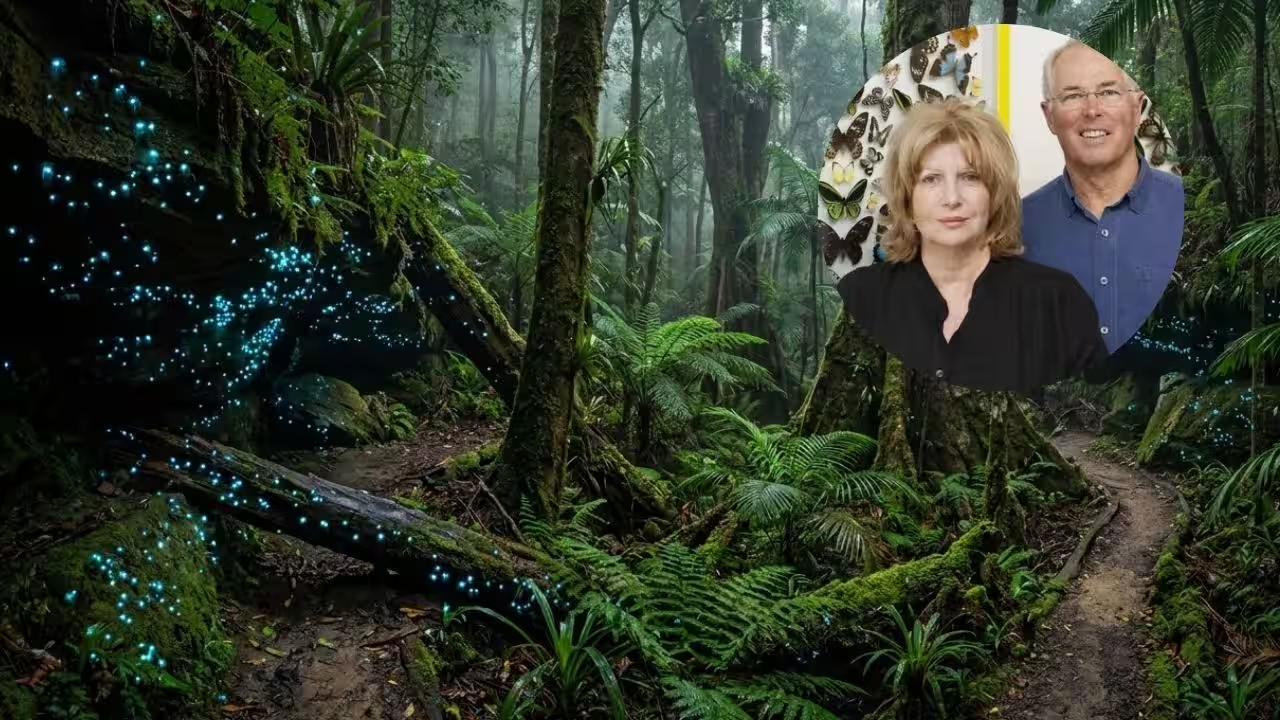
In 1998, Ian and Jennifer Moore stumbled upon a colony of glow-worms on an overlooked 30-acre stretch of rainforest on Tamborine Mountain, Queensland. The discovery gave them an idea that would eventually take years to realise. They began with night-time tours in 1999 before planning a raised walkway and steel bridge through the forest. After nearly five years of planning and construction, the Tamborine Rainforest Skywalk opened in 2009. The Moores said the elevated attraction was built without cutting down any forest trees, turning a once-inaccessible part of their property into a destination for visitors.How Ian and Jennifer Moore built a rainforest retreat from a 130-acre propertyIan and Jennifer Moore returned to Queensland after spending 17 years in Perth, Western Australia, an official Tamborine Rainforest Skywalk reported. They wanted a business that would give them a different way of life, and in 1988 they purchased 130 acres of land on Tamborine Mountain. The property had a small house and established gardens, while Tamborine Mountain Road ran through the middle of the estate.The couple converted the house into a restaurant, opening Songbirds in the Forest in 1989. Its outdoor dining setting, surrounded by gardens, attracted visitors from the Gold Coast and beyond, including people travelling from interstate and overseas. As the business grew, they added six accommodation studios and developed Songbirds Rainforest Retreat.The land below the road followed a different course. Its 30 acres had no known access, and with the restaurant and accommodation taking up their attention, the area remained largely unexplored by the owners. That changed one night in 1998.Old timber tracks helped turn the hidden forest into a visitor attractionDuring a visit to the lower property, the Moores discovered a large colony of glow-worms beside Cedar Creek. The site suggested that the forest could become part of a visitor experience in its own right, rather than remaining an inaccessible section of the estate.The first idea was relatively modest. They planned night-time eco-tours that would allow visitors to see the glow-worms in their natural surroundings. Before those trips could begin, however, they needed a way to reach the site.Their search for access led to an unexpected piece of local history. Timber workers had already established tracks through the area in the early 20th century, when they harvested red cedar, rose gum and crow’s ash. The old routes had become overgrown, but clearing the invasive lantana made it possible to adapt them for use by minibuses.The glow-worm tours began in 1999 and continued nightly until 2004. They brought people into a part of the property that had rarely been visited, even as the forest itself remained the main attraction.The Moores sold Songbirds to focus on their new rainforest attractionFor several years, visitors experienced the area after dark. The tours also gave the Moores a closer understanding of what the property could offer during daylight hours, when the rainforest, its rock pools and the surrounding vegetation could be seen in greater detail.They began considering a structure that would allow people to move through the forest at an elevated level. The plan developed into a raised walkway and high steel bridge, with a central building intended to provide information about the surrounding environment.By 2004, the couple had decided to commit to the new venture. They sold the remaining Songbirds property and turned their attention to creating the attraction that would become the Tamborine Rainforest Skywalk.How the family built an elevated walkway above the rainforest floorThe project required almost five years of planning, research and approvals from state authorities and the local council. The site presented practical difficulties, including steep volcanic soils and the challenge of installing large steel structures within an established rainforest.The construction relied on heavy lifting equipment rather than clearing a broad route through the trees. Cranes weighing up to 120 tonnes, with booms reaching 80 metres, were used to position the bridge towers and the walkway sections. Some of the components measured 40 metres long and had to be carefully manoeuvred over the canopy before being lowered into place.The central building was delivered in sections and assembled on-site. The work demanded careful positioning because the structure had to be installed above the forest floor while leaving the surrounding vegetation intact.The Moores' stated achievement was that no forest trees were cut down during the installation of the Skywalk. Their sons, Brendan and Nicholas, joined the project during this period, contributing their experience in marketing and ecotourism. The development became a family undertaking, with different members bringing their own knowledge to the planning and construction process.The rainforest needed attention beyond constructionThe Moores' plans extended beyond building a bridge and opening the site to visitors. They also established ongoing work to maintain the property's vegetation, including planting native species and removing invasive plants.The Richmond birdwing butterfly became another focus. The species faces conservation pressures, and the property has a programme intended to provide suitable habitat. The family has also worked to maintain a butterfly colony through breeding efforts involving other Australian colonies, seeking to reduce the risks associated with a small, isolated population.These efforts formed part of the longer-term management of the site. The attraction depended on the rainforest remaining a living environment, rather than simply providing a backdrop for the elevated walkway.Opening the Skywalk in 2009The Tamborine Rainforest Skywalk officially opened in 2009, with then federal tourism minister Martin Ferguson attending the ceremony. By that point, the project had taken more than a decade to progress from the original glow-worm discovery to a purpose-built rainforest attraction.The site offered visitors a different way to experience the landscape, with elevated paths and a bridge taking them above the forest floor. Its origins, however, remained tied to the creek where the Moores had found the glow-worms and the tours that first brought visitors into the neglected section of their property.The Skywalk is now managed by Brendan and Nicholas Moore. The family's involvement has continued beyond the opening, with the attraction operating as a tourism business while maintaining its focus on the surrounding rainforest.You use AI every day. Now get your AI Quotient. Take the AIQ test.
Topics in this story
Gathered from external sources. Rights to this text belong to whoever originally published it.