Rare manx shearwaters returned to Isle of Canna in bird conservation bid
The island's colony of the birds was devastated by a rat infestation by the 1990s.
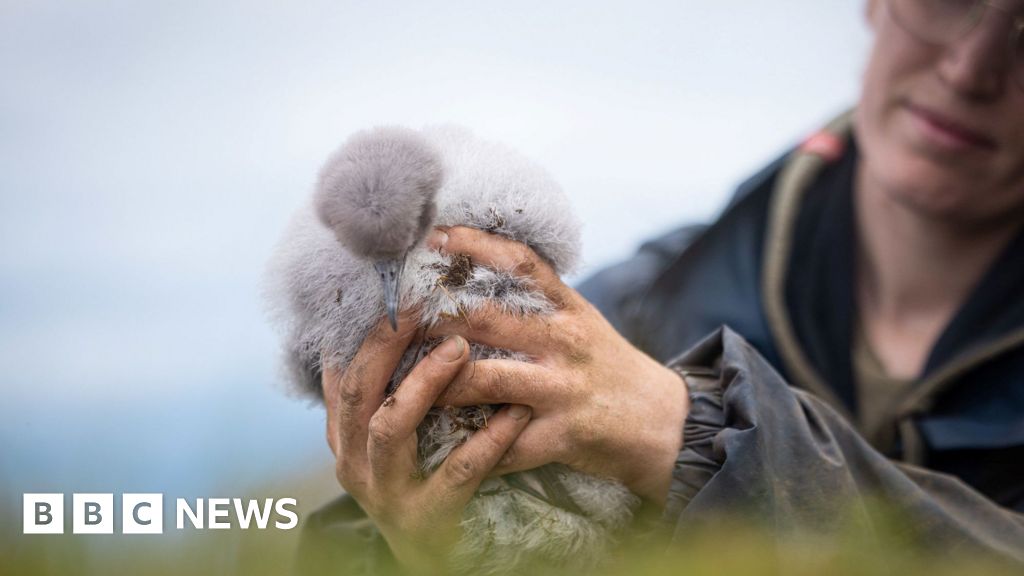
Conservationists are trying to re-establish a population of rare manx shearwaters on the Isle of Canna.
The island in the Small Isles, off the west of Scotland, had as many as 3,000 breeding adult birds, but the colony was devastated by a rat infestation.
Rats were eradicated on Canna in 2005, and National Trust for Scotland (NTS) has now moved 40 young manx shearwaters to the island from the nearby Isle of Rum.
The birds are closely related to albatrosses and spend most of their lives at sea. They are believed to navigate using the Sun, Moon and stars.
More stories from the Highlands and Islands
News from the Highlands and Islands on BBC Sounds
Rats first arrived on Canna about 100 years ago after they were accidentally brought over on ships from the mainland.
By the 1990s the rodents were having a devastating effect on seabirds by eating their eggs.
Trappers from New Zealand helped in the effort to rid Canna of the rodents.
Over the past two years, 40 manx shearwaters have been moved from Rum, which holds around a quarter of the world's breeding population with at least 120,000 breeding pairs.
Ellie Owen, senior seabird officer at NTS, said: "The Return of the Manx project is the seabird conservation equivalent of scaling Everest for the National Trust for Scotland.
"It is an extremely collaborative effort, working very closely with the communities of Canna and Rum, Highland Ringing Group, NatureScot, and our invaluable volunteers, without whom this project would not exist."
A film about the project is due to be released next year.
Moon and streetlights cause birds problems
Topics in this story
Gathered from external sources. Rights to this text belong to whoever originally published it.