Democrats split over who should lead China oversight
The House Select Committee on China may be coming to an end with Democrats taking over the House majority in January. Rep. Hakeem Jeffries (D-N.Y.), who is poised to be the next Speaker of the House, is ultimately responsible for whether the committee continues or is disbanded. He says discussions about its fate won’t happen…
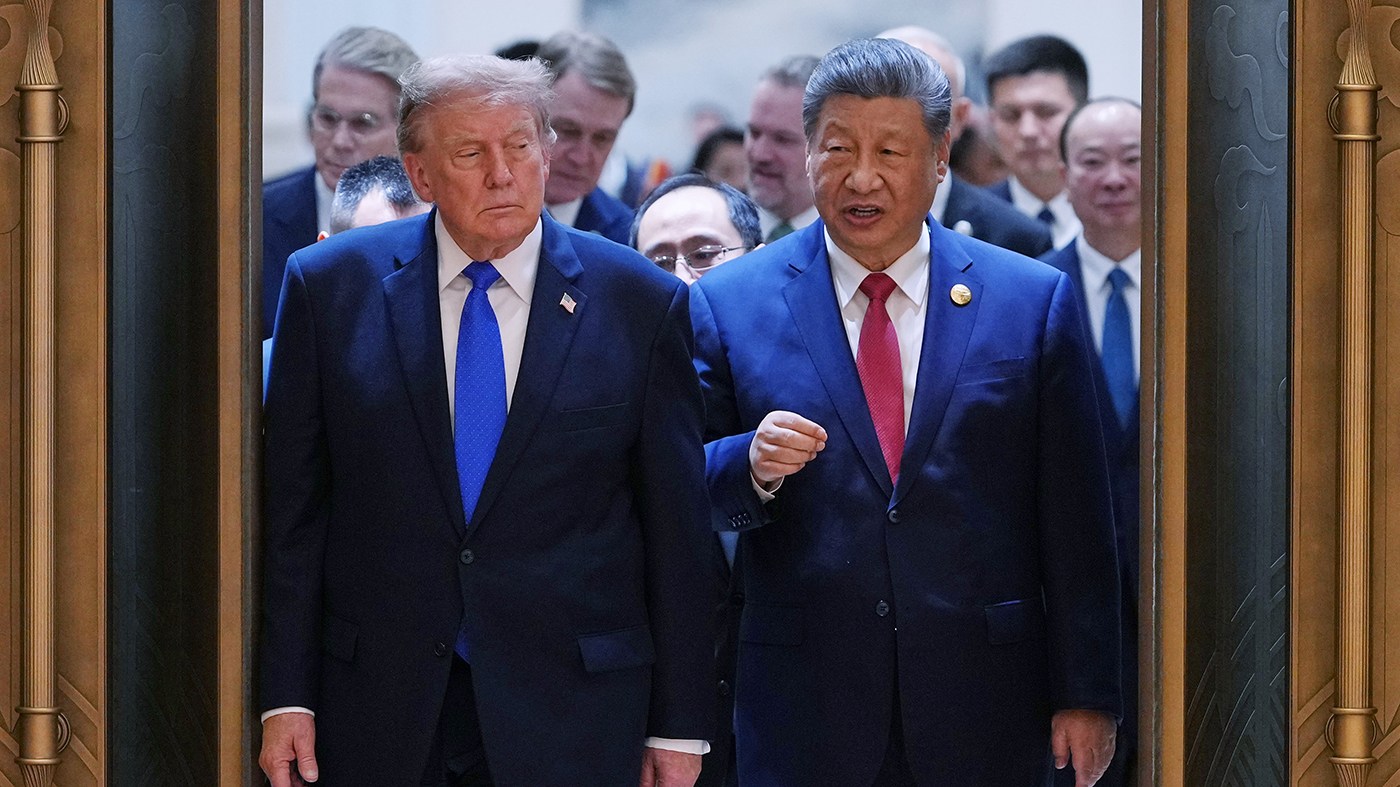
The House Select Committee on China may be coming to an end with Democrats taking over the House majority in January.
Rep. Hakeem Jeffries (D-N.Y.), who is poised to be the next Speaker of the House, is ultimately responsible for whether the committee continues or is disbanded.
He says discussions about its fate won’t happen in earnest until after Democrats choose their leadership team.
Rep. Gregory Meeks (D-N.Y.), the likely incoming chair of the House Foreign Affairs panel, told The Hill that his committee is capable of taking over the select panel’s responsibilities.
“We have the ability to do it. We’re ready to do it. We’ll do it. But I’ll follow the leader,” he told The Hill.
Supporters of the select committee, formally known as the Select Committee on Strategic Competition between the United States and the Chinese Communist Party, say the panel established by the GOP House in 2023 is the best venue for bipartisan cooperation on confronting Beijing.
But Democrats on the Foreign Affairs Committee are itching to take the lead on investigations and legislation that the select committee has overseen. They are particularly interested in focusing on President Trump’s dealings with China, including the fallout from allegations that former Nvidia CEO Jensen Huang — a close adviser to Trump — had a romantic relationship with a suspected Chinese spy and tech business partner.
Democrats are also probing whether the administration prized profits over national security and allowed China in the process to illegally access advanced U.S. technology.
“We’ve got great talent on our committee,” Meeks told The Hill. “First we’ve got to see what the next Speaker is going to say. Once he makes his decision then we’ll plan accordingly.”
The Foreign Affairs panel has two subcommittees focused on Asia: one on East Asia and the Pacific and one on South and Central Asia. Meeks said he’s likely to overhaul the panel’s subcommittees in the new Congress.
“All of those committees, I’ve got to decide what I’m going to do – those committees were set up by the Republicans. They might not be the same committees once I make my determination,” he said.
Rep. Brad Sherman (D-Calif.), a member of the House Foreign Affairs Committee, sees that committee as “well-positioned to conduct oversight of the administration’s China policy.”
Rep. Raja Krishnamoorthi (D-Ill.), a member of the Select Committee on China and its initial ranking member, told The Hill the panel is “absolutely” essential to combat escalating challenges from Beijing.
“Now, in the face of the CCP [Chinese Communist Party] relentlessly kind of promulgating aggression toward us, whether it’s technologically, militarily, or economically — as we just saw with Jensen Huang and Nvidia — I feel like we need to stand firm on a bipartisan basis, and bicameral basis in holding the CCP at bay,” he said.
“I’m very concerned about this CCP having gained an advantage at our expense, especially through the Jensen Huang affair, but also through other actions that the administration has taken.”
Rep. Ro Khanna (D-Calif.), who now serves as the ranking member of the China Select Committee, told The Hill he believes there will be an “independent committee” and said, “We’re having the conversation of what that committee looks like.”
In 2023, Jeffries gave the blessing to establish the committee in agreement with then-Speaker Kevin McCarthy (R-Calif.).
It was a rare area of bipartisanship amid deep divisions over how the U.S. should deal with China after Democrats in 2020 boycotted a Republican “China Task Force” initiative.
When the select committee was established, Republicans were lashing out at then-President Biden for allowing a Chinese spy balloon to traverse the U.S. before shooting it down. And anti-Asian hate was still at an all-time high, tied to the COVID-19 pandemic.
Three years later, the select committee’s supporters argue the panel has demonstrated bipartisan cooperation and delivered important legislation addressing competition between the U.S. and China.
Wins, they say, include the committee advancing a bipartisan bill to force the social media app TikTok to separate from its Chinese owners.
In 2024, it produced a report detailing how the Chinese government incentivized the production of fentanyl precursor chemicals even as Beijing had agreed to stem exports. The Biden administration pushed Beijing to crack down on production and chemical exports. The Chinese government declared fentanyl a “U.S. problem.”
Other legislative wins that supporters promote include the Biosecure Act, which became law in 2025. The law calls for identifying risky foreign biotechnology companies, largely from China, and barring U.S. companies from contracting with them.
The law is intended to protect Americans’ health data and safeguard sensitive U.S. technology from, in particular, the Chinese military.
Earlier this month, the select committee released a report outlining the dangers of American companies relying on Chinese artificial intelligence models. The Trump administration is reportedly considering forcing U.S. companies to disclose their use of Chinese AI models.
“For nearly four years the Select Committee has brought together Republicans and Democrats to address the grave threats the Chinese Communist Party poses to U.S. interests and values,” Rep. John Moolenaar (R-Mich.), the outgoing chair of the select committee, said in a statement urging its renewal.
“The challenges we face as a nation are only becoming more urgent given the high-stakes technology competition in AI and the CCP’s growing coercion targeting America’s allies and partners. The coming two years will be a critical period—and an opportunity to meet the moment through the Select Committee’s bipartisan mandate and work.”
The committee could be slimmed down but shouldn’t be eliminated, argued Rush Doshi, who served as deputy senior director for China and Taiwan on the National Security Council under Biden. Doshi said Democrats should take advantage of the committee to put forth their vision for U.S.-China relations.
“Congress has other committees. But each covers a small slice of China policy,” he wrote on social platform X , alongside an analysis calling for the select committee’s renewal.
“Only the Select Committee can pull that together and balance the executive branch’s dominance of the issue. As Trump meets [Chinese President] Xi [Jinping] and [Russian President Vladimir] Putin, and as the Nvidia scandal spirals, now is the wrong time to shut down the Committee but the right time to reframe it,” wrote Doshi, a senior fellow for Asia studies and director of the China Strategy Initiative at the Council on Foreign Relations.
A former committee staffer, who asked for anonymity to protect their work, described the select committee as a unique venue that helped push other House committees to look at issues linked to Chinese threats. The former staffer said its staff were given a long leash to explore ideas and propose solutions.
“They allowed us to develop ideas, produce work products and deliver results, and that’s wonderful,” the former staffer said.
“I appreciate the time when I was on the committee, I could venture out, identify a problem, sit down, do my research, and do a bill, or oversight, and create impact. In that regard I’m very grateful to our members and our senior staff for their support.”
Topics in this story
Gathered from external sources. Rights to this text belong to whoever originally published it.