Stranded Iranian tankers, American pressure: Why Sri Lanka faces a difficult choice
Sri Lanka has announced it has no immediate plans to assist 19 Iranian oil tankers anchored in international waters off the island nation's coast, despite
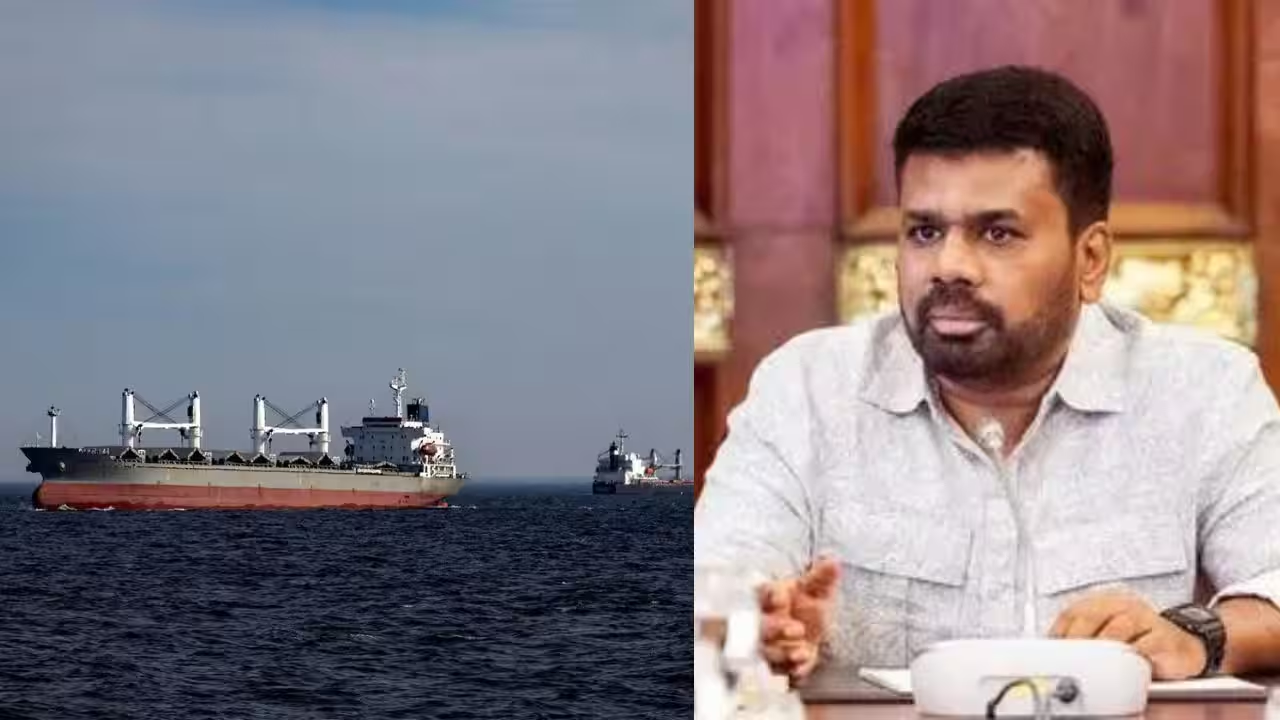
Sri Lanka has announced it has no immediate plans to assist 19 Iranian oil tankers anchored in international waters off the island nation's coast, despite shortages of food, water and fuel aboard the vessels.“Sri Lanka will put its national interest first before considering any help, and the companies that supply ships are aware of possible secondary sanctions from the United States,” a foreign ministry spokesperson told reporters in Colombo on October 9.The statement came in response to a Wall Street Journal report earlier this month alleging that US officials had “pressured” Sri Lanka to prevent local shipping firms from supplying the tankers with food and fresh water.However, the foreign ministry spokesperson said the US had not communicated any threat of sanctions if Sri Lanka stepped in to help. Nevertheless, the risk of sanctions appears to be shaping Colombo's response, whether or not Washington has issued a direct warning.Sri Lanka's dilemma is not simply about whether to assist the stranded Iranian vessels, but how far it can act independently when the prospect of US secondary sanctions looms over its decisions.How Iranian ships became stranded near Sri Lanka, and Colombo’s dilemmaOn February 28, the United States and Israel launched joint strikes against Iran, triggering a war in the Middle East. Tehran retaliated with strikes against Israel and targeted American military bases across Gulf states.Iran also blockaded the Strait of Hormuz, a critical sea route, in March, prompting Washington to impose a naval blockade on Iranian ports. The US blockade was later lifted before being reinstated in July. Its resumption left dozens of Iranian vessels stranded off Sri Lanka and neighbouring nations, unable to return home.It was against this backdrop that Sri Lanka said it would prioritise its national interests before assisting the Iranian ships.But where are the ships stranded, and is Colombo legally obliged to assist them?According to Sri Lankan foreign minister Vijitha Herath, around 47 foreign ships are currently anchored off the country's coast, 19 of which are Iranian-flagged. Herath said all the vessels are stranded within Sri Lanka's Exclusive Economic Zone but outside the 12-nautical-mile limit of its territorial waters.This creates a dilemma for Sri Lanka. Article 98 of the United Nations Convention on the Law of the Sea (UNCLOS) requires states to promote effective search-and-rescue services and ships to assist people in distress at sea. However, the extent of Colombo's legal obligation to provide supplies depends on whether the sailors are in distress and the circumstances of their requests for assistance, rather than simply the vessels' location outside territorial waters.We haven’t provided them (Iranian vessels) with anything so far, and we don’t intend to do so in the future either. ... Such supplies to vessels are usually provided by the private sector, and this is a matter for them.Dayan Jayatilleka, Sri Lanka's former Permanent Representative to the UN, acknowledged that Colombo was in a “difficult situation.”“We are caught in a difficult situation. It's clear to the world that we are not willingly refusing to assist, but there are reasons we have to be careful and to deliberate,” The Associated Press quoted Jayatilleka as saying.Sri Lanka's hesitation, therefore, appears to stem not from an unwillingness to help, but from the position it finds itself in: provide assistance and risk possible US action, or withhold it and leave the seafarers to their fate.How US uses secondary sanctions to pressure governmentsSecondary sanctions are imposed by a government on third parties to maintain or intensify pressure on a primary sanctions target. Although the sanctioning government cannot directly compel foreign entities to comply with its policies, it can restrict its own companies and citizens from doing business with the third party. This puts the designated firm under severe pressure to sever its commercial ties with the primary target.Leveraging the dollar's central role in global finance, Washington uses secondary sanctions to discourage countries and foreign businesses from maintaining commercial ties with Iran or entities linked to Tehran. Although not legally bound by US sanctions in all cases, many comply to avoid losing access to the US financial system.This is where the secondary sanctions threat hits home for Sri Lanka, and the Iranian tankers are caught in the crossfire because of Operation Economic Outcast, the latest in a decades-long series of US sanctions against Iran.Announced on August 24, Operation Economic Outcast expanded the risk of secondary sanctions for foreign individuals and entities doing business with Tehran, including in the shipping sector.With so much at stake, a Sri Lankan shipping company may therefore conclude that the risks of assisting the Iranian tankers are too severe to justify providing them with services.Sri Lanka’s maritime industry: What is at stakeSri Lanka lies in the Indian Ocean, making it a key maritime hub. However, this strategic location also makes its shipping industry dependent on international trade and vulnerable to disruptions caused by geopolitical tensions and sanctions.The maritime sector, which includes shipping and other sea-related activities, has historically contributed around 2.5% of Sri Lanka's GDP. It provides full-time, direct employment to approximately 40,000–50,000 people. Around 70% of service providers are Sri Lankan-owned, while the remainder are multinational companies. Sri Lanka is also home to 130 shipping agencies.The presence of these agencies reflects Sri Lanka's integration into international shipping networks. Maintaining these connections is important if Colombo wants to expand its maritime sector and increase its contribution to the national economy. However, the threat of US secondary sanctions could complicate companies' decisions on whether to provide services to Iranian-flagged vessels, potentially putting Sri Lanka's maritime ambitions at odds with the risks of doing business with entities linked to Tehran.With its maritime industry growing, the question for Sri Lanka is whether it can assist Iranian vessels while managing the risk of US secondary sanctions.We have informed the private sector that they should be extremely careful and act responsibly. Otherwise, they run the risk of falling foul of US sanctionsWhy Sri Lanka can't defy USThe threat of secondary sanctions is not specific to Sri Lankan companies; any non-US entity doing business with Iran could face similar risks. However, there is a significant asymmetry between Sri Lanka and larger, wealthier economies in their ability to absorb the economic consequences of a confrontation with Washington.For instance, in 2025, Sri Lankan companies exported goods worth $2,999 million to the United States, while importing $544 million worth of goods in return. While this trade surplus benefits Sri Lanka in some ways, it also highlights the asymmetry between the two countries: the US accounted for around 24% of Sri Lanka’s total exports that year, whereas Sri Lanka represents a relatively small market for American exports.(function(){function e(){window.addEventListener(`message`,function(e){if(e.data[`datawrapper-height`]!==void 0){var t=document.querySelectorAll(`iframe`);for(var n in e.data[`datawrapper-height`])for(var r=0,i;i=t[r];r++)if(i.contentWindow===e.source){var a=e.data[`datawrapper-height`][n]+`px`;i.style.height=a}}})}e()})();Therefore, with nearly a quarter of its exports going to the US alone, Sri Lanka has a significant economic stake in maintaining access to the American market. Any disruption could affect exporters, businesses and workers who depend on it. This makes the potential costs of antagonising the Trump administration difficult for Colombo to ignore, even in the absence of a direct threat from Washington.(function(){function e(){window.addEventListener(`message`,function(e){if(e.data[`datawrapper-height`]!==void 0){var t=document.querySelectorAll(`iframe`);for(var n in e.data[`datawrapper-height`])for(var r=0,i;i=t[r];r++)if(i.contentWindow===e.source){var a=e.data[`datawrapper-height`][n]+`px`;i.style.height=a}}})}e()})();There is also the added context of the 2022 economic crisis, Sri Lanka’s worst since its independence in 1948. The United States provided economic and humanitarian assistance during the economic crisis and reportedly supported Colombo’s efforts to secure a four-year, $3 billion IMF bailout programme, approved in March 2023.This imbalance gives Washington further leverage over Colombo, narrowing Sri Lanka’s room for manoeuvre.What can Sri Lanka doHowever, Sri Lanka has not always aligned itself with the US. In recent months, Colombo has taken decisions that diverged from Washington's preferences, reflecting its efforts to preserve strategic autonomy while balancing relations with competing powers.President Anura Kumara Dissanayake revealed on March 20 that his government had rejected a US request to allow two American combat aircraft to land at a civilian airport in southern Sri Lanka. According to Dissanayake, Washington made the request on February 26, two days before the Iran war began.Before that, on March 5, the Sri Lankan Navy rescued 206 sailors from the Iranian warship IRIS Bushehr after one of its engines malfunctioned and the vessel requested assistance. In total, Sri Lanka rescued 238 sailors, including 32 crew members from IRIS Dena, another Iranian warship that was sunk by a US Navy torpedo attack on March 4, four days after the Iran war began.Jayatilleka, the former Sri Lankan diplomat, highlighted that the stranded vessels are cargo ships, not warships, and argued that Sri Lanka has a moral obligation to render assistance.“These are cargo ships which carried oil to China from Iran. If these ships come in for some reason to our waters because they are attacked, we have a moral obligation to assist immediately,” he said.Colombo's past decisions show that it can exercise strategic autonomy. Whether it can do so again is another question.Limits of Sri Lanka’s strategic autonomyAlthough the Sri Lankan government has repeatedly maintained that its decisions are not influenced by US pressure, its position over the Iranian tankers raises questions about the limits of strategic autonomy in an unequal international system.Also, the fact that Colombo has acted independently in the past does not mean it can do so again without risking economic repercussions from Washington, which could be particularly damaging for a country still recovering from a severe economic crisis.Sri Lanka's final decision will therefore not only affect its relationship with the US or Iran, depending on what it does, but will also test its commitment to humanitarian principles. It will also determine how far Colombo can pursue an independent foreign policy without jeopardising its economic interests.You use AI every day. Now get your AI Quotient. Take the AIQ test.
Topics in this story
Gathered from external sources. Rights to this text belong to whoever originally published it.