Luxon fights to stay as New Zealand concludes elections
Polls closed in New Zealand on Saturday after the final day of voting in what is expected to be one of the country's tightest elections in years.
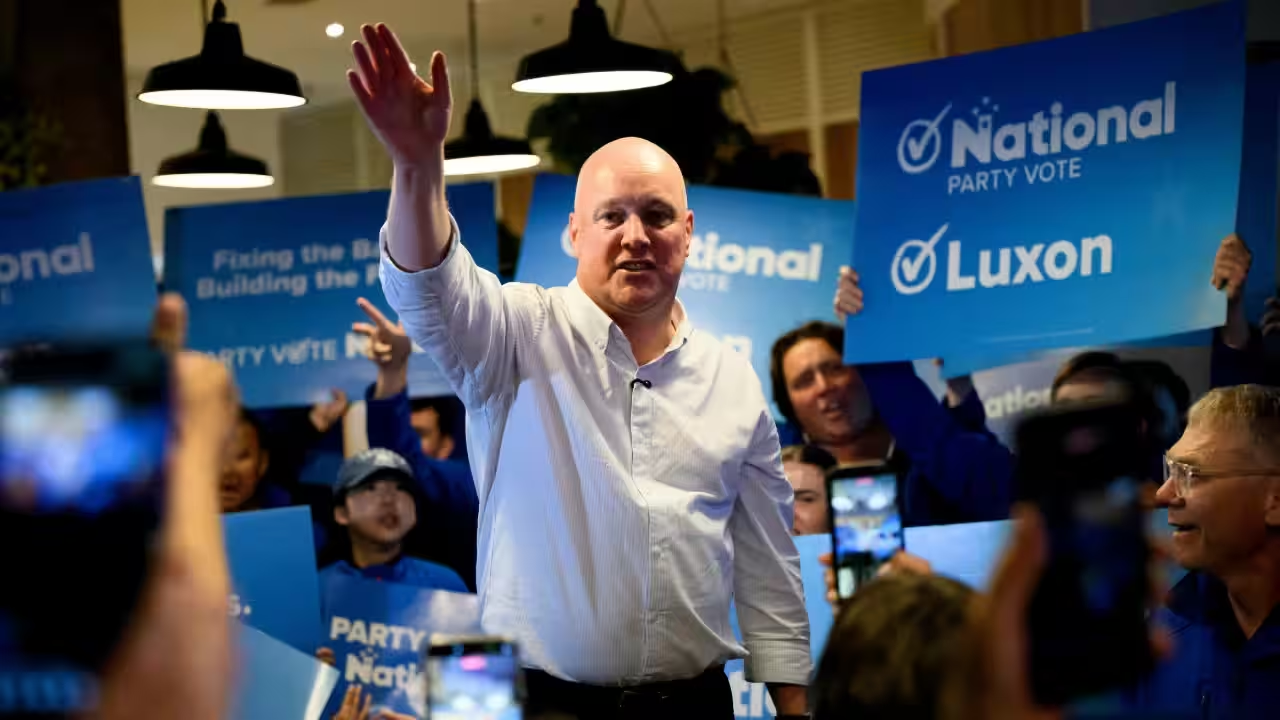
Polls closed in New Zealand on Saturday after the final day of voting in what is expected to be one of the country's tightest elections in years. The early results are due shortly after the ballot ended.Prime Minister Christopher Luxon's conservative National Party is seeking a second term against a left-wing bloc led by Labour leader Chris Hipkins. With neither side having a clear path to victory, smaller parties are expected to play a crucial role in deciding who forms the next government.Voting ended at 7pm local time after polling began on October 26. New Zealand's Electoral Commission aimed to release an initial count covering 5% of the votes within 30 minutes of polling stations closing. Results from 95% of ballots cast are expected by the end of Saturday night. The final verified tally, including overseas votes, is due on November 27.The closely fought contest has left both the right-wing and left-wing blocs uncertain about their prospects. Pre-election opinion polls suggested neither major grouping was likely to secure a straightforward parliamentary majority.Luxon, who took office in 2020, is seeking another term after facing two confidence votes among his own lawmakers this year. Hipkins, meanwhile, is attempting to return to power after Labour suffered a decisive defeat in the 2023 election.Economic concerns dominate campaignThe cost of living and economic difficulties have been central issues during the campaign. New Zealand's trade-dependent economy has struggled with the impact of international shocks, while unemployment in the September quarter reached its highest level in 15 years.National formed a coalition with two right-wing parties, populist New Zealand First and libertarian ACT, after winning the 2023 election. The alliance produced the country's most conservative government in modern history.Luxon, a former business executive who entered parliament in 2020, has faced criticism over his political inexperience compared with the leaders of his coalition partners. Both minor parties have secured significant policy concessions from the prime minister.On the other side, Labour is seeking to regain ground with the support of the Green Party and Te Pati Maori, an Indigenous rights group.Hipkins, a career politician, became prime minister nine months before the 2023 election after Jacinda Ardern stepped down. However, Labour has struggled to recover its popularity since its electoral defeat. Hipkins also continues to face criticism over pandemic-era policies introduced under the previous government.Minor parties could hold key to government formationNew Zealanders do not directly elect their prime minister. Instead, voters cast two ballots, one for their preferred political party and another to elect their local representative.A party or coalition must secure more than half the seats in parliament to form a government. The final number of seats is determined through official calculations based on the country's electoral system.If neither major bloc secures enough support, parties could be forced into negotiations to form a coalition. Previous election deadlocks have seen the two sides compete to win the backing of smaller parties holding the balance of power.This time, The Opportunity Party could emerge as a potential kingmaker if it wins parliamentary representation for the first time.Led by 38-year-old Qiulae Wong, the centrist party is backed by candidates described as socially liberal technocrats. Its proposals include a land tax, universal basic income and environmental measures.Wong, who has a business background but no political experience, has pledged to negotiate first with whichever party secures the most votes if her party holds the balance of power.Luxon has ruled out forming a government with The Opportunity Party. However, analysts believe both major party leaders would be willing to negotiate with Wong if her support becomes essential to securing a parliamentary majority.You use AI every day. Now get your AI Quotient. Take the AIQ test.
Topics in this story
Gathered from external sources. Rights to this text belong to whoever originally published it.