Ukraine's drone strikes Russian energy infra 3,000 km away from the borders
International News: A drone attack sparked a fire at an industrial facility in Novy Urengoy, a city just south of the Arctic circle and considered Russia's unofficial gas.
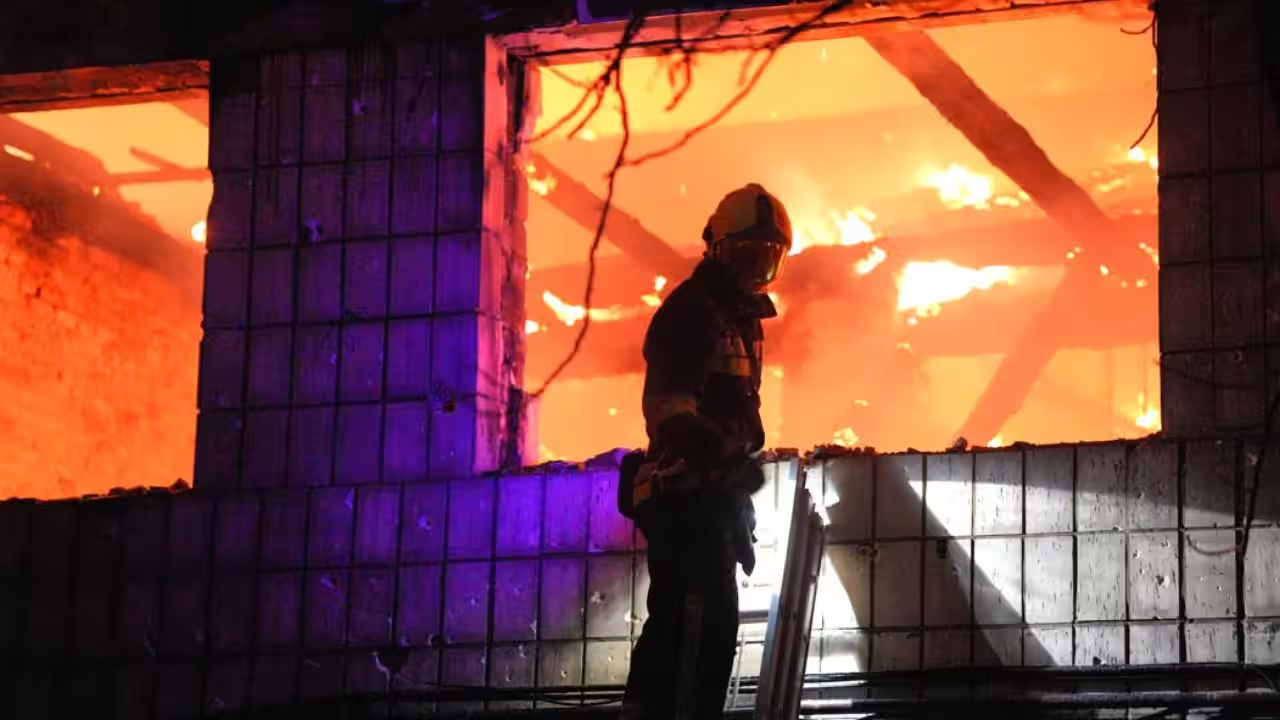
A drone attack sparked a fire at an industrial facility in Novy Urengoy, a city just south of the Arctic circle and considered Russia's unofficial gas capital, marking the first such strike on the country's gas-producing heartland, regional Governor Dmitry Artyukhov said. The facility sits roughly 3,000 kilometres from the Ukrainian border in northwestern Siberia, a region holding an estimated 26.5 trillion cubic metres of gas reserves, enough to cover global demand for more than six years. Gazprom, which once exported gas from this region to Western Europe before ties collapsed after Russia's 2022 invasion.According to Ukraine's Special Operations Forces, as reported by the Kyiv Independent, the September 9 strike marks Kyiv's deepest attack into Russian territory since the war began, hitting a natural gas facility 3,200 kilometres from the border. It follows a pattern of expanding long-range strikes, Ukraine has hit an oil refinery in Omsk, nearly 2,500 kilometres away, and targeted refineries in Perm Oblast, over 1,500 kilometres from the border, in the past three months. Thus taking away the role of aircraft and missiles in the realm of precision long range strikes.Iran's Shahed drones offer another clear example of this shift. Cheap to build but capable of flying up to 2,000 kilometres, these drones have let Tehran project power well beyond its borders, striking Israel, Gulf states and even the UK's RAF Akrotiri base in Cyprus, some 1,100 kilometres away. The physical damage from these strikes has often been limited, but the message wasn't, Iran can hit distant targets without risking pilots or expensive missiles, using sheer volume to complicate even sophisticated air defences.India is moving down a similar path. The Army has inducted over a hundred indigenous kamikaze drones, the Peacekeeper or Agniveg, built for high-speed precision strikes on command centres and radar sites, alongside existing Harpy and Harop systems. The Air Force, meanwhile, is co-developing long-range kamikaze drones with domestic industry to cut dependence on foreign components, particularly Chinese ones, with systems like the Sheshnag, targeting a 1,000-kilometre range, currently under development.These developments explain why drones are increasingly seen as strategic weapons in their own right. They can strike far beyond the frontlines, disrupt energy infrastructure, and be deployed en masse thanks to their low cost relative to missiles, making them genuinely hard to defend against. For India, this isn't just about battlefield utility, drones are becoming a core part of military doctrine.
Topics in this story
Gathered from external sources. Rights to this text belong to whoever originally published it.