By 1941, Hawaii had recorded Koster’s curse, whose introduction may have been linked to ornamental planting; it later spread across the islands, threatening native forest plants
Discover the origins and impact of Koster's Curse, an invasive plant introduced to Hawaii in 1941, disrupting native forests and ecosystems. Learn about its introduction, spread, and potential control measures.
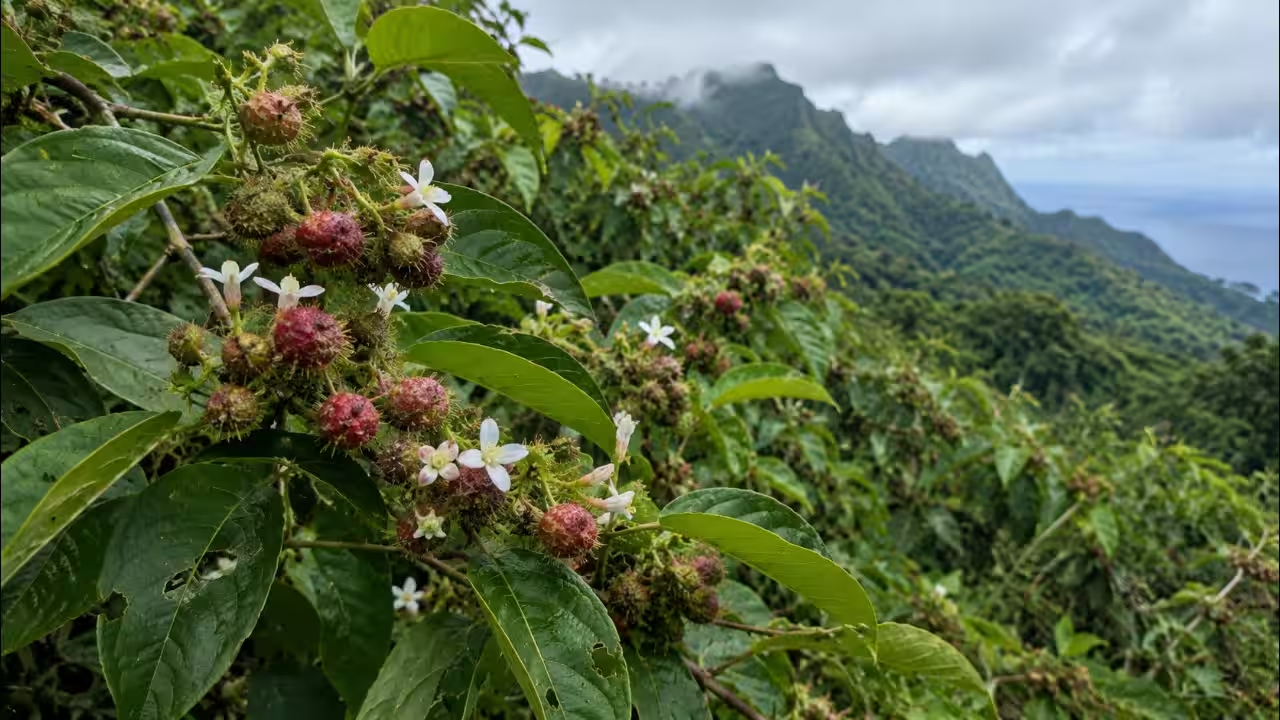
A plant carrying an ominous name was first found on O‘ahu in 1941, botanically identified as Clidemia hirta; it came to be known as Koster’s curse. According to the research paper titled “Koster’s Curse (Clidemia hirta), a Weed Pest in Hawaiian Forests”, led by Lyndon L. Wester and Hulton B. Wood, the plant had subsequently spread across the Hawaiian Islands. Although the plant was native to Central and South America, it began to colonise habitats in the forests, pastures and cultivated land. Koster’s curse's arrival in the Pacific predates its appearance in Hawaii. During the late nineteenth century, the plant became established in Fiji as a severe agricultural and ecological pest. However, the name of the plant, along with the circumstances of its introduction to Fiji, remains disputed.The origin of its name and an introduction to FijiIn his 2014 paper, “Koster’s Curse: mistaken blame in the common name for the invasive melastome, Clidemia hirta”, Neal L. Evenhuis examined the two accounts surrounding its origin and how the plant arrived on the shores of Fiji in the first place. As per the first account, the seeds of this plant arrived after it was accidentally shipped with coffee plants from South America. According to this account, between 1880 and 1886, a man by the name of Koster, while cultivating a coffee plantation, inadvertently mixed seeds of Clidemia hirta into the stock. Unbeknownst to Koster, this would spark a disruption of native ecosystems, specifically in coconut plantations, and, by extension of his action, the plant was named after him.The name had already appeared in print by 1906, when entomologist Frederick Muir recorded the plant in Fiji under the name “Koster’s Curse”, but a 1914 report by the Fiji Department of Agriculture questioned the name’s credibility and deemed it erroneous.The second account originated from the journal of Edwin H. Bryan Jr., a naturalist who visited Fiji in 1924 when the Whitney South Seas Expedition took place. The journal, dated 9 June, tells a story of how Bryan recorded an account from A.E. Ward, an artist posted in Fiji. Ward’s story attributes the plant to William Fillingham Parr, who brought it to Fiji as an ornamental for his garden, but the plant eluded cultivation and spread. However, there was a caveat to the name, which rested on an alleged misunderstanding. The story loses cohesion here: Ward said that a son of Carl H. Köster, a neighbour of Parr, identified Parr as the person responsible for bringing in the plant, but the answer was misheard, which transferred the blame to Köster instead.How the plant affected the Hawaiian forestsThe onset of Koster’s curse in Hawaii presented an array of concerns regarding natural habitats. The Hawaii Invasive Species Council identifies Clidemia hirta as a shade-tolerant shrub that spreads rapidly through the understories of wet and mesic forests, newly opened forest gaps, and pastureland. Birds are known to consume its purple fruits, and in doing so, they would disperse the seeds. This itself presented a harrowing problem because each fruit of the plant contains roughly 500 seeds, which meant it can extend beyond the immediate area of an existing infestation.What makes the plant particularly threatening is that its shrub can grow up to 6 feet, although it generally grows from 1 to 3 feet in height and these dense stands, which, by extension, restrict other plants beneath it from growing. As a result, forests are left without the means to regenerate, and native vegetation is put under pressure in Hawaii’s already vulnerable island ecosystems, which could lose plant and animal species. Moreover, there are no local wildlife that feed on the plants; they are often transported to new regions by invasive pigs carrying seeds in their hooves. These reasons make it hard to contain, let alone keep it under control, and as a precaution, hikers are advised to wash their boots before and after entering these forests.To counter this invasive plant, Liothrips urichi, a thrips originally used against the plant in Fiji, has been introduced in the region. While the Hawaii Invasive Species Council broached another possible approach in the form of the clidemia gall wasp, Allorhogas clidemiae.Its larvae develop in flower buds and alter fruit formation, producing hardened structures in place of viable seeds. Host-specificity trials were identified as a necessary step before any potential release in Hawaii.You use AI every day. Now get your AI Quotient. Take the AIQ test.
Topics in this story
Gathered from external sources. Rights to this text belong to whoever originally published it.