Tanker with 27 Indian seafarers targeted in first-ever limpet mine attack in Strait of Hormuz
A Panama-flagged oil tanker MT LOUISE 1 carrying 27 Indian seafarers was targeted with limpet mines in the Strait of Hormuz, marking the first known
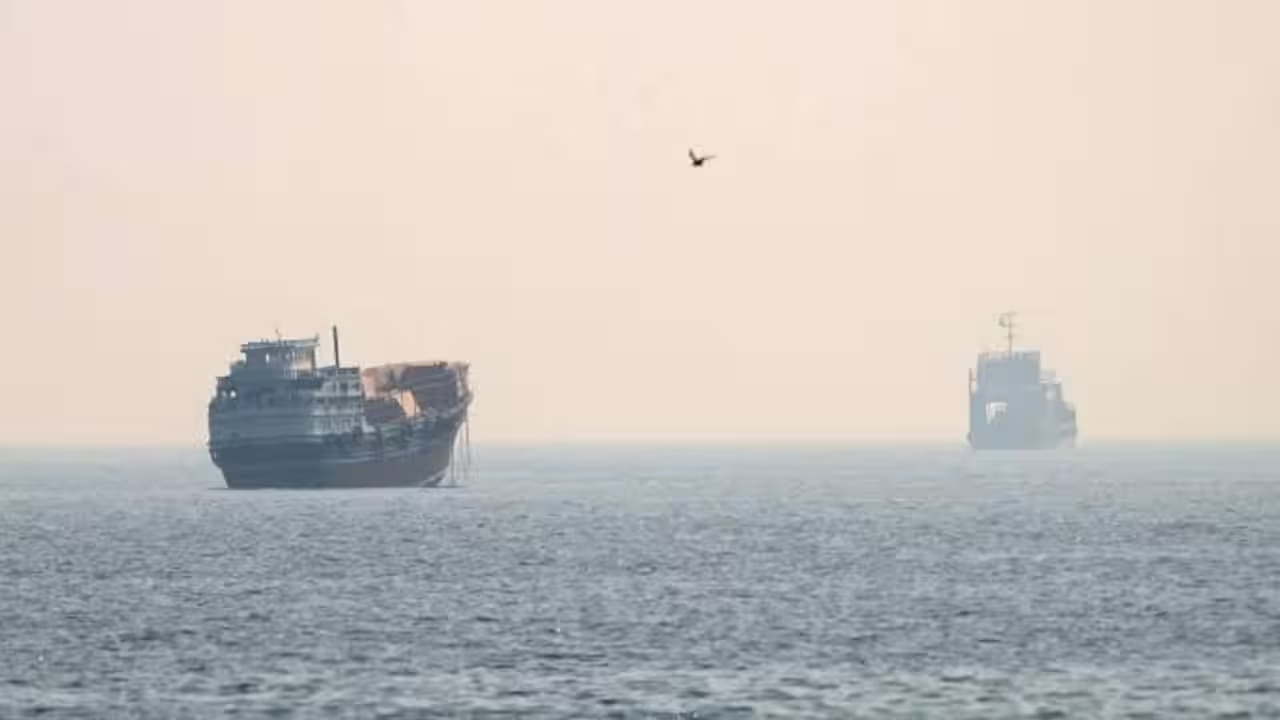
A Panama-flagged oil tanker MT LOUISE 1 carrying 27 Indian seafarers was targeted with limpet mines in the Strait of Hormuz, marking the first known successful use of the explosives against a vessel in the area since the US-Iran war began in February.Union minister for ports, shipping and waterways Sarbananda Sonowal said on Friday that all 29 Indian seafarers aboard two tankers targeted in separate attacks on October 29 and 30 were safe, with no injuries reported.In a post on X, Sonowal said, "On October 29, Liberia-flagged VLCC MT ARZANAH, carrying 2 Indian nationals, and on Oct 30, Panama-flagged crude oil tanker MT LOUISE 1, carrying 27 Indian seafarers, were targeted in projectile attacks in the Strait of Hormuz.""All 29 Indian seafarers across both vessels are completely safe with no injuries,"he said."We are continuously monitoring the situations & coordinating with the ship management companies to ensure the ongoing security and wellbeing of our crew," he added.The attacks come amid repeated incidents involving commercial vessels in and around the strategic waterway, a key route for global oil exports, since the US-Iran conflict began in February.The Panama-flagged tanker Louise 1 was reportedly targeted with two limpet mines attached to its hull while transiting the Strait of Hormuz, Reuters reported citing three maritime security sources.The explosives caused a fire in the engine room and temporarily disabled the vessel, maritime sources said. The fire was later extinguished, and the tanker continued towards its next port of call.The United Kingdom Maritime Trade Operations (UKMTO), a British navy agency, said the crew was safe and there was no environmental impact. It did not identify the vessel in its advisory.The incident took place on Thursday, about 25 nautical miles (46 km) northeast of Khasab in Oman, UKMTO said. However, it was not immediately clear who was behind the attack.Maritime security sources told the agency that the incident was the first known successful use of limpet mines against a vessel in the area since the US-Iran war began in February.It followed a separate attempt in September in which the devices reportedly failed to detonate, two of the sources said.Limpet mines are explosive devices that can be attached to a ship's hull. Their use by a small craft raises security concerns in the Strait's congested shipping lanes."The apparent ability of a small craft to approach a transiting tanker, deploy explosive devices and withdraw presents a significant security concern, particularly in the Strait's congested shipping lanes," Greece-based maritime risk management group Marisks said in a note on Friday, Reuters reported.Marisks said limpet mines were first deployed in the region in 2017 and had been used against tankers in the Strait of Hormuz in subsequent years. It said that "limpet mines are cheap and easily available"."The methodology of a small craft attaching these mines on the hulls of vessels in transit is cheap, low tech and very efficient," the group added.Earlier in the day, Iran's Islamic Revolutionary Guard Corps (IRGC) Navy said that three oil tankers had caught fire and exploded while attempting to use unauthorised routes through the Strait of Hormuz, Iranian state media reported.Iran also said it had destroyed an unmanned US vessel in the eastern Strait of Hormuz. However, there was no immediate confirmation from the US military.The Strait of Hormuz is one of the world's most important oil export routes, connecting the Persian Gulf with the Gulf of Oman and the Arabian Sea. The waterway has faced repeated security incidents since the conflict between the United States and Iran began in February.You use AI every day. Now get your AI Quotient. Take the AIQ test.
Topics in this story
Gathered from external sources. Rights to this text belong to whoever originally published it.