South African engineering student built a three-bedroom house using soil and plastic waste; after success requests came in for more homes
Rest of World News: What if a house could be built from the very waste that usually ends up in landfills? That question became a reality for Matimba Mabonda, a South Afri.
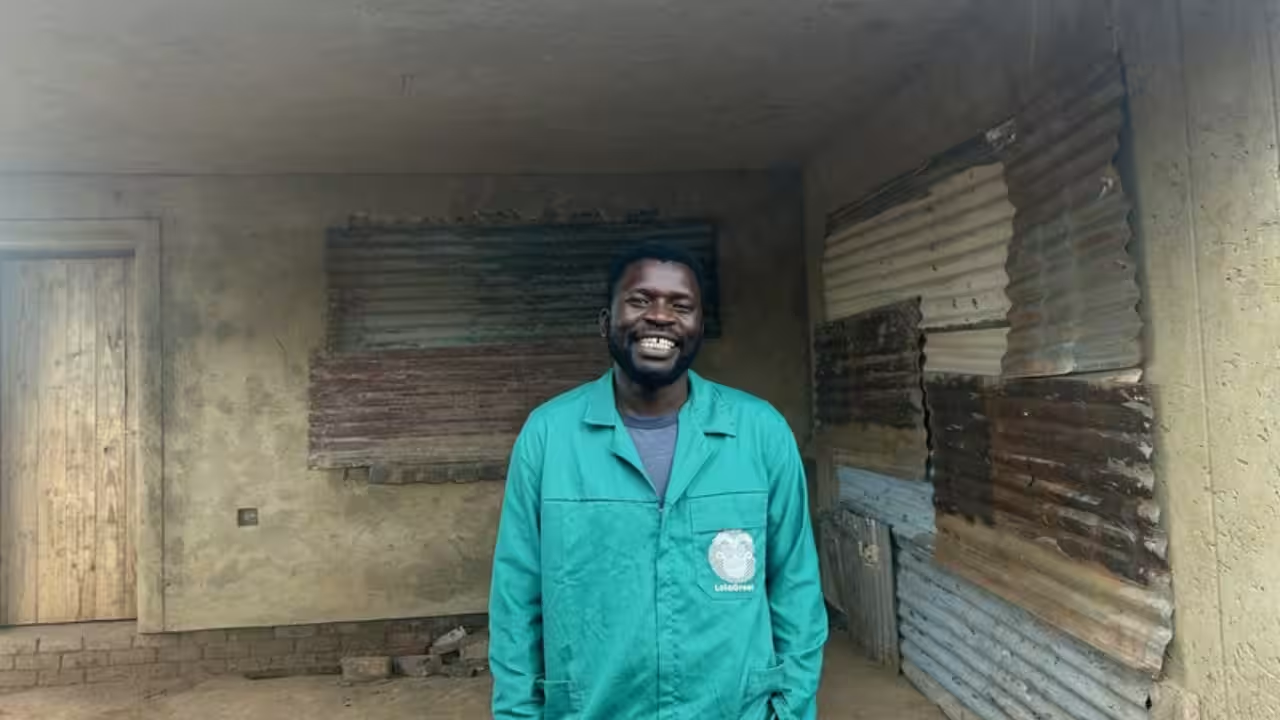
What if a house could be built from the very waste that usually ends up in landfills? That question became a reality for Matimba Mabonda, a South African chemical engineering graduate and MSc student at the University of Cape Town (UCT). Mabonda and his team have completed a three-bedroom house in Ennerdale, Johannesburg, using natural soil alongside plastic and other waste materials. The project was designed to explore whether sustainable construction could also provide a more affordable alternative to conventional brick-and-mortar homes. More than 90% of the home's walls were made from earth materials and plastic waste, according to UCT's Faculty of Engineering & the Built Environment. The house took less than a month to construct and, from the outside, looks much like the conventional homes around it. After the pilot was completed, the team began receiving requests from people interested in having similar houses built.From growing up in a shack to designing affordable homesFor Mabonda, the idea was deeply personal. He grew up in a shack in Grasmere, Ennerdale, Johannesburg, where he saw first-hand the difficulties associated with South Africa's housing shortage. After completing his chemical engineering degree at UCT, he joined his father, Ben, a contractor who had already built hundreds of homes. Together, they began exploring how construction could become more affordable and environmentally responsible. Mabonda had also established LolaGreen, a start-up focused on converting waste collected from landfills and the environment into durable building materials. His original idea involved “lolabricks”, made using plastic and industrial waste without cement or water. However, the machinery needed to manufacture them proved too expensive, prompting him to explore earth-building technologies instead.Soil and plastic waste became the building materialsThe pilot project eventually combined raw soil with plastic waste to create the materials used in the house. But turning ordinary earth into a suitable construction material was not as simple as digging it up and building with it. Mabonda explained that soil needs to be carefully analysed and tested to determine whether its composition is appropriate for construction. Different homes and locations can require different soil ratios, meaning the material has to be blended according to the desired building requirements. For the Ennerdale house, the team incorporated plastic waste into the raw soil while ensuring that the structure remained sound throughout construction. The finished property contains three bedrooms, a living area, kitchen, bathroom and garage, demonstrating that waste-based construction can extend beyond experimental walls or small structures.The three-bedroom house took less than a monthThe completed home looks surprisingly ordinary from the outside. That was partly the point. Rather than creating a structure that immediately announces itself as an experimental eco-project, Mabonda wanted to demonstrate that alternative construction materials could produce a comfortable home comparable to conventional housing. The three-bedroom house took less than a month to build and the family moved in after construction was completed. Mabonda said more than 90% of the walls were made from earth materials and plastic waste. He also described the house as naturally comfortable, remaining warm during winter and cool during summer, reducing the need for expensive air conditioning. The project therefore tackles several challenges simultaneously: construction cost, building time, waste management and the demand for housing.Success of the pilot brought requests for more housesThe first house was intended as a proof of concept, but its completion quickly created interest in scaling the idea. Mabonda said LolaGreen had already received a significant number of requests from people wanting houses constructed using waste materials. The appeal is not only environmental. According to Mabonda, the approach can be more cost-effective than traditional brick-and-mortar construction while also taking less time. His longer-term ambition is to help decarbonise the construction industry and demonstrate what can be achieved without relying entirely on conventional building materials. The next challenge is certification. Mabonda is in discussions with the Council for Scientific and Industrial Research (CSIR) as he works towards obtaining the necessary certification for the company's building approach.Catch the latest World News and Live updates. Download the TOI app.
Topics in this story
- South African waste house
- Matimba Mabonda LolaGreen
- plastic waste construction
- earth building materials
- sustainable housing South Africa
- affordable housing Johannesburg
- Ennerdale house project
- recycled plastic bricks
- eco-friendly home construction
- University of Cape Town engineering student
- World news
- World news today
Gathered from external sources. Rights to this text belong to whoever originally published it.