Hundreds of IDF investigations into killings without public outcome, BBC Verify finds
BBC Verify has identified 254 incidents from the past three years the Israeli military said it is reviewing after being accused of harm.
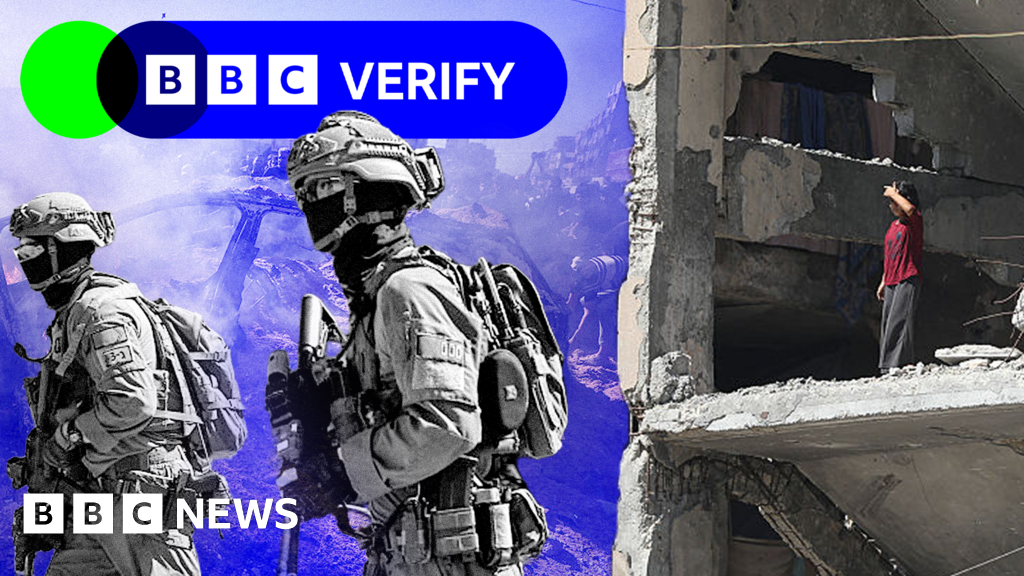
BBC Verify has identified 254 incidents in which the Israeli military has been accused of killing or injuring people in Gaza, Lebanon, the occupied West Bank and Israel that it said it was investigating, but have no public outcome.
Using purpose-built AI tools, BBC Verify combed through more than 60,000 news reports and examined hundreds of incidents in which the Israel Defense Forces (IDF) faced allegations of harm since the start of the Gaza war. Following extensive manual checking of each incident, we found 300 cases that the military said it was looking into, only 28 of which had outcomes published on the IDF website. For a further 18 incidents it was unclear if the investigation has been concluded.
BBC Verify approached the IDF about each case multiple times but only received information on two incidents, which the IDF said are still under review. "The IDF takes every allegation or report raising concerns about conduct that may be inconsistent with the law or IDF directives with the utmost seriousness," it said in a statement.
The International Committee of the Red Cross (ICRC), which works in warzones to uphold the Geneva Conventions, publishes guidelines that state investigations into potential violations of international humanitarian law, whether criminal or otherwise, should be as transparent as possible.
Of the 254 incidents identified by BBC Verify, 158 occurred in Gaza, 48 in the West Bank and 32 in Lebanon. A further 16 took place in Israel or in IDF detention. All happened between 7 October 2023 and 19 August 2026, and at least one person was reportedly killed in more than 200 of them.
Some of the incidents without public outcomes date back to late 2023. One of the deadliest cases involved a strike on a school building in Gaza in August 2024 when at least 93 people were reportedly killed, including six women and 11 children.
For three years, the Israeli military has often responded to accusations of harm by stating an incident is being investigated in some form, for example that it is being "looked into", "reviewed", "checked" or "examined". Often, that is the last that is heard about a case.
A number of incidents have been escalated for criminal investigation by the IDF. Two that came under intense public scrutiny involved the killings of five-year-old Hind Rajab, and of 15 Palestinian Red Crescent emergency workers who were shot more than 100 times and allegedly targeted at close range.
The results of IDF military investigations are not routinely made public, including those leading to criminal investigations of its soldiers.
A number that have been published relate to hostages in Gaza who were allegedly killed as a result of Israeli operations. In some cases, the military has only announced it is investigating an incident after being approached by BBC Verify or other media organisations.
In August, the IDF published a rare report detailing internal probes into five incidents in Gaza, including the killings of Hind Rajab and the 15 Palestinian emergency workers, which it revealed had been escalated to criminal investigations.
In the three other cases, which involved the killings of seven aid workers from the World Central Kitchen (WCK) in an air strike and the killing of four Médecins Sans Frontières (MSF) aid workers in two separate Gaza attacks, the IDF said it did not find a basis for or reasonable suspicion to begin a criminal investigation.
The report also stated Israel's General Staff Fact-Finding and Assessment Mechanism (FFAM), which handles IDF investigations into "exceptional operational incidents" , had completed the review of approximately 150 cases since the start of the war.
These cases have now been transferred to the IDF's Military Prosecution for examination, according to the report. The IDF did not outline what the 150 incidents were, and did not clarify whether they were separate to the cases identified by BBC Verify when asked.
Despite multiple requests, the IDF has not provided a transparent breakdown of the status of the 300 investigations identified by BBC Verify.
In a statement, the IDF said it "publishes information regarding the outcomes of investigations and examinations when possible, subject to legal and operational considerations, as well as restrictions relating to privacy and information security".
It added that certain incidents are examined through command-level operational reviews, which are "intended to establish the sequence of events, identify failures and draw lessons for the purpose of improving operational conduct and taking any necessary command measures".
More than 900 killed in Gaza this year despite ceasefire, Hamas-run health ministry says
Satellite images reveal scale of Israeli demolitions as Lebanese villages destroyed
Israeli 'bunker buster' bombs used in Gaza hospital strike, experts say
The IDF also said that during the war it has taken disciplinary action in dozens of cases against soldiers who failed to meet the standards expected of them and acted contrary to IDF directives, including being removed from combat positions and from reserve service.
Freedom of Information data obtained by Yesh Din, an Israeli human rights group, showed that between October 2023 and August 2024 at least 1,456 Gaza-related incidents were referred to the FFAM. Twelve of these reviews were completed and referred to the Military Advocate General (MAG) Corps, two of which resulted in criminal investigations.
Dan Owen, a researcher at Yesh Din which has been monitoring military investigations since 2006, told BBC Verify that he believes the IDF will often try to "prolong" investigations. "They try to stretch out these processes to the point where people forget and people don't care about them," he said.
Janina Dill, a professor of international law at the University of Oxford, said that according to the Geneva Conventions a party to armed conflict has a responsibility to "investigate and potentially prosecute its own".
"That's the absolute clear bottom line," she added. "There are also guidelines for investigation, endorsed by the ICRC, so they have some authority. And they emphasise promptness, thoroughness, impartiality."
Eran Shamir-Borer, director of the Center for Security and Democracy at the Israeli Democracy Institute (IDI) and a former top lawyer for the IDF, said there are "genuine challenges" investigating allegations in conflicts Israel is involved in, given the complex combat environments.
"[In] a territory which is hostile, not always under your control, collecting evidence could be very challenging. Lots of forces on the ground, many of them executing fire," he said.
Shamir-Borer added: "The idea of investigating soldiers in the context of a war is never a popular thing to do," which he said is also seen in other law abiding countries.
He added that Israel would only benefit from being more transparent about its investigations, and he would encourage the IDF to be "more forthcoming with information that they are sharing with the public on the progress they are making in investigating various allegations".
Since the Hamas-led attacks in Israel on 7 October 2023, in which about 1,200 people were killed and 251 others were taken hostage, the IDF has carried out extensive military operations in Gaza which it said aimed to bring back the hostages and dismantle Hamas.
More than 74,000 Palestinians have been killed in Israeli attacks since the start of the war, according to the Hamas-run health ministry.
BBC Verify has reported on the killing of emergency workers and people trying to access aid inside Gaza, the levelling of thousands of buildings in the strip and incidents of alleged misconduct carried out by Israeli soldiers over the last three years.
Just two months into the war, two women were killed by Israeli troops in the only Catholic church in the territory in December 2023, during an incident that the IDF later said was under review.
A mother, Nahida Anton, and her daughter, Samar Anton, were killed by sniper fire inside the grounds of the Holy Family church in Gaza, according to the Latin Patriarchate of Jerusalem.
BBC Verify contacted the IDF about the report at the time. The military said that an initial review suggested troops had been operating against a Hamas threat they had identified "in the area of the church". The IDF added that it was "conducting a thorough review of the incident".
In September 2025, BBC Verify asked for an update on the review and was told that the incident was "still being reviewed by the FFAM".
Now, almost three years since Nahida and Samar were killed, the IDF has again said the incident is under review.
Following the latest request for information, the IDF said: "Complex incidents may require considerable time to collect, cross-check, and verify the relevant factual information."
It added: "The IDF does not shorten or forgo examination or investigative procedures in order to meet external timelines."
One of the deadliest incidents that remains under investigation by the Israeli military is an air strike carried out on a school building in eastern Gaza city in August 2024.
The Hamas-run civil defence agency said at least 93 people, including six women and 11 children, were killed in the strike on the Tabaeen school complex and nearby mosque.
The buildings had been housing displaced Palestinians when multiple Israeli strikes hit the area at the time of dawn prayers. Videos verified by the BBC of the aftermath showed a cloud of dust as emergency workers worked their way through small fires, rubble and body parts strewn on the floor. Photos taken in daylight showed blood-soaked floors, debris and people's clothes scattered around.
Experts told BBC Verify munition fragments visible at the scene matched that of a GBU-39 - a precision-guided bomb supplied by the US to the Israeli military.
The IDF at the time said a Hamas command and control centre had been embedded in the school building, and that IDF soldiers killed 31 fighters in the incident. It added that according to an "initial review" the casualty numbers did not align with the information held by the IDF, the precise munitions used and the accuracy of the strike. The IDF told BBC Verify this incident remains under review.
BBC Verify also looked into incidents the IDF said it was investigating in the West Bank. Israel has occupied the territory since the 1967 war and built dozens of settlements there, which is illegal under international law.
More than 1,000 Palestinians have been killed in the West Bank by Israeli forces since 11 October 2023, according to the UN Office for the Coordination of Humanitarian Affairs . BBC Verify examined more than 50 IDF investigations into incidents in the territory, at least 26 of which involved women and children being killed or injured.
One of those incidents took place just outside of Jenin in September 2024, when Israeli forces reportedly killed 16-year-old Lujain Musleh during an Israeli operation .
Lujain's father said she was shot in the head as she looked out of the window at her house in Kafr Dan, after soldiers had surrounded a neighbouring house.
The Israeli military said at the time that armed fighters had fired on the soldiers, who had "fired back at a suspect who observed" them, and that the details of the incident were under review.
BBC Verify also found nearly 40 IDF investigations into incidents of harm in Lebanon.
The Shia Muslim armed group Hezbollah fired rockets into Israel in support of Hamas following the 7 October attacks. Israel has since launched two major invasions into Lebanon, where more than 4,000 people have been killed according to the country's health authorities.
One IDF investigation identified by BBC Verify took place on 10 November 2024. An Israeli strike killed 23 people, including seven children , near the city of Byblos, according to the Lebanese health ministry.
Verified footage of the aftermath showed smoke rising between rubble and warped metal strewn across the ground where buildings had been destroyed. The IDF said at the time it had targeted a site where Hezbollah had been operating from and storing weapons, and that the incident was under review.
Michael Schmitt is a professor of international law at the University of Reading who has previously worked closely with the IDF. He said the Israeli military's legal division is the "gold standard in terms of understanding the law", and added that "every allegation that there was a violation does not necessarily trigger a full-blown investigation".
Schmitt said there can be a number of reasons why the IDF may be unable to publicly reveal the details of an investigation or a decision not to pursue one. "For example, you do not want to reveal operational details or particular rules of engagement because the enemy forces will adapt," he said, adding: "And even if you did pursue an investigation, many elements of [it] would remain confidential."
Dill, who is also a co-director of the Oxford Institute for Ethics, Law and Armed Conflict (ELAC), said: "Three years into this operation, some of these investigations should have been concluded."
She said that when it comes to investigating incidents of harm, "Israel has relied heavily on the argument that it is a rule-of-law country to delegitimatise attempts by the international community to investigate".
"If we have cases of documented abuse that either don't get investigated or the investigations get stuck, and we have reasonable grounds to believe that they get kicked into the long grass, then that would undermine the narrative that Israel is fully capable of taking care of providing accountability," she added.
BBC Verify gathered 61,000 reports from BBC News and Reuters which mentioned Gaza, the West Bank or Lebanon, published between 7 October 2023 and 19 August 2026.
We built an AI search engine to look through those reports for incidents where people may have been injured or killed by Israeli forces, and where the IDF said the report was being investigated, or for example "looked into", "reviewed", "checked" or "examined".
This identified almost 5,000 reports. Each one was manually checked by BBC Verify reporters, who excluded any which did not meet the criteria above.
This left 1,343 reports of incidents that the IDF said it was looking into. Some of these reports described the same incidents.
We built another AI tool to remove these duplicate reports. It grouped reports into unique incidents based on the publication date, incident date, location, and numbers reported injured or killed.
We then manually checked that each report had been assigned to the correct group, leaving us with 300 unique incidents.
For each of these incidents we then manually checked our records including the incident date, location, and how many people were killed or injured against the original BBC News or Reuters report.
We shared the details of each case with the IDF including the incident date, location, the news report describing the incident, and the IDF's original comment indicating it was looking into the matter. We asked the IDF for comment and the latest status of each case. The IDF did not say whether any of these investigations had concluded in response to the BBC's requests.
For each incident we also looked for statements on the IDF's website suggesting that the investigation had been concluded, using two different AI assisted web search engines. We found evidence that 28 cases were closed based on statements detailing the findings or indicating that no further steps would be taken.
For a further 18 incidents, it was unclear whether the investigation had been concluded. This included cases where the IDF published initial information about the incident without a clear indication it was closed, and cases where the IDF had characterised some or all of the people killed or injured as combatants, in statements on its own website.
This left us with at least 254 incidents of harm the Israeli military had said it was looking into, for which we did not find a public outcome on the IDF's website.
This was not an exhaustive search, and it is likely that there are more investigations into incidents of harm that were not captured in our search.
Additional reporting by Barbara Metzler.
Topics in this story
Gathered from external sources. Rights to this text belong to whoever originally published it.