Scotland needs to embrace AI for its potential to be realised, minister says
The Scottish government has said AI could generate an additional £23bn in annual GDP for Scotland by 2035 with the right investment and leadership.
Scotland needs to embrace AI technology and trust the country's planning system to allow its potential to be realised, Innovation Minister Alyn Smith has said.
The Scottish government said AI could generate an additional £23bn in annual GDP for Scotland by 2035 with the right investment and leadership, citing independent research .
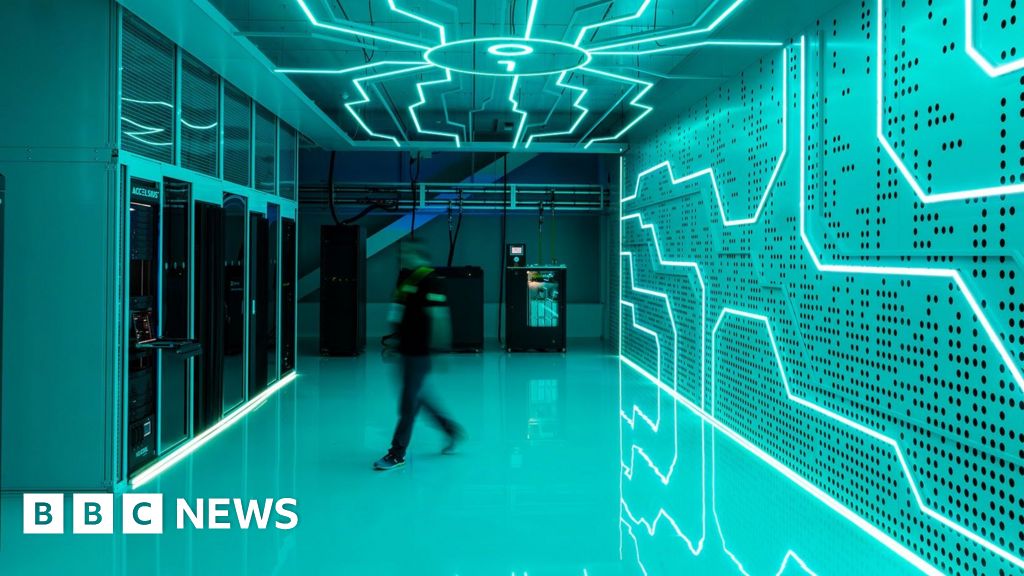
It comes at a time of widespread debate about the technology's value, as well as opposition to a number of proposed AI data centres in Scotland.
Smith told the BBC: "People are up for these developments but we need to see the planning system augmented to take due note of the significant implications of some of these projects, particularly on energy use."
The minister is due to attend a meeting in Edinburgh to hear from businesses about what they feel is holding back AI adoption and what is helping.
The event will also discuss the role of Scotland's universities and colleges in developing the AI and data skills the economy needs.
In September, the Scottish Greens led a debate calling for a pause on planning applications for large-scale AI data centres until national guidance had been published.
The Scottish government officially rejected this, though ministers said consent for such sites was "highly unlikely" to be granted before guidance is updated by the end of this year.
The government said that while there were "legitimate concerns" about large data centres, ministers were increasing oversight of the planning process.
Smith said some of the arguments surrounding the building of large data centres had been leading the conversation about the future of AI in Scotland.
"Some of the discourse we have seen on this is wild," Smith told Radio Scotland Breakfast .
"You'd think there wasn't a planning system at all. Comparing a really bad data centre in the middle of the Utah desert doesn't track through to what we're going to have in Scotland."
BBC Scotland has previously heard from people living near proposed data centre sites who worry about the appearance of developments, potential noise and the amount of land required to build them.
Experts have also warned MSPs that these data centres could push up electricity prices for consumers and challenge climate change targets.
Meanwhile the Scottish Greens say an unregulated expansion of data centres would "enrich giant AI companies and their super-rich owners".
Smith said the Scottish people were "pro-technology", pointing out that the IT industry in Scotland currently employs 87,000 people compared with the 21,000 people employed by the mining industry in 1979.
"Lets just get a grip on this," he said. "The people of Scotland are serious about technological developments. We've got a great industry right now."
He said there needed to be "confidence-building measures" in AI going forward.
"I want to see us get a grip on this debate - focus on the actual facts," he said. "We could get significant community benefit out of these things."
Big, noisy and coming to a town near you - why the data centre backlash is growing
How could AI change Scotland's public services?
Smith said data centres were "the whisky bonds of the AI sector".
"They're an integral part of what the sector needs to be and for tech sovereignty in a really interconnected, but unstable world, I think it's quite important that if you're using a smartphone you ask where your data is being kept. Is it somewhere reliable? Is it somewhere trustworthy?"
Smith admitted that there were not a great deal of jobs created by data centres but emphasised the benefits AI could bring to businesses and the community.
Speaking about the concerns raised over data centres, he said: "Everything will be judged on its merit. People who are expressing concerns about particular developments, so they should. We have a planning system in Scotland that the people are in charge of.
"Not all of these applications are going to go forward because not all of them are suitable or have sufficient community engagement.
"We are a tech-heavy nation. We have got a lot of great jobs in this sector and I want a debate on the merit of these AI data centres."
The minister said a new Workplace Jobs Observatory - led by STUC - could examine in real time how AI was impacting on the workplace.
"This is a technology that is developing at pace," he said. "I want to see ethical guard rails put on it by legislation and want to align with the EU norms."
He said Tuesday's meeting would look at what the Scottish government was doing to adopt the technology and to make sure people had the relevant skills.
"Where there are opportunities for AI I want us to be all over it," he said. "And where there are things that people need to be reassured about I also want to be all over it because I'm here to represent the interests of the people of Scotland."
Julian David, chief executive of techUK, who is also attending the meeting, said: "The opportunity AI offers Scotland is significant, but it will only be realised if businesses and government pull in the same direction.
"Today's roundtable is a chance for industry to share what is working on the ground and for government to listen and act.
"By collaborating, we can help more businesses of every size make the most of AI."
Why are data centres such a big deal in Scotland?
Could a huge data centre revitalise Ayrshire - or ruin it?
Scotland's first AI teacher warns pupils: Don't trust everything it tells you
Topics in this story
Gathered from external sources. Rights to this text belong to whoever originally published it.