In 1976, Japan gave Seattle 1,000 cherry trees; 50 years later, the gift had grown into a cultural festival
Rest of World News: For Seattle, the arrival of spring carries a history that reaches back half a century. In 1976, 1,000 cherry trees arrived from Japan at a time when t.
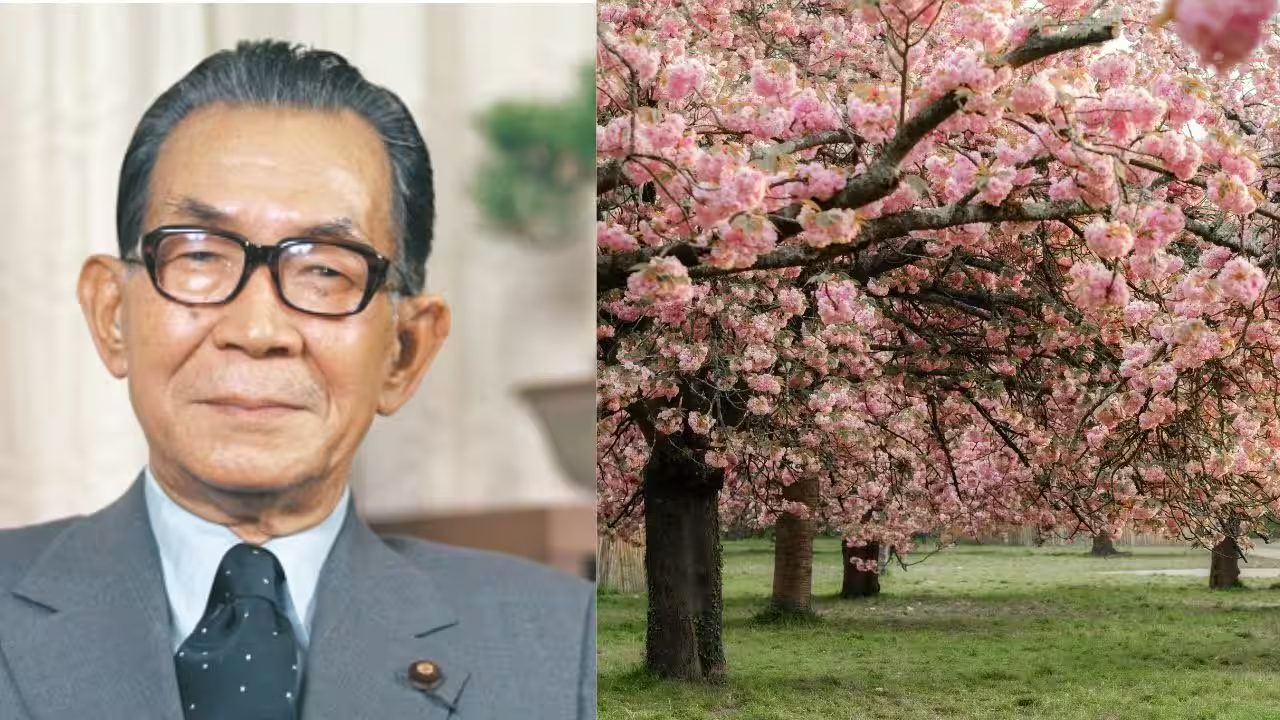
For Seattle, the arrival of spring carries a history that reaches back half a century. In 1976, 1,000 cherry trees arrived from Japan at a time when the United States was preparing to mark its bicentennial. The gift was presented by Japan’s former prime minister Takeo Miki as a gesture recognising the ties between Japan and Washington state. That same day, people gathered at Seward Park for a small celebration beneath the trees, with traditional music, dancing and picnic lunches on the grass. What began as a modest afternoon gathering would eventually become a major annual festival, linking cherry blossoms with a lasting cultural exchange between Japan and the Pacific Northwest.Japan’s 1,000-tree gift to Seattle began a festival tradition in 1976According to the official website Seattle Cherry Blossom & Japanese Cultural Festival, on May 8, 1976, Japan's former prime minister Takeo Miki presented Seattle with 1,000 cherry trees. The gift marked America's bicentennial and recognised the longstanding ties between Japan and Washington state.The trees also provided the starting point for a public celebration. That afternoon, the first festival was held on the grass at Seattle's Seward Park. People brought sack lunches and gathered to watch traditional Japanese music and dance on a temporary stage.The setting was simple. There was no expectation that the occasion would eventually become one of the region's longest-running Japanese cultural festivals.Cherry blossom viewing, or hanami, was part of the cultural connection from the beginning. The falling petals offered a natural setting for a gathering centred on Japanese culture, while the trees themselves became a visible reminder of the relationship between the two places.What began in Seward Park grew into a major cultural eventThe festival did not remain at Seward Park for long. In 1978, it moved to Seattle Center, where it has continued as part of the site's Festál programme.The change gave the event room to grow. What had started as an afternoon gathering developed into a three-day celebration featuring performances, demonstrations, exhibitions, workshops and community organisations.The festival has retained one feature from its early years that remains important to its identity: admission is free. Its purpose is not limited to celebrating the arrival of spring. The programme is intended to introduce visitors to Japanese arts, traditions, history and contemporary cultural life while encouraging connections between Japanese and Pacific Northwest communities.By 2026, the festival was marking its 50th anniversary. Its theme for the year was "Sakura Monogatari – Stories Beneath the Blossoms", looking back at the event's beginnings while pointing towards its next half-century.A three-day programme brings Japanese culture to Seattle CenterThe anniversary programme at Seattle Center runs from April 10 to April 12, with activities scheduled from 11am to 5pm each day.Taiko performances, martial arts, traditional music and other demonstrations form much of the public programme. More than 25 performances and hands-on activities are planned for the anniversary festival, alongside more than 35 exhibitors.As reported by Japanese Cultural & Community Center of Washington Seattle, an exhibition brings together more than 120 works by over 30 local artists, adding another layer to an event that has expanded well beyond its original music and dance performances.The festival's organisers have also brought together groups representing different forms of Japanese cultural practice in the Pacific Northwest. The result is a programme that includes both established traditions and activities shaped by Japanese American and local communities.Sumo, Okinawan crafts and taiko add new dimensions to the 2026 festivalAmong the more unusual additions to the 2026 programme is the Rain City Open, a sumo tournament taking place on Saturday morning. Around 60 competitors from across the United States are expected to take part, with men's and women's divisions.The weekend also includes opportunities to learn directly from visiting artists from Okinawa. Members of the Asato family from Asato Bingata Studio are leading workshops in bingata, a traditional Okinawan textile dyeing method recognised for its elaborate patterns and vivid colours. Participants can make small dyed objects such as bags or coasters and take them home.These activities sit alongside the better-known festival sounds. Taiko groups will perform throughout the weekend, while martial arts demonstrations and traditional music help connect the modern event with the cultural traditions that have been presented since its early years.From a 1976 gift of trees to a 50-year cultural traditionThe cherry blossom celebration now forms part of Seattle Center Festál, a year-round programme of free cultural festivals.Festál brings together 25 community-produced festivals representing different cultural traditions across the Seattle and Pacific Northwest region. Collectively, the programme records about 400,000 visits each year and generates an estimated $30 million in economic activity, according to Seattle Center.That wider setting has given the cherry blossom festival a place within a much broader calendar of cultural events. Yet its origins remain unusually specific: a diplomatic gift of trees in 1976, followed by a small gathering in a Seattle park.The anniversary therefore marks two things at once. It is 50 years since the first festival, but it also traces half a century of public cultural exchange that began with a gift intended to commemorate friendship.How a 1976 tree gift grew into Seattle’s 50-year cultural celebrationCherry trees are now a familiar part of Seattle's spring landscape, making it easy to overlook the particular history behind some of them.The 1976 gift came during the United States bicentennial, when the gesture carried both a cultural and diplomatic meaning. The festival that grew from it has kept that connection at its centre, using the blossoms as an entry point into Japanese culture rather than treating them simply as a seasonal attraction.Over five decades, the scale has changed dramatically. The first gathering involved people sitting on grass with lunches while performers used a temporary stage. The 2026 anniversary includes artists, community groups, workshops, exhibitions, a national sumo competition and performances across Seattle Center.Catch the latest World News and Live updates. Download the TOI app.
Topics in this story
Gathered from external sources. Rights to this text belong to whoever originally published it.