In 1990, Louisiana bricklayer Kenny Hill began a sculpture garden; by 2000, it held 100+ concrete figures and a 45-foot lighthouse built with 7,000 bricks
Discover the unique story of Kenny Hill's sculpture garden in Louisiana, showcasing over 100 concrete figures and a stunning 45-foot lighthouse made from 7,000 bricks. Explore the artistic expressions of faith, culture, and resilience that define this vibrant collection.
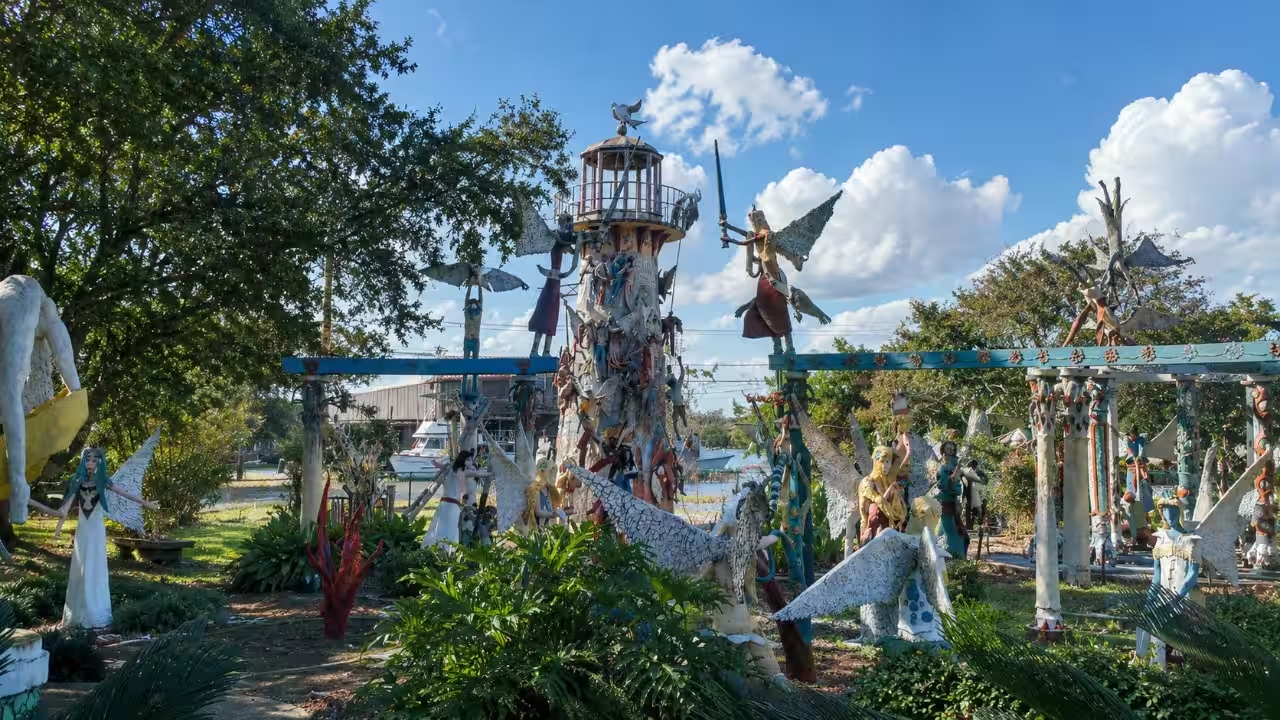
In 1990, after settling on a small plot in 1988, bricklayer Kenny Hill started creating a sculpture garden beside Bayou Petit Caillou in Chauvin, Louisiana. Almost a decade later, the site was filled with more than 100 concrete sculptures picturing biblical figures, angels, and soldiers. By weaving his own self-portraits among these representations of Christ and lost souls, the artist became a living part of the scenes he created. According to Nicholls State University, Hill transformed the site into an artistic expression through religious imagery to personify his personal experience and understanding of life. Hill, who was born around 1950, initially lived in a tent before building a small home there. The garden was laden with American culture described in the form of inscriptions, celestial symbols, and figures. The collection eventually included cowboys, soldiers, God, and angels who were black, white, male, female, or baby.The lighthouse and figures reflected Hill’s personal visionThe most prominent feature of the garden is perhaps the lighthouse made from 7,000 bricks with sculpted figures attached to its exterior; it stands 45 feet above the property. The exterior figures include angels, soldiers, cowboys, God, and a self-portrait of Hill himself.For the figures, the principal material used was concrete, while rebar and bricks also formed part of Hill’s construction work. In terms of their arrangement, the sculptures are arranged differently from one another, as some angels appear to support or lift other figures while others stand like guards at entrances and passages. When it comes to appearance, some are depicted as barefoot; others are blue-skinned, and the rest are dressed in medieval-style clothing.Hill’s own image appears throughout the garden; in different sculptures, he is seen riding a horse, carrying Christ’s cross, or standing with long hair and a beard. One representation shows his face divided between black and white, which has been interpreted as a symbolic struggle between good and evil. However, a definitive explanation of the sculptures remains elusive, since Hill was never outspoken, and when asked by Sipiorski, an art professor, about his vision, Hill responded that he had been told to build the garden but never revealed by whom. He also recalled that Hill resisted the idea of creating art for financial gain and reportedly believed that working that way would undermine his ability to create.Abandonment threatened the garden before its preservationBy early January 2000, Hill had been evicted from the property by Terrebonne Parish for failing to cut the grass and weeds. The actual circumstances surrounding his departure remain uncertain, but the university’s account described him as being troubled when he abandoned his art and, once evicted, left on foot.Hill’s departure left the future of the garden hanging in doubt because technically his work was realised on rented land which he didn’t own. This stood true until Biology professor Gary LaFleur, who regularly passed the property while on transit to the university’s marine research station, recognised the importance of protecting the site. He contacted Sipiorski, who at the time headed the art department, and discussed ways to preserve the collection.Ultimately, their efforts led to the involvement of the Kohler Foundation, a Wisconsin-based organisation involved in preserving art environments. The property was arranged to be purchased by the foundation, which also funded a new art studio on the site. Subsequently, the foundation gifted the garden to the university. In 2002, the site officially opened to the public, and the university took responsibility for maintaining the sculptures.You use AI every day. Now get your AI Quotient. Take the AIQ test.
Topics in this story
Gathered from external sources. Rights to this text belong to whoever originally published it.