Trump says 'some' munitions are low as Iran stalemate grinds on
He also said in an interview with Time magazine that it was possible the US could ramp up strikes on Iran after November's elections.
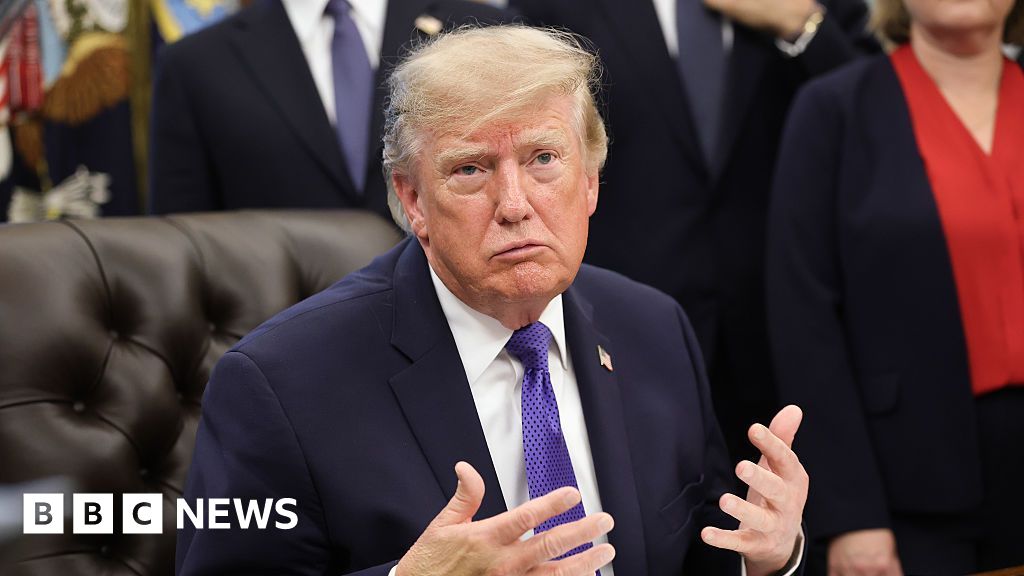
US President Donald Trump has acknowledged that supplies of some munitions "are a little bit lower" as a result of the Iran war but vowed to replenish them to "levels we've never done before".
A report from the Pentagon's inspector general published in mid-July found that the war had led to shortfalls in critical munitions and a bottleneck in resupply.
The US president, however, described the inspector's report at the time as "mostly fake news".
In an interview published by Time on Thursday, Trump also said it was possible the US could ramp up strikes on Iran after the midterm elections in November, despite his previous statements that the US had already achieved victory in the war.
Since the conflict with Iran began in late February, US forces have expended vast quantities of both long-range ground attack systems and the air and missile defences used to intercept Iranian attacks.
The Center for Strategic and International Studies, or CSIS, estimated in July that stocks of some interceptors - such as the Patriot missile and Terminal High Altitude Area Defense, or Thaad - were significantly depleted, in some cases by more than half.
Despite the dire picture of US shortages painted by multiple assessments, Trump insisted in the Time interview that the US was in "great shape" and "stocking up big".
"Some forms of ammunition are a little bit lower than other forms. We have that middle grade and upper middle grade, which is very powerful," he said.
Trump did not offer specifics on which munitions he was referring to, although he did say that US weapons manufacturers were building plants to manufacture Patriots and Thaads "all over the country".
The US president revealed few details about his plans for the future of the conflict with Iran. Over the weekend, Trump said he had rejected an Iranian proposal to reopen the Strait of Hormuz.
"It's just not good enough," Trump told Time of the offer. He added that a resumption of hostilities was "possible" after November's elections, despite the US having done "an incredible job with that."
In early September, Trump had offered a different view , telling reporters he thought the war would "end immediately after the election because they can't hold out any longer" and that he believed Iran was "desperate to try and affect the election".
Recent polling suggests a significant number of Americans blame Trump's policies, including the war, for rising prices domestically.
Only 17% of US adults approved of Trump's handling of the cost of living and only 26% approved of his handling of the broader economy - a new low - in an Associated Press-NORC Center for Public Affairs Research poll that was released on Thursday.
Republican campaign strategists are reportedly worried that negative opinions of Trump will hurt their party's chances in next month's elections, in which control of Congress hangs in the balance.
In the Time interview, however, Trump brushed off polls as "fake numbers" and expressed optimism that he could personally propel Republican candidates to victory in key races next month.
"I think we'll do okay if I campaign, and I intend to," he said, adding that "if I campaign for people, those people are going to win".
Iran war has led to US munitions shortfalls, Pentagon inspector confirms
As the US pauses the war with Iran, is Trump really running out of weapons?
How could US-Iran conflict end? Three experts give their views
Topics in this story
Gathered from external sources. Rights to this text belong to whoever originally published it.