In the 1930s, Canada planted white spruce across native prairie; decades after the trees were removed, scientists found the ecosystem still hadn't recovered
Rest of World News: In the 1930s, white spruce plantations were established on native prairie in what is now known as the ‘Riding Mountain National Park’ in Manitoba. Dec.
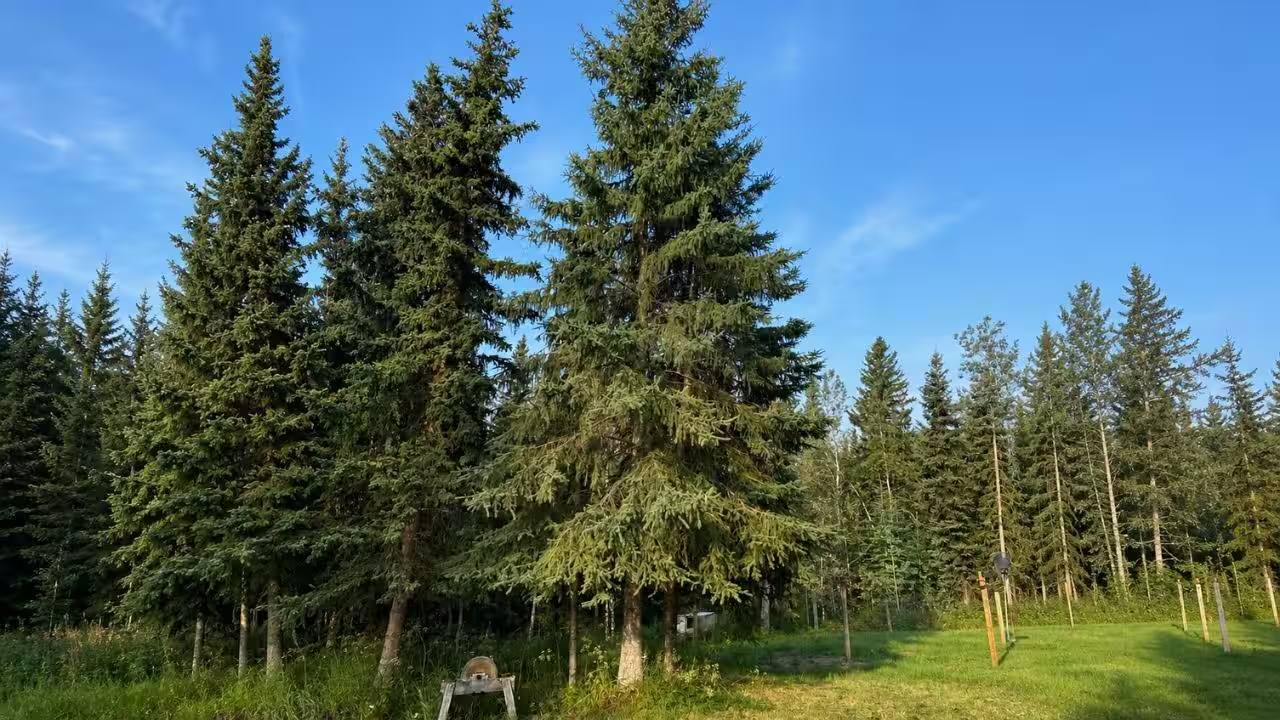
In the 1930s, white spruce plantations were established on native prairie in what is now known as the ‘Riding Mountain National Park’ in Manitoba. Decades later, the plantations were removed in an effort to restore the original northern fescue prairie. But according to a study titled ‘Legacy effects of afforestation on prairie plant and seed bank communities in a northern Canadian prairie,’ taking away the trees did not simply return the ecosystem to its former state. The researchers found that the effects of the plantations continued to shape both the plants above ground and the tiny organisms living in the soil long after tree removal. The findings show how a landscape may begin to look like its old self while important changes remain hidden below the surface. The study offers a long-term warning that restoring native prairie after decades of tree cover may require far more than simply cutting the trees down.Why Canada’s native prairie hadn’t recovered after removing the white spruce treesThe study examined two historic white spruce plantations that had been established between 1930 and 1940 on rough fescue prairie in Riding Mountain National Park. The researchers compared three different parts of these landscapes which includes native prairie that had never been planted with trees, areas where the white spruce plantation remained, and sites where the trees had been removed at different times. This approach allowed the scientists to look beyond the immediate effects of tree removal and ask a more difficult question as to ‘what happens to a prairie when more time passes after restoration begins.’According to the study, planting trees had changed the prairie ecosystem above and below ground. Even after the spruce had been removed, the restored areas did not simply follow a straightforward path back to the conditions found in untouched native prairie. The researchers focused on plant communities as well as soil nematodes (tiny roundworms that occupy different positions in the soil food web). These organisms can reveal changes that are not always visible in the plants growing above ground.Decades of tree cover left lasting changes beneath the soilThe study found that changes in plant communities after tree removal were accompanied by changes in soil nematodes. As the restored sites aged, the balance between different nematode feeding groups also shifted. Nematodes that feed on fungi and bacteria declined over time, while plant-parasitic nematodes became more common and reached levels similar to those recorded in native prairie. This suggested that some parts of the soil ecosystem were changing in the direction of the original grassland. However, recovery was not complete. The study found that the overall diversity of both plant and nematode communities declined over time and was lowest in the oldest restored treatment. That was a striking result because it suggested that simply allowing more years to pass after tree removal did not necessarily lead to a closer match with the native prairie. In other words, restoration was not a straight line from plantation to fully recovered grassland.Could the prairie ever return to its original stateThe findings challenge the idea that removing an ecological disturbance automatically reverses its effects. The white spruce trees were gone from the restored sites, but decades of tree growth had left behind a legacy that continued to influence the ecosystem. A prairie is not defined only by the plants above the surface. Its roots, soil organisms and food webs are also important parts of the ecosystem. When trees replace native grassland for many decades, those relationships can change in ways that are difficult to reverse. The study's results show why restoration projects cannot always be judged by appearance alone. An area may once again contain prairie vegetation while its underground community remains different from that of an undisturbed grassland. The researchers therefore highlighted soil nematodes as useful indicators of restoration. Because these organisms responded to changes in plant communities and the passage of time after tree removal, they provided another way of measuring how the ecosystem was changing.The oldest restored sites still showed signs of ecological changePerhaps the most important message from the study is that time alone does not guarantee ecological recovery. The oldest restored sites did not have the highest overall diversity. Instead, both plant and nematode diversity were lowest there. This does not mean that every part of the ecosystem was moving further away from prairie conditions. These mixed results showed that recovery can occur differently across an ecosystem. One part may begin to resemble the original habitat while another remains altered. That makes long-term monitoring especially important. A restoration project may appear successful shortly after an intervention, yet its ecological direction can change as years pass.Lesson from Canada's altered prairie landscapeHuman decisions can leave ecological effects that persist far longer than the original activity itself. In this case, trees planted on native prairie in the 1930s were eventually removed, yet the prairie had not simply returned to its previous ecological condition. The research showed that the legacy of afforestation remained visible in the structure and diversity of plant and soil communities. The study does not suggest that restoration is pointless. Instead, it reveals how complex the process can be. Removing an obvious pressure is often only the beginning of ecological recovery. For prairie conservation, the findings underline the importance of protecting native ecosystems before major changes occur. Decades after the first white spruce trees were planted, and years after many of them were removed, the prairie was still carrying the ecological memory of what had happened.Catch the latest World News and Live updates. Download the TOI app.
Topics in this story
Gathered from external sources. Rights to this text belong to whoever originally published it.