Gandhi Jayanti 2026: History, Significance, Facts, Celebration and all you need to know
Gandhi Jayanti 2026 is celebrated on October 2 as the 157th birthday of Mahatma Gandhi who was born on October 2, 1869, in Porbandar, Gujarat.
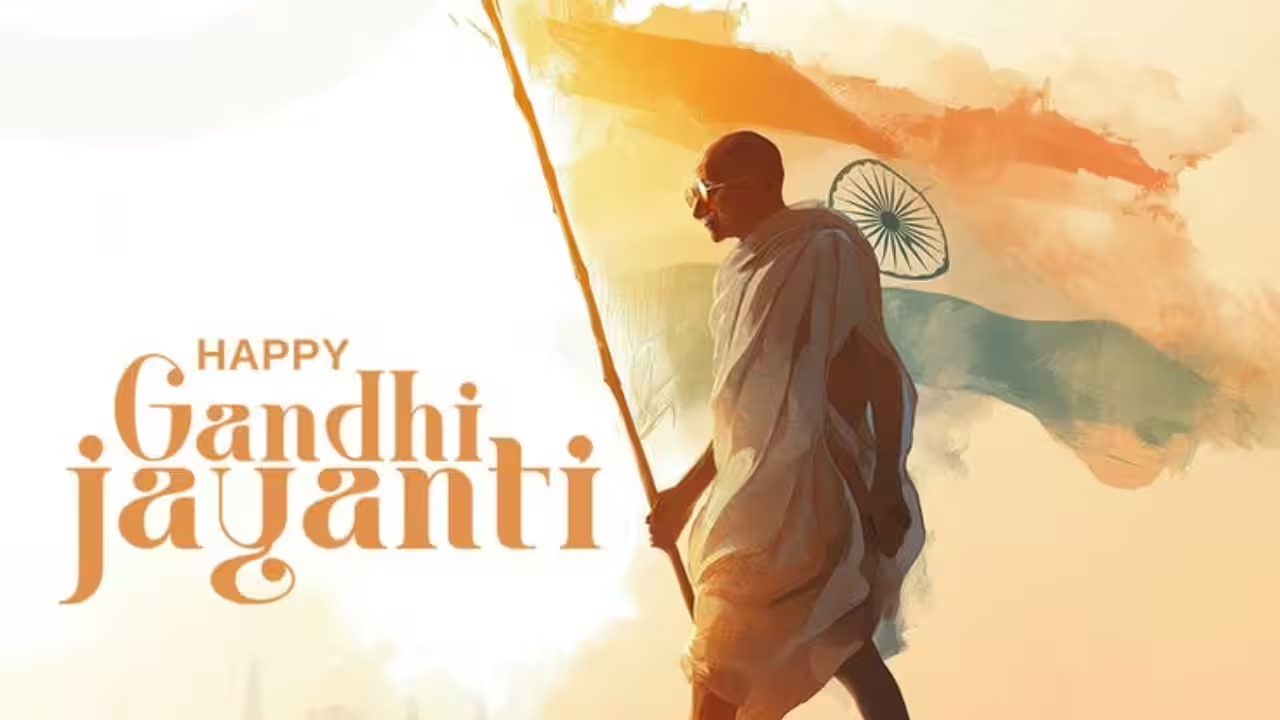
Gandhi Jayanti 2026 is celebrated on October 2 as the 157th birthday of Mahatma Gandhi who was born on October 2, 1869, in Porbandar, Gujarat. On this day, in India, the life of Mahatma Gandhi is honored and his contribution to the struggle for freedom is commemorated. However, on October 2, the United Nations celebrates the International Day of Non-violence around the world.Gandhi Jayanti is celebrated in a variety of ways, from holding memorial services in Rajghat to delivering speeches on peace, non-violence, and the social responsibility of people. Here is all you need to know about Gandhi Jayanti 2026, its history, significance, facts, and celebrations.Why is Gandhi Jayanti celebrated?Gandhi Jayanti is celebrated on the date of birth of Mohandas Karamchand Gandhi, universally known as Mahatma Gandhi. Born on October 2, 1869, in the town of Porbandar, he became one of the most important leaders of the Indian freedom struggle. In addition to that, he is also associated with a unique way of resistance based on truth and non-violence.His technique of Satyagraha, literally meaning resistance based on truth and non-violence, thus became a vital component of various movements opposing British rule.His techniques were later applied in the fights for the civil rights in places far beyond India. This day has a great importance for various reasons, as it is not only the birthday of Gandhi, but it also is a symbol of the ideologies associated with him, such as non-violence, peace, truth, tolerance and social responsibility.History of Gandhi JayantiIn 1869, a Hindu Family blessed with a son in Porbandar in Kathiawad (now Gujarat). He went to London and got trained as a lawyer and got involved in the South Africa in 1893 where he experienced racial discrimination which influenced his political beliefs. Gandhi returned to India in 1915 and got involved in the independence movements. He advocated Swadeshi, a movement promoting the boycott of foreign-made items and peaceful protests of the British rule.He participated in several non-violent political actions, and the most famous one is the 1930 Salt March. A salt march is a journey of Gandhi’s followers from his ashram in Gujarat to Dandi to protest against the salt tax imposed by the British Raj. The protest turned historical as it became part of India’s freedom struggle. Gandhi was shot and killed on 30 January 1948 in New Delhi, and the day is marked as Martyrs’ Day in India.What is the Significance of Gandhi Jayanti?Gandhi Jayanti is significant for various reasons, some of them include:1. Reminder of non-violence: Non-violence was a key element of Gandhi’s political philosophy and action. Gandhi’s various non-violent movements have shown that non-violent massive protests could overt urn successful.2. Celebration of truth and of Satyagraha: Satyagraha is a philosophical concept developed by Gandhi, and its core element is truth. The concept promoted non-violent resistance to injustice and has been practiced in South Africa as well as in India’s independence struggle.3. A link to the freedom struggle of India: Gandhi’s contribution to the freedom struggle of India marks the significance of October 2 in modern Indian history. His various campaigns mobilised a large portion of the population for anti-colonial activities of various types.4. A message of universal significance: His ideas have gone beyond the freedom struggle of India. In 2007, the United Nations declared October 2 as the International Day of Non-Violence and has been using this date as a chance to spread messages of non-violence through education and public awareness.How is Gandhi Jayanti celebrated?Gandhi Jayanti is celebrated through various prayer activities and events in remembrance of the great leader in India. One of the important places related to the celebration of the event is Rajghat, which is situated in New Delhi and has Gandhi's memorial. Official celebrations normally involve paying tributes and conducting a prayer ceremony.On the other hand, schools and educational organizations can also organize additional activities, such as essay writing competitions, debates and discussions, art and poster competitions, Gandhi's life speeches, quiz competitions, prayer meetings, cultural events, etc. The main idea of such activities is to introduce young people to Gandhi's ideas.Why does the day still matter?Over seventy years since Ghandi's demise, Gandhi Jayanti is still one of the significant days of the Indian public calendar. The day’s observance connects the past with the present by bringing discussions about the historical figure as well as about the independence movement into the conversations about non-violence, peace, tolerance, and civic responsibility throughout the world.In 2026, October 2nd will fall on a Friday. But besides being a public holiday, this date presents an opportunity to study the history of the freedom struggle in India as well as the fundamental principles of the philosophy of this prominent Indian figure.Get the latest movie news, reviews, and celebrity updates. Download the TOI App.
Topics in this story
Gathered from external sources. Rights to this text belong to whoever originally published it.