The credentialing cartels are facing their reckoning
When accrediting bodies shift their focus from objective professional competence to specific social theories, they risk losing their government-sanctioned monopolies.
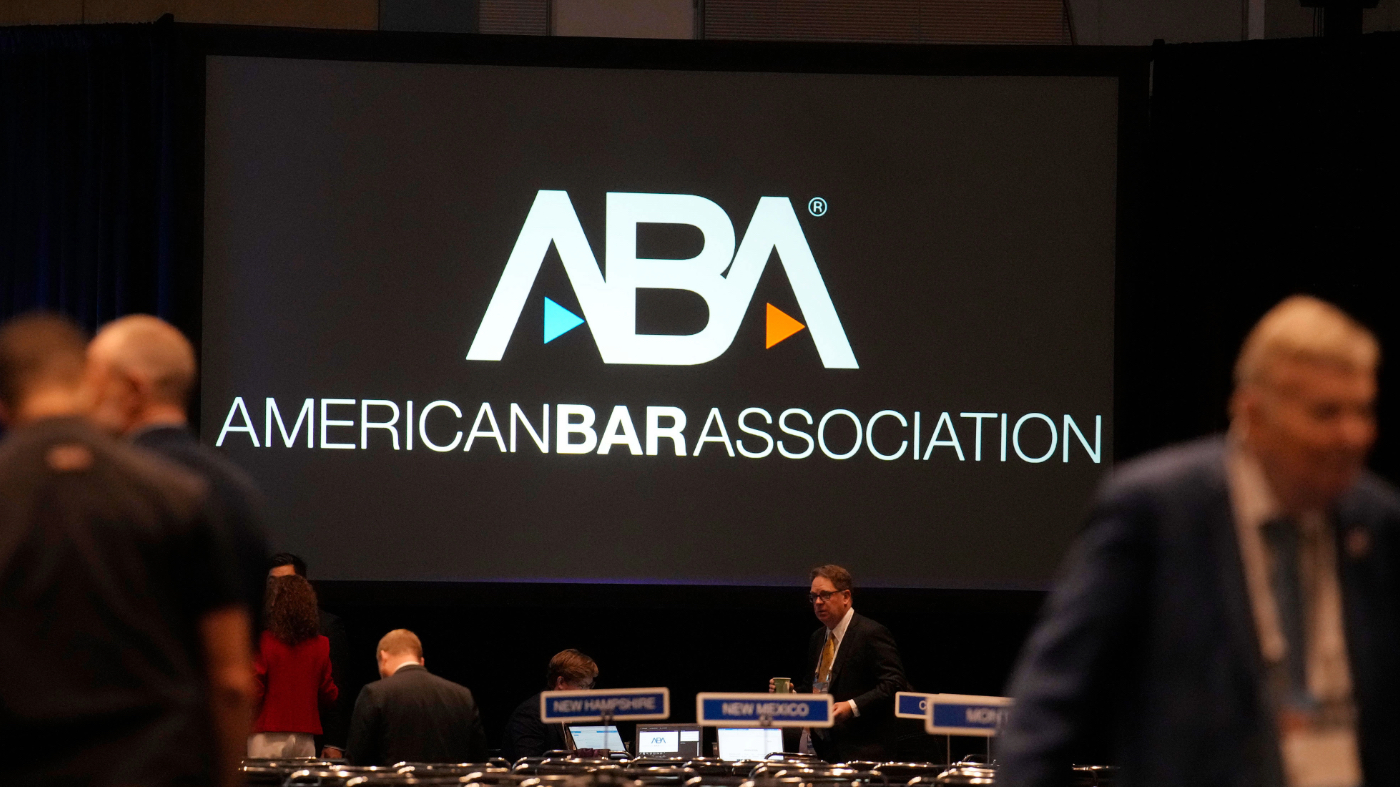
The federal government’s challenge to professional accreditation standards has reached the legal field. The Department of Education recently released a sweeping report recommending that the federal government strip the American Bar Association of its decades-old authority to accredit U.S. law schools. The administration argues that the ABA’s accreditation wing is not sufficiently independent from its parent trade association, resulting in the enforcement of uniform, ideologically driven standards.
I view these developments from a multi-disciplinary standpoint. I have attended medical school, completed graduate medical education, studied law and currently preside over a courtroom as a judge. When accrediting bodies shift their focus from objective professional competence to specific social theories, they risk losing their government-sanctioned monopolies.
The current legal dispute closely mirrors recent actions in the healthcare sector. Last year, the White House issued an executive order targeting the Liaison Committee on Medical Education. This body, co-sponsored by the American Medical Association, oversees medical school accreditation. Like the ABA, the Liaison Committee on Medical Education faced intense criticism for embedding specific diversity, equity and inclusion metrics into professional training standards and faculty goals.
The federal pressure on medical gatekeepers carried catastrophic financial risks, including the loss of student financial aid and Medicare-funded residency payments. In response, the committee chose survival over ideology. The organization removed Standard 3.3 , which required specific diversity programs, and eliminated curriculum mandates regarding systemic social biases. Faced with structural financial consequences, the medical education system chose to preserve its funding, quickly altering its standards to comply with federal directives.
The ABA now faces a similar choice. Early actions indicate a movement toward compliance, though with much greater organizational friction. Shortly after the Department of Education’s report became public, the ABA’s Council on Legal Education scrambled to consider revisions to its diversity rules. This included moving to repeal a standard mandating coursework in cultural competency.
But the ABA faces fierce internal disagreement. Its larger policymaking body, the House of Delegates, previously voted to keep these diversity rules despite explicit federal warnings. This institutional division means the ABA will likely experience a prolonged, painful internal debate before resolving the dispute. Faced with upcoming federal advisory hearings that threaten its entire regulatory role, the ABA will ultimately have to align with federal requirements.
Critics state that direct federal involvement harms institutional autonomy and politicizes higher education. However, the accreditation process itself had already become deeply political. When oversight bodies move away from baseline metrics — such as bar passage rates, clinical skills and scientific literacy — they stray from their primary function.
In medical practice and healthcare leadership, I know that a physician’s primary duty is clinical competence, not social advocacy. The medical side acted practically by complying. By removing specific ideological requirements, medical programs can focus admissions and training strictly on professional merit.
Similarly, from the bench, I see daily that the legal system depends on open, adversarial debate. This environment is restricted when a central authority mandates specific viewpoints under threat of institutional closure.
The American Bar Association should adjust its policies to match federal standards immediately. If the ABA resists, the Department of Education should enforce its recommendations. Ending these single-source monopolies allows for alternative accrediting entities, which will help restore objective merit to professional life.
Eric Wargotz, M.D. is a practicing physician, clinical professor emeritus at the George Washington University, president of MedChi (the Maryland State Medical Society ) and a judge of the Queen Anne’s County Orphans’ Court, Maryland Judiciary.
Topics in this story
Gathered from external sources. Rights to this text belong to whoever originally published it.