Did voters reject Christian nationalism? What the midterm results show
Some in the movement to boost Christianity's presence in public life were voted out of office, but advocates say there's much more work to be done.
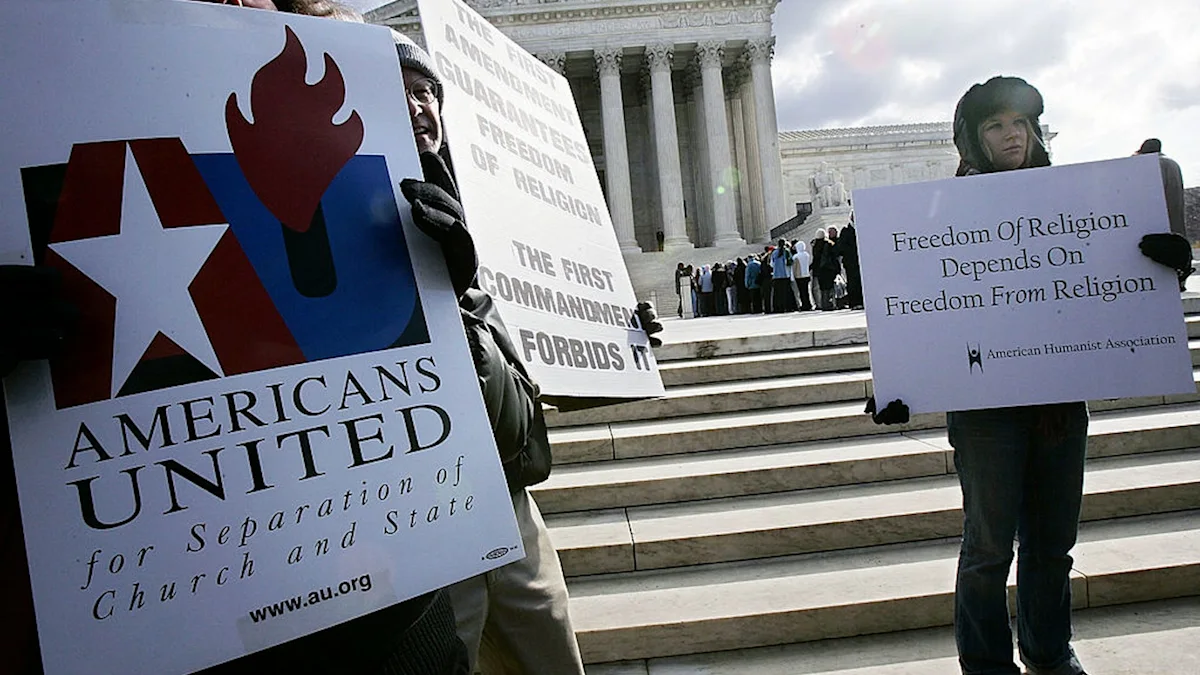
Advocates for the separation of church and state have faced setbacks in recent years, but they say the results of the midterm elections have made them more optimistic about the road ahead.
It was a "huge repudiation of Trump, authoritarianism and Christian nationalism," said Annie Laurie Gaylor , co-founder and co-president of the Freedom From Religion Foundation .
The organization is one of many advocacy groups that have raised First Amendment concerns over efforts by President Donald Trump and his federal and state-level allies to boost their version of Christianity in the public square.
Several states have passed laws requiring Protestant versions of the Ten Commandments to be displayed in public school classrooms, for example, and members of Trump's Religious Liberty Commission frequently criticized what they described as a weaponization of the law against Christians under previous administrations.
The commission published a draft report in June that said religion has often been "treated not as a protected and valued contribution to public life, but as a problem or annoyance to be managed, restricted or sidelined."
Though it has its supporters – such as the Southern Baptist Convention's Ethics and Religious Liberty Commission , which said it "commends and supports many of the recommendations" in the report and that the commission "demonstrates a commitment to ensuring the retention and protection of the American value of religious liberty" – the commission has also faced heavy criticism from groups who say its work promotes Christian nationalism.
Interfaith Alliance, along with organizations including Muslims for Progressive Values and Hindus for Human Rights, sued the administration over the commission in February, arguing that it had an illegal lack of diversity by only having Christian and Jewish commissioners. A federal judge dismissed the lawsuit in July.
But now, Guthrie Graves-Fitzsimmons, Interfaith Alliance's vice president of programs and strategy, says it's a "beautiful day for religious freedom for all in America."
He and others who spoke to USA TODAY said the midterm elections could reshape the landscape for religious freedom, though they said the incoming Congress and state leaders have much work to do to reverse what they view as backslides for religious freedom in recent years.
Texas charting a 'new course for religious freedom'
They were especially heartened by results from Texas , where the "blue wave" – or "blue tsunami," as some pundits have called it – was particularly notable.
"In a state like Texas, where the Christian nationalism debate has been front and center and the fusion of far-right Christianity into public education has been so central, it's safe to say voters resoundingly rejected Christian nationalism in this election," said Rachel Laser , president and CEO of Americans United for Separation of Church and State .
Republican Gov. Greg Abbott, who signed the state's Ten Commandments legislation into law in June 2025, was voted out of office . He, along with Florida Gov. Ron DeSantis , also designated the Council on American-Islamic Relations, a Muslim civil rights group, as a foreign terrorist organization in late 2025.
A federal lawsuit in Texas accused the state of unconstitutional religious discrimination when the designation led to Islamic private schools initially being excluded from the state's school voucher program on the basis of a perceived affiliation with CAIR.
Texas Gov.-elect Gina Hinojosa, who will be the state's first Democratic governor in more than 30 years, opposed the Ten Commandments bill .
Texas Lt. Gov. Dan Patrick, who Trump named as chair of the Religious Liberty Commission, also lost his reelection bid .
Senator-elect James Talarico , a progressive Presbyterian who has called Christian nationalism a "betrayal of Jesus," defeated Texas Attorney General Ken Paxton, who has rejected the notion that the Constitution requires a separation between church and state and sued to prevent CAIR from operating in Texas. Talarico proclaimed, "We defeated Goliath," in his victory speech.
"As Texas charts a new course for religious freedom, it will be a shining light for the whole nation," Graves-Fitzsimmons said.
Who is James Talarico? Meet the new Texas Senator
Concerns are 'not going to evaporate' despite midterm wins
Now that the midterms are over, advocates said the focus must shift to reversing the efforts of the past few years and preserving religious freedom for the long haul.
"We are going to have to do a lot of work to keep this going in two years," Gaylor said.
Steven Emmert , executive director of the lobbying group Secular Coalition For America , said his organization intends to work with the new lawmakers, as well as existing ones, to promote a separation between church and state. He would like to see more lawmakers join the Congressional Freethought Caucus , which currently has around three dozen members and has a shared mission.
He also hoped the election would prompt lawmakers to recognize the growing influence of religious "nones."
"Part of the work of SCA is to make sure they become aware of that, because clearly it's going to matter in future elections as well," he said.
BrieAnna Frank's role covering First Amendment issues at USA TODAY is made possible by a collaboration among Freedom Forum, Journalism Funding Partners and the USA TODAY Network. Freedom Forum does not provide editorial input. Reach BrieAnna at bjfrank@usatoday.com and @brieannafrank on X and Bluesky.
Topics in this story
Gathered from external sources. Rights to this text belong to whoever originally published it.