Trump invokes executive privilege in Kennedy Center court fight
The White House is asserting executive privilege to block some records of President Trump’s communications from being shared in an ongoing lawsuit over the future of the Kennedy Center. Rep. Joyce Beatty (D-Ohio), an ex officio board member who is challenging plans to close the performing arts center for renovations and add Trump’s name to…
The White House is asserting executive privilege to block some records of President Trump’s communications from being shared in an ongoing lawsuit over the future of the Kennedy Center.
Rep. Joyce Beatty (D-Ohio), an ex officio board member who is challenging plans to close the performing arts center for renovations and add Trump’s name to the building, is seeking documents about Trump’s involvement in decisionmaking.
In a Wednesday court filing , White House deputy counsel Joshua Hoyt invoked executive privilege over any “information, documents and communications” shared between Trump, his advisers and the Kennedy Center staff pertaining to its “management and operation,” as well as certain deposition testimony.
“The communications that Plaintiff seeks are those between the President, his advisors, and/or employees of the Kennedy Center who provided advice to the President and his staff concerning the President’s duties and the effective functioning of the Kennedy Center,” Hoyt wrote. “These communications were intended to be confidential and have remained confidential.”
Beatty’s lawyers have said invoking the privilege would be “unprecedented,” arguing that Trump’s communications fall outside the scope of executive privilege because he is being sued in his capacity as chair of the board, not as president.
“Donald Trump is the chair of a non-profit corporation’s board, and his decisions and directions lie at the heart of that board’s actions which, in turn, are the subject matter of this case,” they wrote in an Oct. 5 motion , asking a federal judge to compel discovery.
“Allowing Defendants to hide behind this unwarranted assertion of privilege would obstruct the search for the truth, frustrate the Court’s discovery order, and undermine public confidence in these important proceedings.”
The Department of Justice (DOJ) has dismissed Beatty’s inquiry as an overbroad “fishing expedition.”
Trump named himself chair of the renowned arts and culture institution last year after firing several members of the board and replacing them with a handpicked slate of administration officials and allies.
The board voted last November to add Trump’s name to the building’s facade, a move reversed by U.S. District Judge Christopher Cooper this spring. Cooper ordered the president’s name to be stripped from the building and has blocked subsequent attempts to display it in different forms.
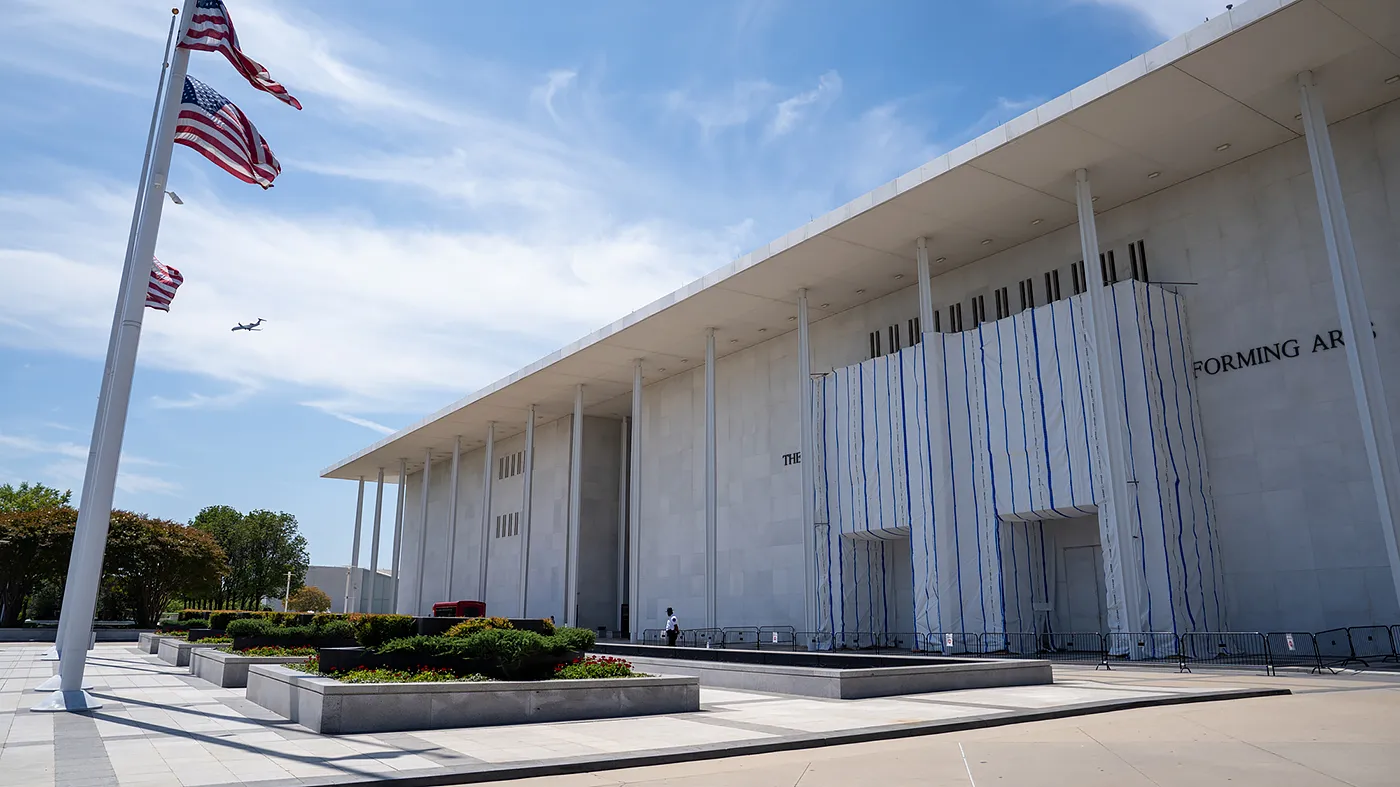
The Kennedy Center is closed temporarily for renovations, as officials say the building is in serious disrepair and unsafe for visitors. The administration, including Trump, has raised the possibility of it being torn down if plans for a longer closure are stopped.
Trump was spotted last month through the window of Air Force One looking at a poster board that appeared to say “Kennedy Center DEMOLISH” on it.
The DOJ has also described the president as the center’s “sole hope” for financial survival, suggesting that the addition of his name is inextricably tied to fundraising efforts.
Topics in this story
Gathered from external sources. Rights to this text belong to whoever originally published it.