Democrats, with House majority, would go big on healthcare
House Democrats are promising immediate action on healthcare next year if they flip control of the chamber in the midterm elections. Party leaders say health costs are a foremost priority of their broader affordability agenda. And the top Democrats on the numerous committees that oversee federal healthcare programs are all preparing to tackle the issue…
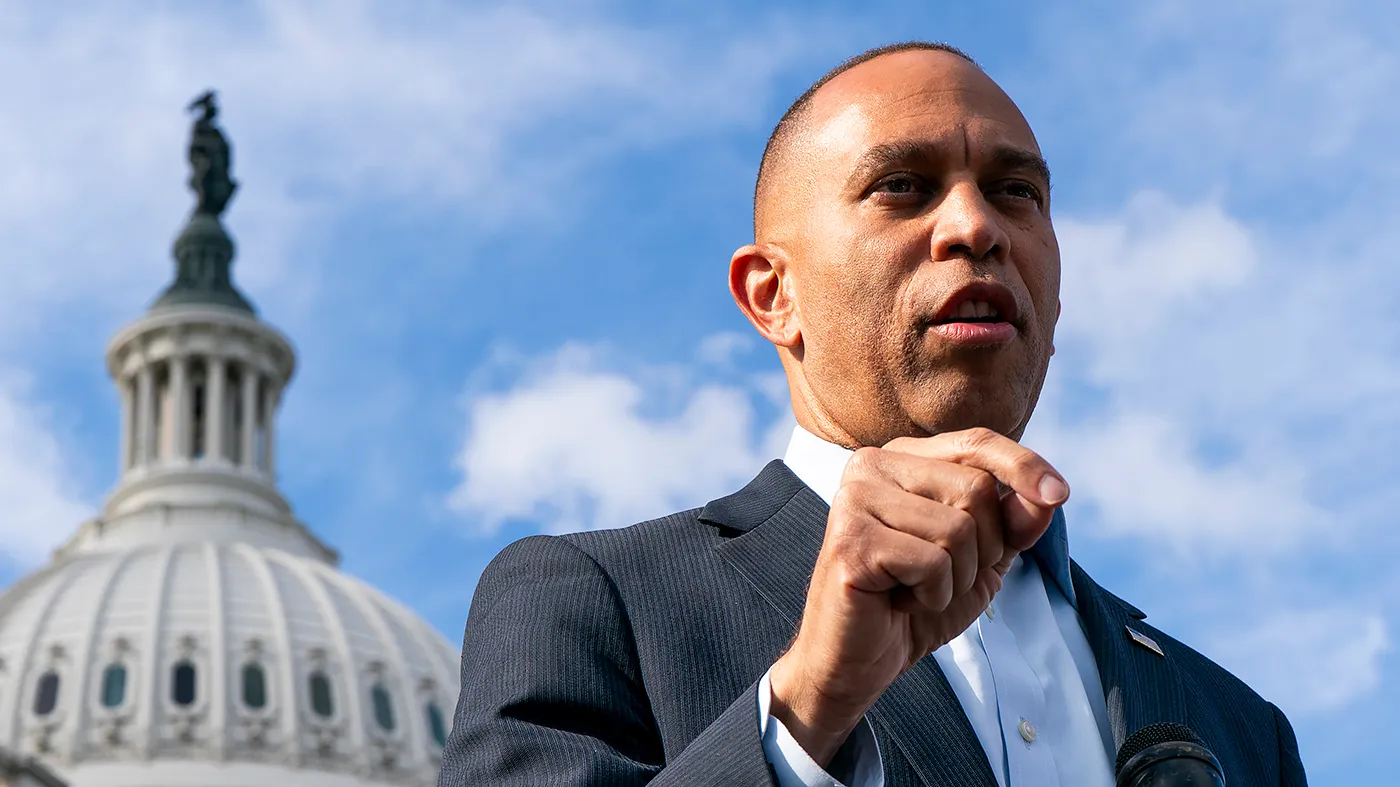
House Democrats are promising immediate action on healthcare next year if they flip control of the chamber in the midterm elections.
Party leaders say health costs are a foremost priority of their broader affordability agenda. And the top Democrats on the numerous committees that oversee federal healthcare programs are all preparing to tackle the issue in the earliest phases of the next Congress.
“I see that as priority No. 1: Saving the healthcare of the American people,” said Rep. Brendan Boyle (D-Pa.), who’s in line to chair the Budget Committee if Democrats win the House majority.
The issue has resonated on the campaign trail all cycle, especially after President Trump and Republicans slashed health programs as part of last year’s One Big Beautiful Bill Act, then allowed ObamaCare subsidies to expire in January. Polls indicate health costs are among the top issues — if not the top issue — on voters’ minds heading into the polls next month.
Democrats have seized on those anxieties, making healthcare a primary plank of their midterm pitch. Now, as the election odds continue to shift in their favor, those Democrats in line for gavels are already eyeing plans to pounce on the issue as a first order of business next year.
The push will feature legislation to reverse the Republican cuts and revive the Affordable Care Act (ACA) subsidies. But it also promises to extend much further than that, with efforts to expand paid medical leave and long-term care while challenging the controversial vaccine policies of Health and Human Services (HHS) Secretary Robert F. Kennedy Jr.
Even House Minority Leader Hakeem Jeffries (D-N.Y.), who has been exceedingly careful not to telegraph the specifics of the Democrats’ game plan for the majority, has made an exception on the healthcare front, telling reporters over the summer that it will be an early item on the agenda.
“We have made clear that we’re going to aggressively focus on making life more affordable, and I think we should begin in the areas where we know there is uniform Democratic support,” he said before the long recess. “We have to reverse the Medicaid cuts, [and] we should extend the Affordable Care Act tax credits.”
The Medicaid issue will be timely in January, since the bulk of the cuts in the One Big Beautiful Bill don’t take effect until December, after the elections.
“That means that if we Democrats win the majority in November, and I get the gavel on Jan. 3, the Medicaid cuts will just be starting at the moment that I’m taking over as chair,” Boyle said. “I want to reverse every single healthcare cut that was contained in that bill.”
Rep. Richard Neal (D-Mass.) is poised to chair the powerful House Ways and Means Committee next year if the lower chamber changes hands. The panel has jurisdiction not only over a huge chunk of healthcare policy, including traditional Medicare, but also oversees federal tax policy. The combination puts Neal in a unique position to juxtapose those two issues, and he intends to use it to highlight the GOP’s decision, as part of the One Big Beautiful Bill, to cut low-income healthcare benefits to help offset tax cuts for corporations and well-heeled Americans.
“It becomes a different paradigm if all of a sudden, you’re being asked to cut healthcare so that you can offer tax cuts to wealthy people,” he said.
But Neal is hardly stopping there. He also expressed a strong interest in expanding federal funding for long-term healthcare services, which are getting more attention — and growing more important — as Americans live longer lives.
“There’s a complement to that, and it’s more dementia, more Alzheimer’s, more people are going to be needing [long-term care],” he said. “There is likely to have to be a government — a substantial government role in it.”
The Democrats’ healthcare wish list has little chance of becoming law, even if Democrats manage to win control of both chambers in November, because Trump will remain in power for the duration of the next Congress. But Democrats could use those issues as leverage in broader fights over government spending, as they did in forcing a 43-day shutdown last year over the ObamaCare subsidies.
Additionally, the debate surrounding those proposals is certain to become a part of the 2028 presidential race, which will kick off early next year, when the Democratic hopefuls are sure to make popular healthcare programs a major part of their platforms. In that sense, the House Democrats’ healthcare agenda will also serve as a form of campaign promise — and a glimpse at what the party might do if voters give them the House, Senate and White House in 2029.
The House Energy and Commerce Committee will be a major player in that conversation because of its outsized hand in healthcare policy and oversight, including jurisdiction over Medicaid, the National Institutes of Health (NIH), the Food and Drug Administration (FDA) and the Centers for Disease Control and Prevention (CDC).
Rep. Frank Pallone Jr. (D-N.J.), who’s in line to lead the panel if the House flips, has been a persistent critic of the administration across each of those departments and subagencies. As a preview of his intentions, Pallone has bashed the GOP’s cuts to Medicare and Medicaid; hammered reductions in medical research as a threat to public safety; and challenged limits on mifepristone, an FDA-approved drug used in medication abortions.
Pallone has also raised alarms over the administration’s handling of a deadly measles outbreak in Pennsylvania, which could become a flash point in a presidential cycle where Josh Shapiro, the state’s Democratic governor, is expected to make a run.
Recent polls indicate that, for Democrats, healthcare is a winning issue. Family healthcare costs have risen steadily in recent decades, far outpacing inflation, and the trend is expected to get worse next year, when premiums are projected to jump again by double digits.
The factors behind the increases are varied, including the rising popularity of weight-loss drugs, consolidation within the industry and general inflation. But the expiration of ACA subsidies is among those factors, and voters appear to blame Republicans for the trend.
A survey released this week by KFF found that 60 percent of respondents are anxious about healthcare costs, and 42 percent of those people trust Democrats to address the problem, versus 22 percent who trust Republicans. (Twenty-eight percent trust neither party).
Rep. Bobby Scott (D-Va.), the ranking member of the House Education and Workforce Committee, which also has jurisdiction over certain pieces of healthcare policy, said Democrats won’t waste time responding to those voter concerns if the House changes hands in the new year. Among the priorities, he said he’ll be pushing to enhance family medical leave and restore the ACA tax credits.
“It’s a full agenda,” he said. “We have to undo what was done but then get back on the positive agenda.”
Topics in this story
Gathered from external sources. Rights to this text belong to whoever originally published it.