Congress can reclaim its spending and war powers by revising two policies
Lawmakers must learn from congressional history and reassert their authority to check executive abuse, particularly on the power of the purse and war-making.
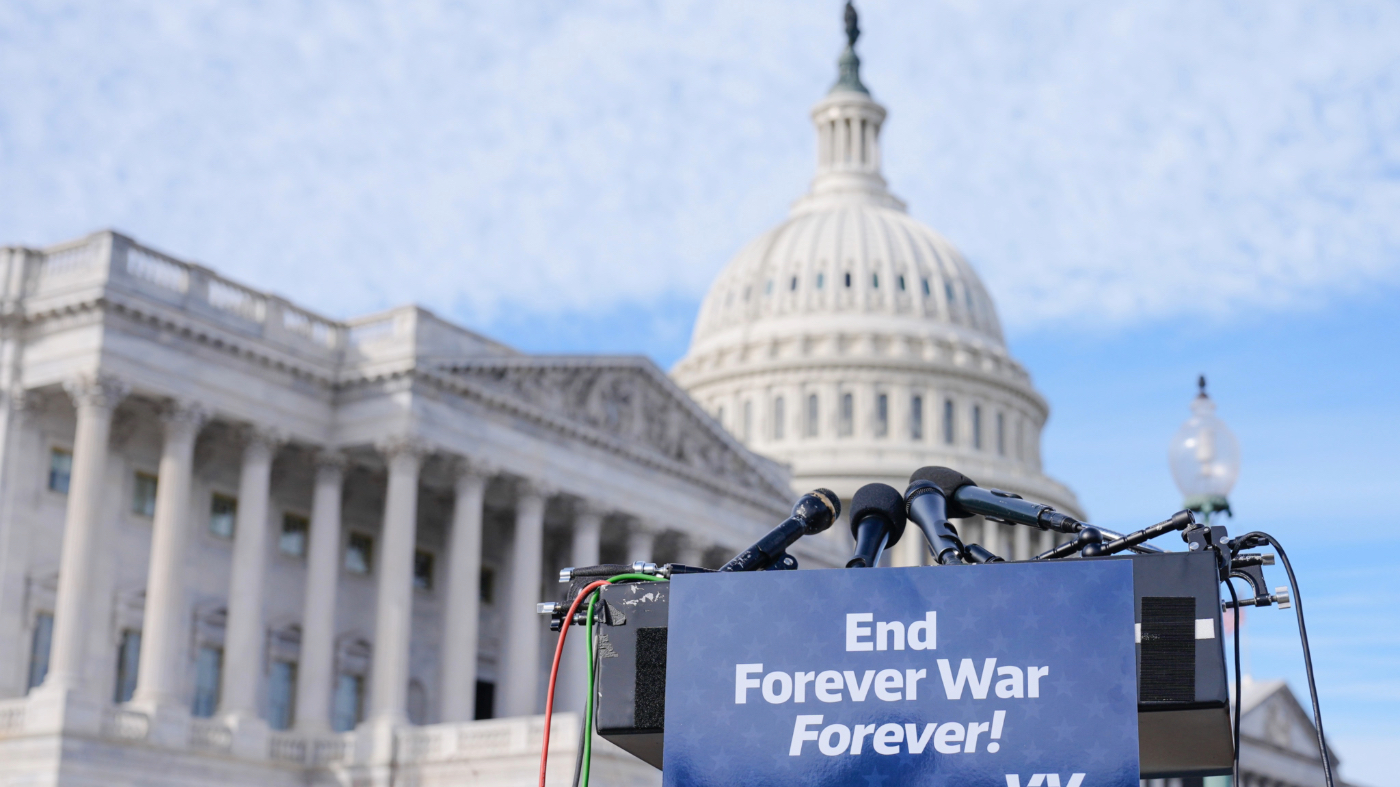
In one of his latest examples of executive overreach, President Trump cancelled $810 million in congressionally authorized spending , yet again undermining Congress’s power of the purse.
From funding freezes to illegal wars, Trump has repeatedly tried to seize Congress’s constitutional powers throughout this term. The Government Accountability Office pushed back on the recent cancellation. And there are finally signs that Congress is starting to get fed up. Lawmakers from both parties are reportedly discussing how to adjust future spending bills to make sure this doesn’t happen again.
But Congress must go much further in clawing its power back. Lawmakers must learn from congressional history and reassert their authority to check executive abuse, particularly on the power of the purse and war-making.
The framers envisioned Congress as the foundation of the U.S. government, equipping it with the power to decide how taxpayer dollars are spent. While presidents and Congress have always engaged in a push and pull over funding, Trump is trying to burst through the remaining guardrails.
His approach harkens back to the 1970s, when President Richard Nixon refused to spend billions of dollars of approved congressional spending. In response, Congress passed the Impoundment Control Act , which reinforced its spending power by explicitly requiring the president, in most cases, to spend the funds Congress appropriates.
But presidents have manipulated vague parts of the law to justify funding freezes. In Trump’s second term, his administration has significantly escalated these tactics, gutting funding for independent agencies as well as delaying or withholding hundreds of billions of dollars of congressionally approved funds for foreign aid and more.
In many cases, courts have successfully intervened to force the administration to spend congressionally approved funding. However, Congress must enact proactive measures to ensure presidents abide by constitutional limits on power.
A first step could be for Congress to overhaul the Impoundment Control Act to remove ambiguities that this administration, and others, have used to justify withholding or delaying funding. Congress should also bolster its oversight abilities to make sure funds are being used and distributed appropriately. And in the aftermath of President Trump’s use of private donations to fund dubious projects like the White House ballroom, Congress must set stronger guardrails on when presidents can use private funding for projects, a process which allows them to bypass normal appropriations processes.
Another area where Congress must reclaim its constitutional prerogatives is war powers. The framers equipped Congress with exclusive powers to make laws and set national policy. The Constitution gives Congress, not the president, the power to raise, support and regulate the military and declare war.
At the tail end of the Vietnam War, Congress reaffirmed its authority over matters of war and peace by passing the War Powers Resolution , which recognizes that the president may use military force only when Congress has declared war, after Congress has passed an authorization for use of military force or when there is a “national emergency created by attack” against the United States. The law also requires the president to notify Congress of new hostilities within 48 hours and to terminate military operations if Congress has not authorized them within 60 days.
Despite Congress’s use of the War Powers Resolution to terminate the Trump administration’s illegal Iran War, the law has been an insufficient check on unauthorized conflict. Since the Vietnam War, presidents have overstepped the boundaries of their war authorities, Congress has struggled to rein in overly broad interpretations of presidential power and the courts have largely refrained from reviewing executive decisions concerning war powers.
President Trump alone has launched unlawful hostilities in Iran , Venezuela , Ecuador and elsewhere, all while stonewalling and even threatening congressional overseers. It took a full three-and-a-half months for Congress to take some steps to rein in the Iran War, and now months later the conflict roars on.
These challenges speak to the importance of Congress not only acting on Iran but also bolstering the War Powers Resolution to strengthen that law’s constraints. Experts agree on solutions including shortening the law’s 60-day window, clarifying key terms such as “hostilities” and adding a judicial review provision to ensure that courts are empowered to correct misinterpretations of the law and rein in abuse.
Half a century ago, when Congress passed the Impoundment Control Act and War Powers Resolution, it was doing so to stand up to a president who had stepped far outside the bounds of his authority. As Rep. Elizabeth Holtzman, who served in Congress during the 1970s, put it : “There were a lot of bills that became law which were in response to Nixon’s arrogation of power. Congress had finally said ‘enough is enough.’” Now, following decades of constitutional abdication and deference, the institution once again faces a president with seemingly no regard for separation of powers.
It is time for Congress to dust off and reclaim its constitutional authority — not only on this most recent canceled spending but on war powers and spending, generally — so it can be the people’s branch Americans deserve.
Maya Kornberg is a senior research fellow in the elections and government program at the Brennan Center for Justice at NYU Law. She is also the author most recently of “Stuck: How Money, Media, and Violence Prevent Change in Congress.”
Topics in this story
Gathered from external sources. Rights to this text belong to whoever originally published it.