MARK HALPERIN: Trump picked Warsh and Bessent to fix the economy. Now they may collide
Kevin Warsh's rate hike could make Scott Bessent's job financing government debt much harder, setting up a collision course within Trump's team.
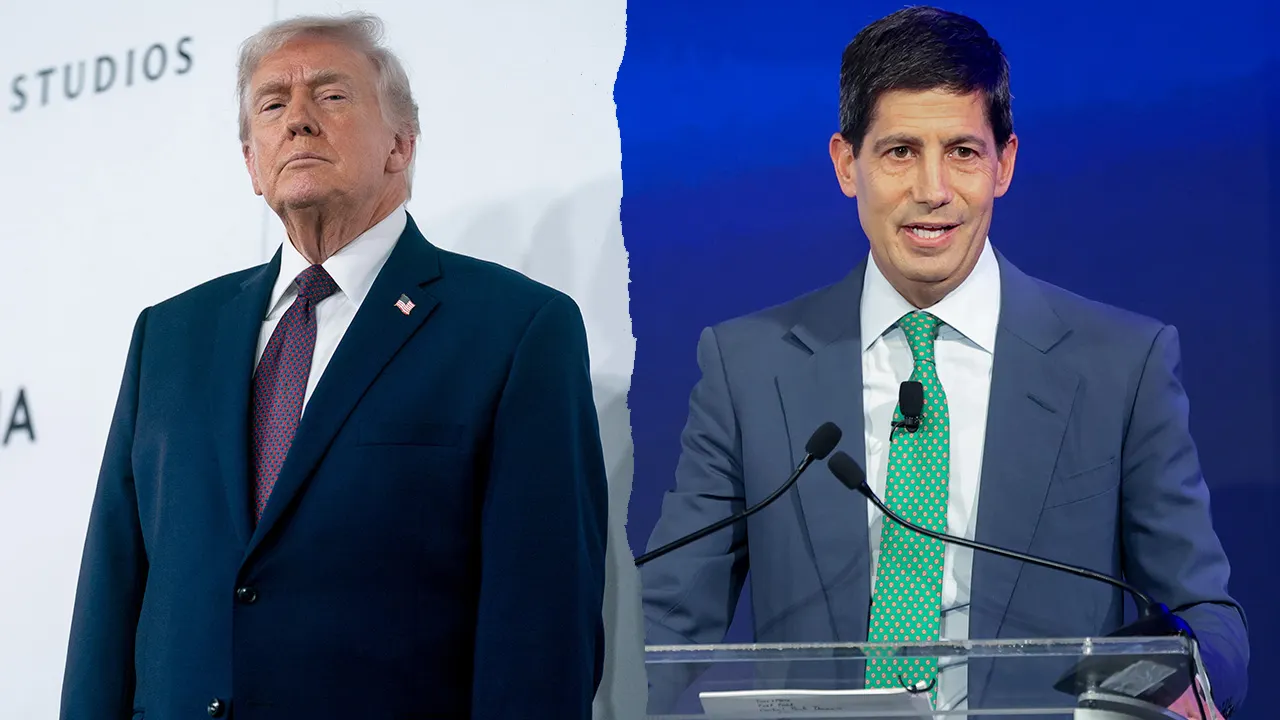
Kevin Warsh and Scott Bessent looked, at the start, like a pairing that might give Donald Trump the economic team he wanted. Both talked about the possibility that faster growth could coexist with less inflation. Both wanted to rethink the relationship between the Federal Reserve and the Treasury. Bessent helped oversee the search that put Warsh in the Fed chairmanship. It was easy to imagine the two working closely together. Six months later, it is now easier to imagine them on a collision course. Warsh raised interest rates during last month's Fed meeting to fight inflation. Bessent has been trying to contain the cost of financing the government’s debt. Usually, those jobs can be carried out without one man making the other’s life miserable. The alarming possibility, laid out in a recent analysis by financial researcher Luke Gromen, is that Warsh’s efforts to do his job could make Bessent’s much harder. THE FED JUST THREW A WRENCH IN TRUMP'S MIDTERM ECONOMIC MESSAGE We all know the conventional expectations. The Fed raises short-term rates. Investors have become more confident that inflation will come down. They buy longer-term Treasury bonds, bringing down the yields on those bonds and, eventually, the rates paid by homebuyers and other borrowers. Gromen thinks that expectation may no longer hold. The country has a great deal of debt to sell, and the people buying it are not all the patient investors of old. Hedge funds own a growing share of Treasuries, often with borrowed money. If a rate hike shakes the markets, some may have to sell. A stronger dollar could put pressure on foreign holders of American debt, prompting them to sell as well. More bonds for sale mean lower bond prices and higher yields. TRUMP’S $5K CHECKS COULD JOIN STACK OF PAST UNFULFILLED PROMISES, FORMER CONGRESS BUDGET CHIEF WARNS That is Gromen’s theory, but it is far from universally accepted. However, the question for Warsh and Bessent is too consequential to dismiss because the answer has yet to be established. What if raising rates makes mortgages more expensive, increases the government’s interest bill and fails to calm the bond market? Bessent must keep finding buyers for Treasury debt, including debt coming due that has to be replaced with new borrowing. If the government has to pay more to attract those buyers, its interest costs rise. If higher rates then slow the economy, tax receipts could suffer and the government could need to borrow still more. That is the danger Gromen sees: an attempt to contain inflation that leaves the country paying more to finance a larger debt. FED RAISES RATES FOR FIRST TIME IN YEARS: WHAT IT MEANS FOR YOUR WALLET Bessent and Warsh could soon face an extraordinarily uncomfortable choice. Amidst mixed macroeconomic signals, Warsh might believe inflation requires another hike. Bessent might be watching Treasury yields climb and wondering how much more pressure the market can take. One would be trying to make money more expensive; the other would need the government to borrow it cheaply. Their early agreement about the economy would not settle that argument. Nor could either count on Trump to referee it quietly. The president wanted lower rates and a stronger economy heading into the midterms. He got a rate increase instead. He picked Warsh, and he picked Bessent. If their approaches begin to clash, Trump will want a solution that does not require him to choose between fighting inflation and making borrowing cheaper. There may be no such solution. REPUBLICANS JUST GOT A POWERFUL NEW PLAYBOOK FOR THE BATTLE FOR CONGRESS. HERE'S WHAT'S INSIDE The political consequences are plain enough. A president can explain why an independent Fed made a decision he disliked. He will have a harder time explaining why mortgage rates remain high after his Fed chairman raised rates to bring them down. "The bond market is behaving differently than we expected" is a serious explanation. It is unlikely to comfort a family that has just calculated the monthly payment on a house. CLICK HERE FOR MORE FOX NEWS OPINION There are less dire possibilities. Inflation could ease. Investors could decide Warsh’s resolve makes long-term Treasuries more attractive. Yields could fall, giving Bessent breathing room and Trump the relief he wants. Gromen could be wrong about how the market responds from here. CLICK HERE TO DOWNLOAD THE FOX NEWS APP But if Gromen is right, the coming dispute will not chiefly be Trump versus Warsh, the familiar story of a president who wants cheap money and a Fed chairman who says "no." It will be Warsh versus Bessent: two men who appeared destined to be allies, confronting an economy in which the remedy one considers necessary may aggravate the danger the other is trying to prevent. CLICK HERE TO READ MORE FROM MARK HALPERIN
Topics in this story
Gathered from external sources. Rights to this text belong to whoever originally published it.