Aviation security has an over-screening problem
The 25th anniversary of 9/11 is now behind us. Though the effects continue, recent proposals by the Transportation Security Administration (TSA), described in its Horizon 25 Strategy, suggest that more changes are coming. What remains to be seen is whether such changes will keep the nation’s air space safe.
The 25th anniversary of 9/11 is now behind us. Though the effects continue, recent proposals by the Transportation Security Administration , described in its Horizon 25 Strategy , suggest that more changes are coming. What remains to be seen is whether such changes will keep the nation’s air space safe.
Having spent 30 years studying risk-based aviation security , including research that provided the technical foundation for TSA PreCheck , I have gained a deep appreciation for how the agency must navigate the tension between system security and passenger convenience. To achieve absolute security would require more intense passenger screening that would slow the system and handicap air travel. If passenger convenience is maximized at the expense of security, the air system would become unacceptably vulnerable. Both these extremes are undesirable, hence the TSA must traverse a path that balances between them.
Recent TSA actions indicate their interest in loosening some existing security protocols, all in the name of passenger convenience. Objectively, tightening security is straightforward, while relaxing security is challenging. The question is whether these relaxations create an unacceptable increase in system risk, given that they were designed to respond to threats that emerged in the past
The TSA footwear removal policy grew out of the Richard Reid “shoe bomber” threat in December 2001 . In July 2025, the TSA announced that passengers would no longer be required to remove their footwear when undergoing fully body screening through millimeter wave machines . These machines have limited scanning capabilities around a passenger’s foot area, which is why dedicated shoe scanners are under development , making the footwear policy premature.
Moreover, results of testing and analysis, including red teams, that would assess whether relaxing shoe removal would create additional security vulnerabilities have not been reported. PreCheck passengers are not routinely required to remove their footwear; however, these travelers have gone through background vetting, reducing their risk footprint, which warrants such a physical screening relaxation.
The TSA launched a remote screening terminal in Framingham, Mass., in June 2026, which allows Delta and JetBlue passengers to be screened, after which they are bussed directly to the sterile side of Boston Logan International Airport. Over the first two months of the program, more than 10,000 passengers have taken advantage of this remote terminal, with discussions underway to add other remote screening options . The risks associated have been well documented. Limiting participation to PreCheck passengers would have been the correct implementation, given that walk-through metal detectors , not millimeter wave machines, are used to screen passengers.
The TSA took the right action when it introduced the Gateside by TSA PreCheck at 13 airports. The program permits PreCheck passengers to pass through security checkpoints when not flying, akin to what everyone experienced pre-2001. Note that several airports already operate similar programs that permit nonflying visitors through their checkpoints. All the TSA did was formalize the process. Most importantly, by limiting it to PreCheck passengers, the risk calculus is appropriately managed. Adding facial recognition as a requirement to participate would also mitigate residual risks.
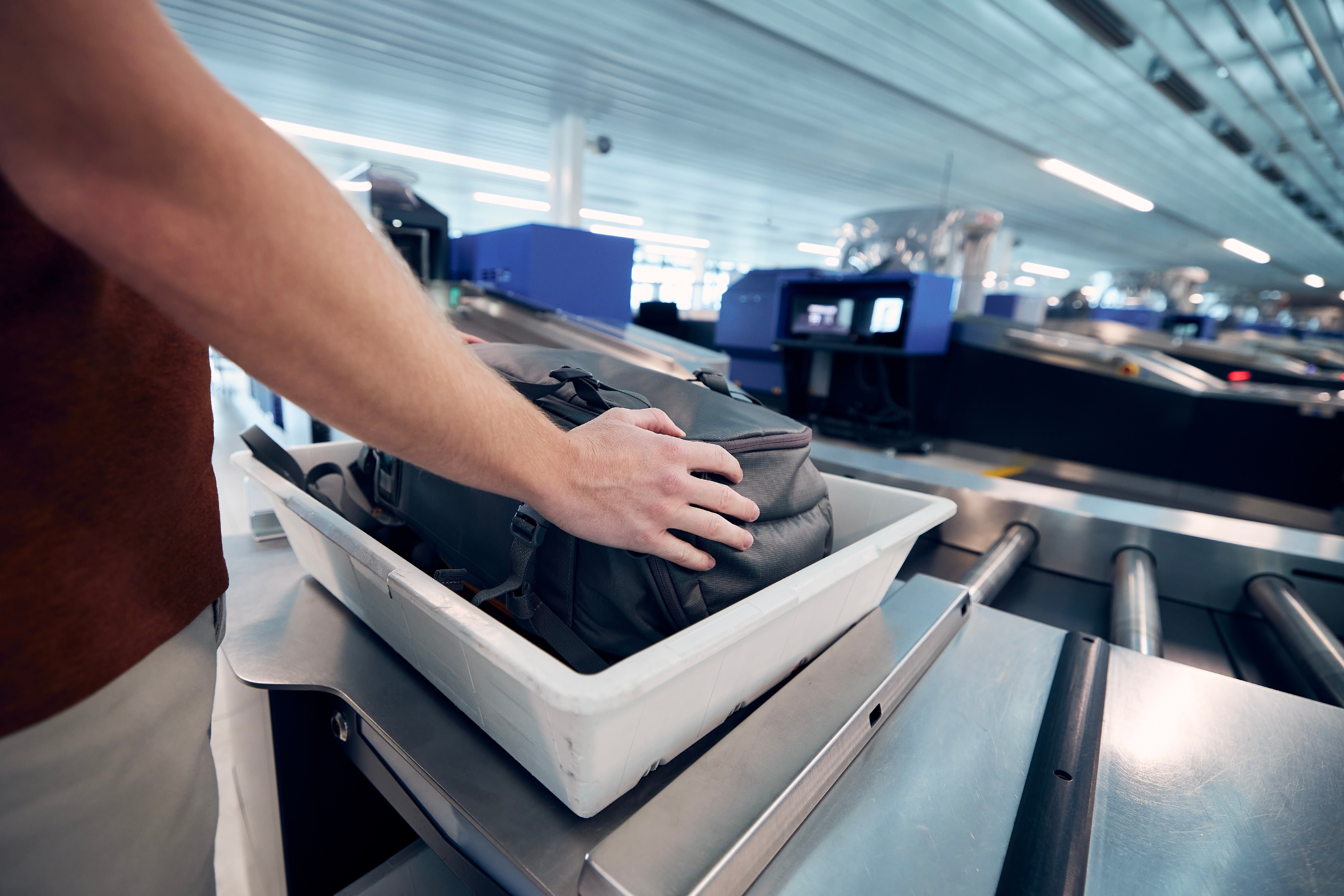
Systemwide, the TSA is deploying computed tomography machines for screening passenger carry-on bags. These machines provide a 3-D image of a bag’s content, making it more difficult for bad actors to conceal threat items, including liquid explosives. The widespread deployment of these machines at checkpoints is the precursor to relaxing the three-ounce liquids, aerosols and gels restriction at U.S. airports. Several United Kingdom airports have already done this . When this policy change is inevitably introduced, it should be restricted to PreCheck passengers, given their reduced risk profile.
With around 2.5 million people screened on average every day at airport security checkpoints , nearly every one of them is being over-screened. The ideal is for the TSA to identify the handful of risky needles in an enormous haystack of benign straw. Focusing on threatening people, not threatening items, is the most effective strategy. That is what the PreCheck program works to achieve. But it does not go far enough, given that around two-thirds of airport security screenings are in standard security lanes , an unacceptably high number.
If every passenger who was not a threat could be enrolled in PreCheck, then air security checkpoints would have all lanes designated Precheck, except for one lane at each airport that would screen those passengers who chose not to enroll or were rejected from the program. To achieve this would require PreCheck be offered at no cost to anyone willing to go through the background check vetting . This upfront cost would be recouped over time, with fewer TSA officers required to operate airport security checkpoints and lower technology purchase and maintenance costs. Most importantly, with higher throughput volume, to keep passengers engaged, the TSA would need to maintain the low waiting times in these lanes .
The net effect of these changes would be a more convenient experience for nearly every traveler, as well as an air system that is more secure.
Sheldon H. Jacobson, Ph.D., is a professor of Computer Science at the University of Illinois Urbana-Champaign. He applies his expertise in data-driven risk-based decision-making to evaluate and inform public policy.
Gathered from external sources. Rights to this text belong to whoever originally published it.