The Movement: Friction among conservative media grows as Trump’s approval falls
President Trump came to power in 2016 and again in 2024 on a wave of conservative media backing, as right-wing podcast, radio and TV hosts built brands off supporting him and his movement. As the president’s approval wanes with voters, many of those same voices have become more willing to call balls and strikes —…
President Trump came to power in 2016 and again in 2024 on a wave of conservative media backing, as right-wing podcast, radio and TV hosts built brands off supporting him and his movement.
As the president’s approval wanes with voters, many of those same voices have become more willing to call balls and strikes — and others in the conservative media ecosystem are becoming quicker to push back at the critics.
Online, that friction has sparked up in recent months over issues as different as childcare subsidies for stay-at-home parents and the price of a steak burrito.
The diverging camps within the media coalition that once rallied behind Trump highlight the divisions emerging across the conservative movement on a number of hot-button issues — just as the race for Trump’s successor gets going.
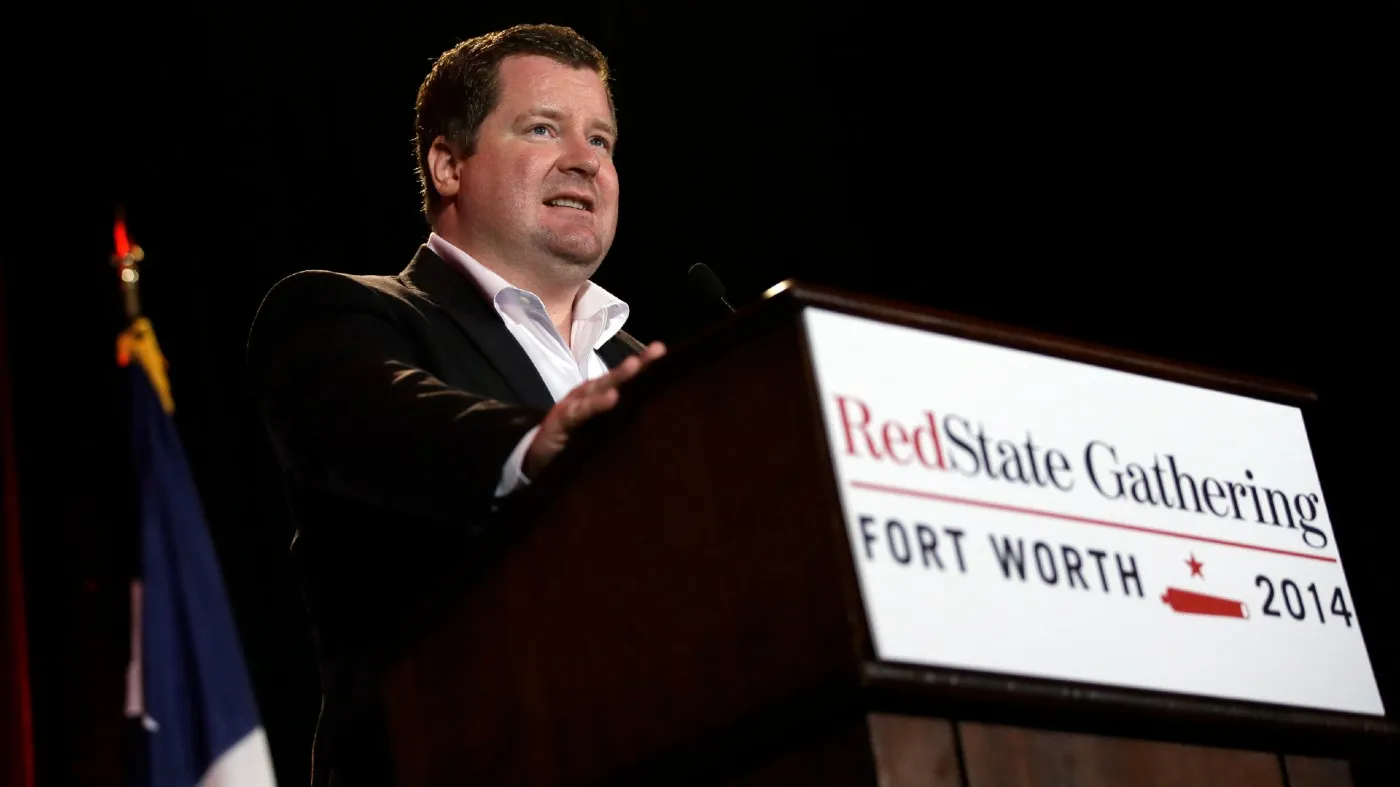
Erick Erickson , a conservative radio host and commentator who had been a Trump critic but then endorsed him in 2020 and 2024, told The Hill that he’s noticed he gets more backlash when he speaks against the Trump administration’s moves than he used to.
“As the president is headed more into lame-duck status, and we are on the verge of the midterms. There is more, I would say, I would call it bullying, almost to try to get people to shut up or toe the line,” Erickson said. “It’s a much more intense, organized effort, and ironically, it is by the groups in D.C. that used to be the people on the outside who would cajole what was at the time the establishment … they’ve kind of become the establishment.”
Erickson mentioned those in Washington close to Vice President Vance , as well the Heritage Foundation and the Conservative Partnership Institute , closely linked conservative heavy hitters in D.C., as part of the crackdown.
“Anyone in Washington who is kind of hitching their wagon now to the Vance campaign are the most aggressive at pushing back on any sort of criticism,” he said.
Douglas Blair , spokesperson for Heritage Action for America , said the group encourages “rigorous, substantive debate among conservatives about the future of our country.”
“We won’t always agree on policy, but we know solutions can only come from the right because the left has become so out of step with average Americans. We will iron out our disagreements, and the best answers will inevitably emerge,” he said.
The rise in right-wing voices willing to speak their minds is not necessarily without precedent for this point in an election cycle. Erickson said that while some commentators have started speaking out more, others, like Ben Shapiro and Dana Loesch , have been doing so this whole time and are now getting more buzz.
“There is this moment in every administration in the last two years, where voices that were once quiet speak up until the next leader is chosen, and they get quiet again and try to be on the team,” Erickson said. “But I mean, you’ve seen pretty consistently a Dana Loesch, a Ben Shapiro, people like that willing to stand up and just, I mean, speak their mind on issues they haven’t, they’ve never really been silent, but they’re starting to get more traction now from other people.”
The recent debate over a plan to make stay-at-home parents eligible for a childcare subsidy exposed those tensions. Loesch, among many others in different factions of the right, was vocally against the program , which she compared to welfare and blasted for being “big-government.”
Loesch also appeared critical of Trump’s idea to give $5,000 to every American if Republicans keep their majority in Congress, which the president floated at the Republican National Committee’s midterm convention in Dallas last week.
“Dear heavens man, what,” Loesch wrote in response to a video of Trump making this suggestion.
For Loesch, a conservative columnist and radio show host based in Missouri, this debate is between the “grassroots” and the “establishment” about who owns the GOP, and it stretches back to Tea Party days.
“A reminder — the GOP had the debate with voters on big government back in 2010. Grassroots mopped the floor with them,” Loesch wrote in a recent social media post. “Are voters more inclined towards government expansionism now? Post-conservative Republicans are by way of defending the same big government ideas that led to massive GOP losses in 2008. Time will tell if voters are, but that’s what post-conservative (don’t say liberal, it insults Tocqueville!) establishment acolytes believe, with enough propaganda.”
Even if the philosophical debate has been going on a while, the new turn is that conservative audiences — Erickson’s and Loesch’s listeners — are starting to warm to the criticism of the status quo. That reflects what polling shows, too: Trump’s approval rating is under 40 percent, and the congressional majority is looking shaky for the incumbent GOP majority.
Erickson said his listeners used to chime in accusing him of criticizing Trump “just to say you’re criticizing Trump.” But now, especially on certain issues that have economic effects on voters’ lives, like the Iran war and the tariffs, he said they’re starting to hear him.
“The one where I think I have turned people in my direction is the tariffs,” Erickson said. “In 2025 I was criticizing them, and most of my audience was very aggravated with me for criticizing the tariffs. And at this point, they’ve all recognized that the tariffs are not a good idea.”
As the midterms close in, and the race for 2028 starts up, whoever looks to succeed Trump will have to swim against that tide. The obvious front-runner is Vance, but Erickson said he’s hoping to see more options since many conservatives aren’t Vance’s biggest fans.
“To the extent that any conservatives are willing to speak out and and think differently than the administration or what the Vance wing of the party wants, you’re getting blowback there to try to silence people and not have an open primary in 2028,” Erickson said. “I think there are a lot of people who want to make it a coronation, and a lot of the pressures within the conservative movement right now are designed to stifle any criticism in that direction.”
Welcome to The Movement , a weekly newsletter looking at the influences and debates on the right in Washington. I’m Helen Huiskes, Senate reporter.
Send me tips, comments, and suggestions: hhuiskes@thehill.com
GOP DIVERGES ON ARTIFICIAL INTELLIGENCE PANIC
As warnings of an artificial intelligence “apocalypse” swirl online and in headlines in recent days, Republican leaders in Congress find themselves at odds with many of their members, and at risk of giving Democrats an opening to take decisive steps toward guardrail policy.
A wave of AI researchers and engineers — and now founders — at top tech companies are saying it’s time to slow the pace of AI development and set up guardrails to prevent the technology from getting out of hand. But as a political question, GOP leaders are struggling to buck President Trump and the wing of their party who still want aggressive AI competition with China.
Trump and House Speaker Mike Johnson (R-La.) are dismissing the idea that guardrails for AI are necessary. Meanwhile, Republicans in both chambers see an opportunity for legislation. And Democrats are preparing to seize the moment, urging Johnson to keep the House in session for the next two weeks to move forward on legislation that would stem the tide.
Senate Majority Leader John Thune (R-S.D.) said Monday that any legislation to regulate AI should have “a light touch,” saying Congress and tech companies could take some action while not setting the U.S. back behind competitors, like China.
But Trump and Republican leaders are facing a tide of public opinion that is generally anxious about unregulated AI development, especially among young people. That could be politically risky on the eve of the midterms, as the same leaders have, for the most part, also tied the Republican majority to Trump’s name and agenda. Johnson and his leadership team all spoke at the Republican National Committee midterm convention in Dallas last week, where they praised Trump’s achievements.
SORORITY SISTERS WANT COURT TO RECONSIDER DEFINITION OF ‘WOMAN’
A group of sorority sisters from the University of Wyoming chapter of Kappa Kappa Gamma is trying again to get a court to consider their years-long challenge to their sorority, which changed its eligibility criteria to allow “women and individuals identifying as women” to join. The sisters are claiming that that change fundamentally affected the makeup of the organization, and that the 2022 vote to admit a transgender student was conducted in bad faith.
The 10th Circuit, based in Denver, heard oral arguments Monday as the group seeks to revive a case that they have twice sought to appeal.
The case has drawn national attention, with Riley Gaines appearing at a press conference Monday on behalf of the sisters and the Independent Women’s Law Center backing them as well.
The court did not indicate how or when it would decide the case. A key question during the arguments was whether the issue should be worked out within the organization internally, rather than in the courts.
Sept. 16-18: The Heritage Foundation hosts Restoring Men’s and Women’s Health Summit: The Future of Health, Fertility, and Family Formation. The event will cover fertility, family formation, preventive care, nutrition and “broader questions about human flourishing.” Details here .
Sept. 16: American Conservation Coalition, Discipulus Ventures and the Foundation for American Innovation host The New Industrial Age Forum, underwritten by Google, Lockheed Martin, Amazon and others. The goal is to “plan the restoration of America’s industrial independence,” with a focus on tech and AI. Details here .
A statue of Charlie Kirk outside of Turning Point USA ’s headquarters in Phoenix, Ariz., was vandalized Sunday morning. The organization said it was working with police to identify a suspect. More here .
The White House plan to give stay-at-home parents a childcare subsidy is still kicking up a lot of debate online. Advancing American Freedom , former Vice President Mike Pence ’s organization, is out with a one-pager urging conservatives to oppose the plan. More here .
Rep. Don Bacon (R-Neb.) said he’s mulling a White House bid. Bacon, who is leaving Congress next year, has been a frequent critic of the Trump administration, especially its military actions. More here .
Helen Lewis in The Atlantic: The Wild West of Commercial Surrogacy
Robert Draper in The New York Times: What Would Charlie Kirk Do Today?
Matthew Schmitz for New York Times Opinion: Ella Langley. ‘Landman.’ The Rural Vibe Shift Is Real.
Topics in this story
Gathered from external sources. Rights to this text belong to whoever originally published it.