Iran war puts future US military presence in Middle East in question
America’s war against Iran is stirring debate inside and outside the U.S. government over the future presence of the U.S. military in the Middle East. Following the Sept. 11, 2001, terror attacks, the U.S. built up a massive configuration of military bases and intelligence outposts in the region to launch strikes, disrupt terrorists and wage…
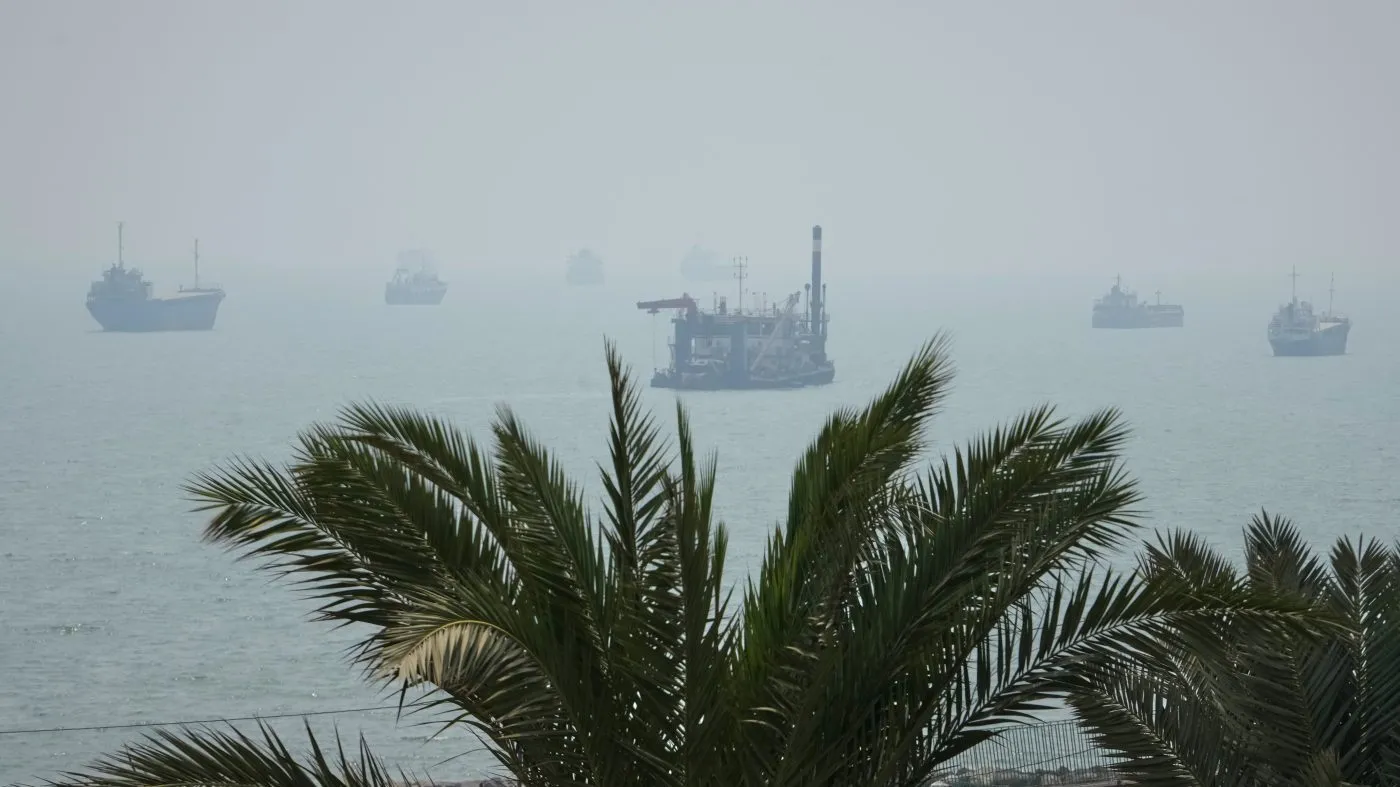
America’s war against Iran is stirring debate inside and outside the U.S. government over the future presence of the U.S. military in the Middle East.
Following the Sept. 11, 2001, terror attacks, the U.S. built up a massive configuration of military bases and intelligence outposts in the region to launch strikes, disrupt terrorists and wage wars.
But the ongoing conflict with Tehran has shed light on the susceptibility of U.S. military infrastructure in the Gulf, as many of those bases have sustained heavy damage from Iranian drone and missile attacks.
That’s become a key factor in informal discussions about potential cuts to the U.S. military presence, which began before President Trump launched attacks on Iran.
The ultimate decision around the withdrawal of U.S. troops in the Middle East hinges on the outcome of the war with Iran, according to multiple people familiar with conversations in and around the Pentagon, who spoke to The Hill on condition of anonymity.
Allison Minor, who was the director for Arabian Peninsula affairs on the National Security Council during Trump’s first term, said forces within the administration view a reduced presence as a “necessary recalibration,” regardless of the conflict with Iran and its proxies.
However, damage to U.S. bases in the Middle East has made a drawdown all but inevitable, Jennifer Kavanagh, a senior fellow and director of military analysis at Defense Priorities, said in an interview.
About 70 structures at 11 U.S. military bases in the Middle East have sustained $5 billion in damage, the American Enterprise Institute said in a report in late April.
Iran’s attacks have damaged and destroyed “hundreds of buildings and structures” at U.S. military bases in Kuwait, Jordan, Oman, Qatar, Bahrain, the United Arab Emirates and Saudi Arabia, a Monday Pentagon watchdog report said.
“I think the reality is that even if the Pentagon would like to keep military forces in the Middle East after the war, the bases around the Persian Gulf, in places like Bahrain and Qatar and Kuwait, are simply not defensible,” Kavanagh said.
“They’ve been badly damaged during the war, so they would have to be rebuilt, and it’s pretty clear that if they were rebuilt, there would be a high risk they’d be damaged again in future conflicts.”
Asked for comment, a U.S. official with Central Command (Centcom), the combatant command that oversees U.S. forces in the Middle East, said: “We will not speculate on future force posture for operational security reasons.”
The White House said the U.S. military “maintains the force posture necessary to achieve any desired objective set by” President Trump.
“As Operation Epic Fury demonstrated, America’s military might is stronger than it’s ever been,” White House spokesperson Anna Kelly said in a statement.
A Pentagon official told The Hill last month that the department “routinely conducts prudent monitoring and assessment” of U.S. force posture across the globe, and Defense Secretary Pete Hegseth has motioned for a formal review of the U.S. military footprint in the Middle East.
The analysis should consider what access the U.S. military needs to be able to sustain, what intelligence collection Washington requires, human relationships with regional allies, how the security relationships with those countries can evolve and how to best push back against Iranian threats, former national security officials said.
“From a tradecraft standpoint, you got to make sure that you realize that sometimes the intelligence you get from partners is not only provided to inform; sometimes it’s provided to influence, and so you’ve got to realize that as well, because sometimes we’re not willing to accept the risk of someone else getting it,” a former senior U.S. intelligence official, who was granted anonymity to speak candidly, told The Hill. “We have to get it ourselves firsthand, and so all of that plays into the calculus of how you figure out.”
The number of U.S. troops in the Centcom region went up in the few years prior to the 9/11 attacks and swelled as the Pentagon broadened its presence during the wars in Afghanistan and Iraq.
Those in favor of maintaining a heavy military presence in the Centcom region have said it gives the U.S. access to basing and overflight, helps maintain air superiority over adversaries and maintains the ability to collect valuable intelligence.
In recent years, there have been growing calls to reduce the U.S. military footprint in the Middle East, with some arguing service members are vulnerable targets and that maintaining the bases isn’t worth the cost.
The U.S. currently has more than 50,000 service members in the Centcom region, stationed across the Middle East from Jordan to Oman. Those U.S. bases have come under fire since the Iran war broke out in late February, including Naval Support Activity Bahrain (NASB), which serves as the headquarters for U.S. Naval Forces Central Command and the U.S. Fifth Fleet.
“We’ve seen a level of risk in proximity, and we’ve also built this presence against the CT [counterterrorism] fight over the course, and then we’ve just increased the footprint and increased, and just got comfortable with an oversized footprint,” the ex-senior U.S. intelligence official said.
Last year, Kavanagh proposed closing U.S. bases in Kuwait and placing U.S. service members in Jordan, the UAE and Bahrain in facilities like the Prince Sultan Air Base near Riyadh, Saudi Arabia.
Others who are more hawkish on Iran have suggested having U.S. forces moved to Ovda Air Base in Israel.
“Israel’s geostrategic location at the crossroads of Europe, Asia, and Africa enables it to support U.S. rapid global mobility by hosting tanker and transport aircraft,” the Jewish Institute for National Security of America (JINSA) wrote in a late March report .
Jonathan Ruhe, a fellow for American strategy at JINSA, said there is a “general atmosphere” in conversations with current and former officials that the U.S. position in the region is going to “have to change,” both in how forces are protected and how the military stores munitions in the region.
“To the extent we continue having permanent presences at fixed locations close to Iran, it’s just going to be [an] unsustainable proposition going forward,” Ruhe said in an interview.
Ruhe said the move to Ovda, located in the south of Israel, could relocate troops from Qatar and Jordan and some from Iraq and Saudi Arabia.
Some of the discussions around how to better defend U.S. positions in the Middle East include having some installations underground for greater deterrence, an idea that has been floated within the Pentagon in years prior.
“If we’re talking about completely building up new installations underground, those are significant expenses. So again, just thinking about what our presence in the region is going to be long term before we get to those investments,” Minor, now the director of the Atlantic Council’s Project for Middle East Integration, told The Hill.
Kavanagh said hardening of U.S. bases is a likely necessary step for future military operations, but placing them underground could complicate the usage of some assets.
“Now, it does complicate operations. If your assets are stored underground, that can complicate actually using them. Using both physical hardening above ground as new types of air defense and underground facilities, I think will be the way of the future, not just in the Middle East but globally.”
The U.S. military having a permanent presence at locations close to Iran while protecting it with more air defense systems is “not going to be a solution” because all service branches are concerned about depleting interceptor stocks, added Ruhe.
“That’s the tenor of the conversations we’ve been hearing since the war,” he said.
Topics in this story
Gathered from external sources. Rights to this text belong to whoever originally published it.