Pretend Orban is on the ballot — he offered handouts, too
Whether it’s Trump, Orbán or Vance, opening the fiscal purse to appease a grumbling public is a classic move made by history’s practitioners of clientelism.
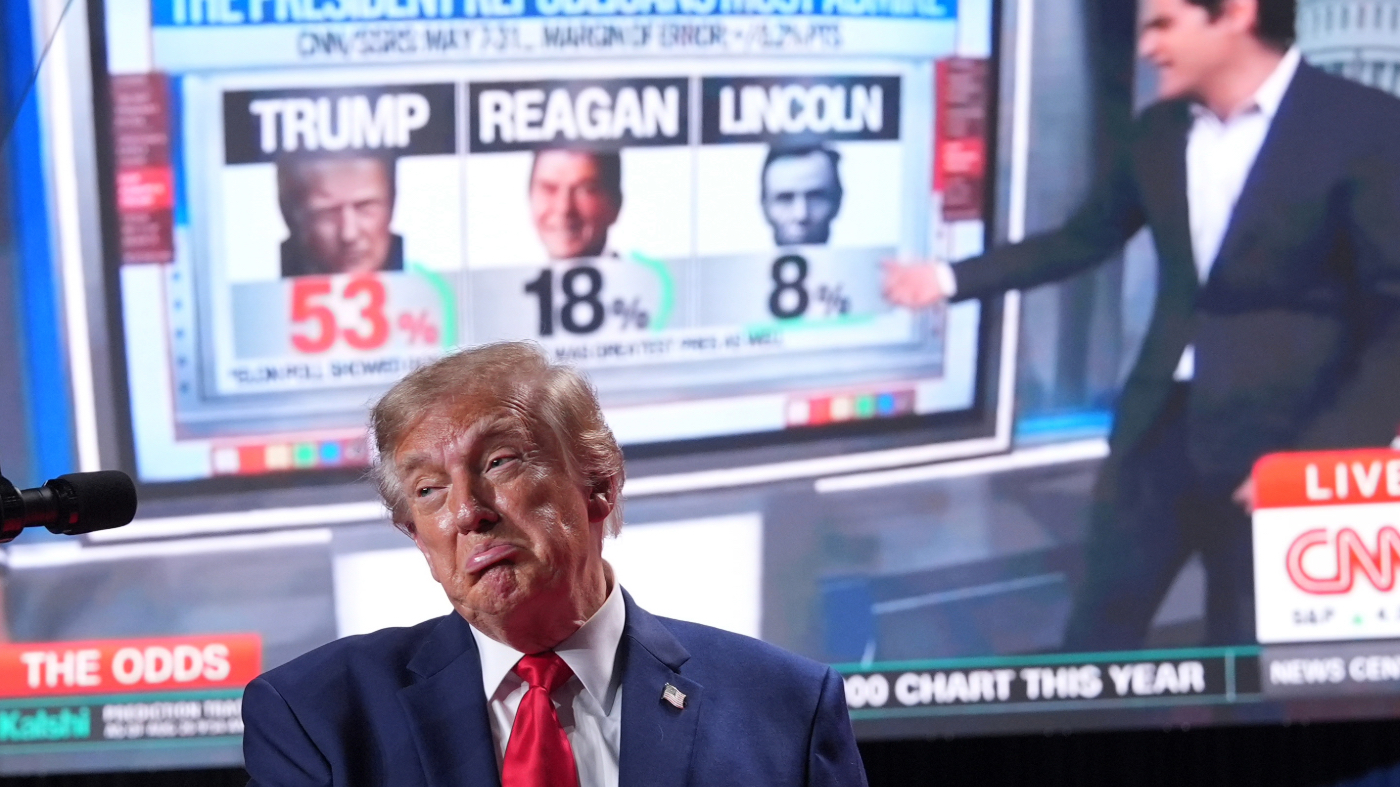
“Pretend, please, I’m on the ballot,” said President Trump.
It has become a common refrain at rallies, and it is how he kicked off the Republican midterm convention. The strategy is, since Trump always does well in elections, voters just need to fool themselves into thinking he’s on the ballot and the Republicans will not lose their majority in Congress.
Meanwhile the White House’s new television ad , proudly stamped with “paid for by the U.S. Government,” shows Trump moving intensely before the camera as a voice-over pitches viewers to join his “final battle” to “demolish the deep state” and “expel the warmongers from our government.”
Taking millions of taxpayer dollars that Congress had already appropriated for other uses to instead pay for a partisan campaign ad?
“I hate it,” Sen. Thom Tillis (R-N.C.) said , “I tell you, it feels like Vicktor Orban talking to the Hungarian people.”
The reference to Orbán may be an apt one. After 16 years in power, late in 2025, Orban began to realize that his April reelection bid was in jeopardy. Orban started to hand out political giveaways . He put a cap on mortgage interest rates , subsidized housing of public-sector workers, exempted young voters and mothers from income tax, topped off pensions and injected cash into restaurants and tourism.
His party lost in a landslide . Orban has been out of power since.
Trump has a similar tendency when he gets squeezed politically — to try to buy his way to victory with taxpayer-funded giveaways. This explains his infamous pledge to pay each adult a $5,000 dividend if Republicans hold onto both chambers. It also curiously brings to mind Vice President JD Vance’s proposal to make transfer payments to stay-at-home spouses — but not to single working parents.
Both schemes are set up as cash transfers, making Orbán’s earnings-contingent payout look politically tame by comparison. Trump and Vance are really swinging for the fences.
Budget hawks have picked apart both giveaway proposals. Legal scholars have also weighed in about the gray area surrounding the television ads.
The Hatch Act of 1939 bars partisan political activity by federal employees, and Congress prohibits appropriated funds from supporting “ publicity or propaganda ”. One legal scholar said the content of the ads fails that basic test between legitimate public information versus partisan electioneering. Several watchdog groups have filed complaints , but it seems doubtful these will be resolved by election day.
Meanwhile, defenders of the ads say they are merely public service announcements, not propaganda at all, and they don’t violate campaign finance law because Trump is not a candidate on the November ballot.
In my field of study, public choice theory, these giveaway maneuvers are recognized as classic features of clientelism , typical of small country dictators and urban political bosses desperate to keep power.
Peronism in Argentina is one example, where make-work jobs were created in exchange for votes. Some provinces in India also exemplify clientelism, where it is not uncommon for incumbents to distribute cash and goods prior to elections. In the U.S. industrial era, job-patronage regimes including Tammany Hall in New York and the Daley machine in Chicago both exemplify the essence of clientelism.
Whether it’s Trump, Orban or Vance, opening the fiscal purse to appease a grumbling public is a classic move made by history’s practitioners of clientelism.
Who is on the ballot this midterm election? It might not make a difference whether we pretend it’s Orbán or Trump. But it will make a big difference if we reject clientelism and move on with our lives in America’s constitutional republic.
I am not one to predict election outcomes. But, like anyone else, I do see polls and expert commentary leaning against the Republicans keeping their majority. This will create a policy window of opportunity. America is weary of Trump’s glare, and voters are hungry for something that makes sense. Who knows whether the Democrats will deliver.
Edward Lopez is a senior fellow and director of entrepreneurship and innovation at Independent Institute in Oakland, Calif., and professor of Economics at Western Carolina University.
Topics in this story
Gathered from external sources. Rights to this text belong to whoever originally published it.