Durbin: Trump moves on voting ‘most serious challenge’ since Civil War
Sen. Dick Durbin (D-Ill.) on Tuesday said President Trump’s policy proposals and executive orders on voting have created the “most serious challenge” to the U.S. government since the Civil War. CNN’s Sara Sidner asked Durbin, the ranking member of the Senate Judiciary Committee, if Democrats have a “plan to secure voter rights.” Durbin replied that…
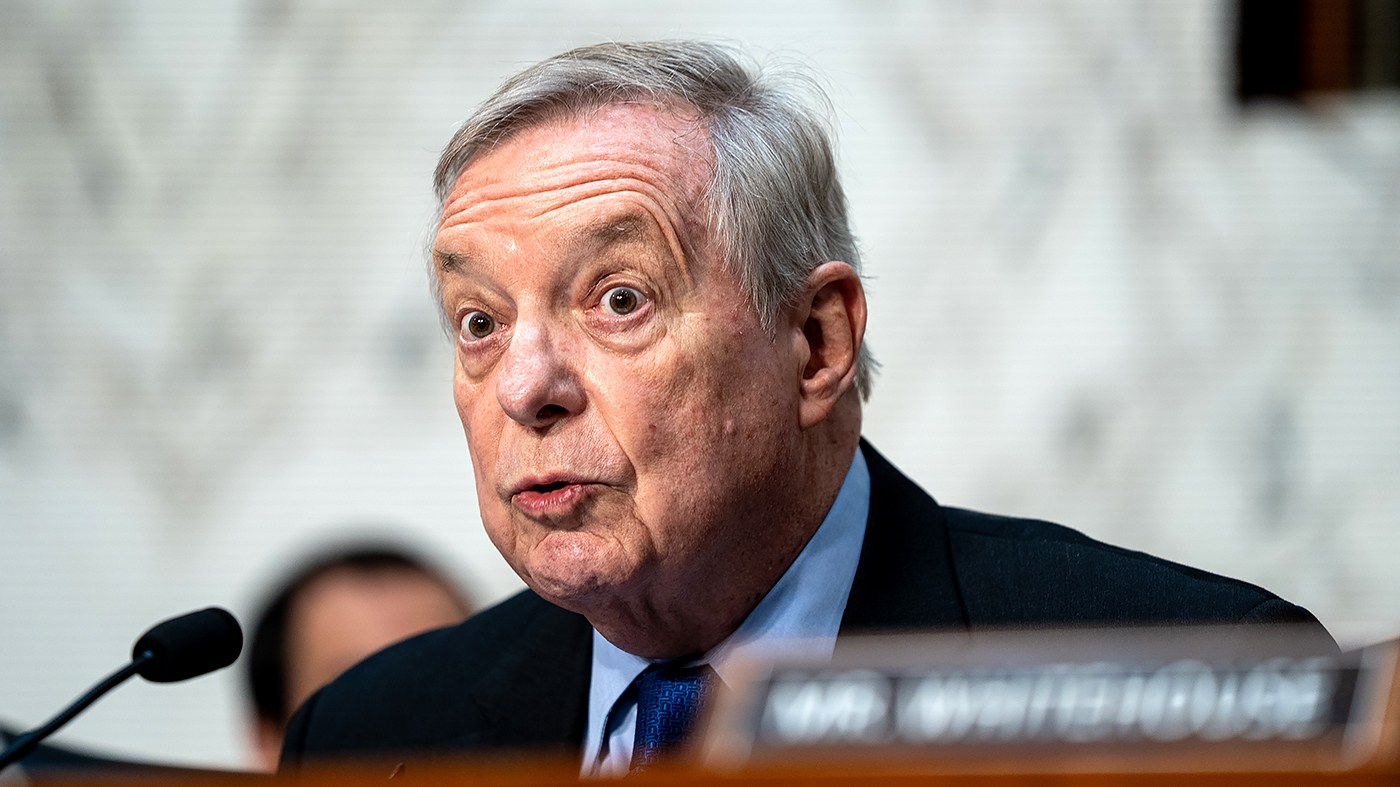
Sen. Dick Durbin (D-Ill.) on Tuesday said President Trump’s policy proposals and executive orders on voting have created the “most serious challenge” to the U.S. government since the Civil War.
CNN’s Sara Sidner asked Durbin, the ranking member of the Senate Judiciary Committee, if Democrats have a “plan to secure voter rights.” Durbin replied that Democrats have attempted to bring up this issue “a number of times.”
“The right to vote is critical to citizenship, and this president is clearly on a mission to discourage people from voting and to not count all the votes that are cast,” Durbin continued. “I think this is the most serious challenge to our basic constitutional form of government since the Civil War. I think it‘s that serious. And yes, we‘re doing everything we can, but as a minority party, we need more votes.”
Sidner noted the Supreme Court’s block on Trump’s executive order to require states to upload lists of voters to receive mail ballots, as the president has long accused mail-in voting of being fraudulent, though there has been no evidence of such fraud at the massive scale that Trump has suggested.
She asked Durbin if Trump could attempt to restrict mail-in voting again leading into the 2028 presidential election.
“We are prepared for the likelihood that this president will do anything in his power to discourage people from voting, to not count the votes that are cast and to question the qualifications of voters at every level,” the Illinois Democrat said. “He is desperate because this is a referendum on his leadership and he is doing poorly with the American people.”
The high court, which previously ruled in Trump’s favor on the plan, ruled against the attempt to have the U.S. Postal Service implement new design requirements, including an official logo and barcode, on ballots before Election Day.
A whistleblower previously warned that the U.S. Postal Service’s computer system was riddled with errors that, if left untouched, would result in “a ‘catastrophic failure’ of the system that could ‘derail the midterm elections,'” according to a letter from Sen. Richard Blumenthal’s (D-Conn.) office.
Trump blasted the majority of the court that ruled against him, including Justices Neil Gorsuch, Brett Kavanaugh and Amy Coney Barrett, all Trump appointees who sided with the liberal minority. He accused his appointed justices of being “merely a shell of their original selves.”
The president has also urged GOP leaders in Congress to eliminate the Senate filibuster in order to pass the Safeguard American Voter Eligibility (SAVE America) Act, his legislative priority that would require Americans to prove their citizenship to register to vote and to show photo ID before casting their ballot.
Efforts to pass what Trump has called his legislative priority have so far failed, though some GOP lawmakers like House Speaker Mike Johnson (R-La.) and Sen. John Cornyn (R-Texas) have suggested passing parts of the bill as part of a reconciliation package.
Topics in this story
Gathered from external sources. Rights to this text belong to whoever originally published it.