25 years after 9/11, we’re still fighting the last war
An institution that stops updating its threat model is getting ready for the next threat to take it by surprise.
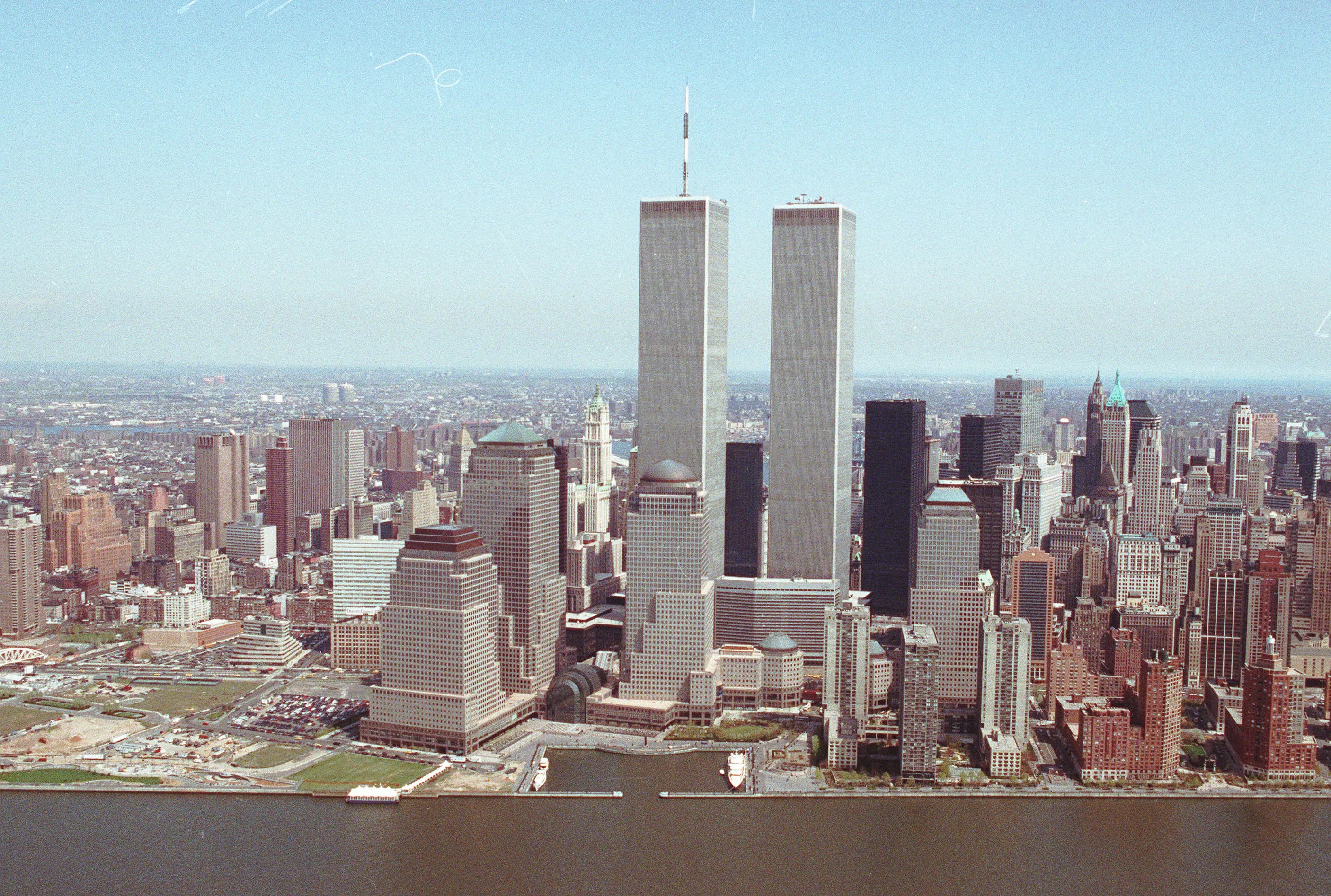
I spent 1995 and part of 1996 on the 65th floor of the World Trade Center, working for Dean Witter. A guy from my neighborhood worked several floors up at Cantor Fitzgerald. On Sept. 11, 2001, he didn’t come home. Twenty-five years on, I still think about how ordinary that building felt to me once, and how it became the opening scene of a war most Americans didn’t know they were already losing.
The comfortable story is that one administration dropped the ball. The truer story is less satisfying and more useful: For most of the 1990s, the whole country decided the war was over and stopped paying attention.
That matters, because the people who lived through it are becoming a minority. Pew found 83 percent of adults born before 2001 can still say exactly where they were when they heard the news. One in ten adults today were not alive for it and know the day only from a classroom. The facts we hand them are going to calcify into the official story — better to get them right while we can still argue about it.
Start with the numbers. Active-duty military strength fell from about 1.8 million troops in 1993 to 1.4 million by 2000, a reduction of roughly one-third from 1990 levels. Brookings scholar Michael O’Hanlon , no critic of the Clinton Pentagon, documented that the administration cut the force about 15 percent deeper than the George H.W. Bush administration had planned.
Readiness was mixed: Army equipment and aviation scores improved, but Air Force mission-capable rates slid. Heritage called the result a hollow force in the making . Brookings called it the most successful drawdown in American history. Both were describing the same military.
None of that excuses the counterterrorism failure. Osama bin Laden was a known, growing threat before 2001, and the government had chances to remove him it didn’t take. The honest account is not that “a weak president let a terrorist live.” The true cause was a legally cautious, capture-first policy, shaped by an assassination ban dating back to Gerald Ford. It was a mindset left over from treating terrorism as a criminal justice and law enforcement question. It was thin intelligence work, excessive fear of civilian casualties, and the political risk of a failed raid. The tragedy of 9/11 will be easier to repeat to whatever extent we drift back into these fallacies.
The rebuttal here is that a bigger defense budget doesn’t stop nineteen men with box cutters and flight training. That is fair enough. But readiness isn’t just about carrier groups and troop counts. It is a habit of mind, a willingness to hunt the next threat relentlessly instead of guarding against the last one.
A military reorganized around a peace dividend had less bandwidth, not more, to chase an enemy that didn’t fit its files.
The 9/11 Commission understood the difference. Its bipartisan report didn’t hang the catastrophe on one person. It found a system built for nation-states failing to notice a borderless terror network operating inside the country it was supposed to protect. That is a structural diagnosis, not a partisan one. The fix was structural too: a Director of National Intelligence, a National Counterterrorism Center, and rules that finally let the FBI and CIA share information.
Here’s the part that should bother you. Congress just passed another stopgap to keep the government open through December, having finished three of twelve spending bills; the Senate has passed none. We are, once again, a country confident that whatever threat shows up next will look like the last one.
The trade we made after 9/11 was real: More screening, more surveillance, less spontaneity at the airport, the ballgame, the office lobby. A quarter century later, Americans aren’t convinced it worked. A new Emerson College/Nexstar survey finds 43 percent think the country is less safe than it was before the attacks, against 31 percent who think it’s safer. Forty percent believe terrorists have more capacity to hit us today than they did in 2001.
We accepted the security state on a promise of lasting peace of mind, and a plurality of us don’t feel like we got it.
I don’t have a tidy fix for that, and I’m suspicious of anyone who claims one. What I do know, from a fiduciary’s eye, is that an institution that stops updating its threat model is getting ready for the next threat to take it by surprise. Twenty-five years ago, we were that institution.
The same complacency shows up closer to home now. Four years of open borders brought gangsters and traffickers into our neighborhoods. Socialism is on the rise nationwide — gaining ground where it would have been laughed out a generation ago — because too many have lost sight of what makes this country worth defending.
My old office tower is gone. My neighbor is gone. The only tribute worth giving either of them is to keep the country’s defenses — physical and cultural — current, not nostalgic.
Jay Rogers is a financial professional with more than 30 years of experience in private equity, private credit, hedge funds, and wealth management.
Topics in this story
Gathered from external sources. Rights to this text belong to whoever originally published it.