Republicans face a dilemma over Trump’s role in the midterms
As the 2026 midterm elections approach, both parties face significant challenges regarding presidential popularity and internal ideological divisions.
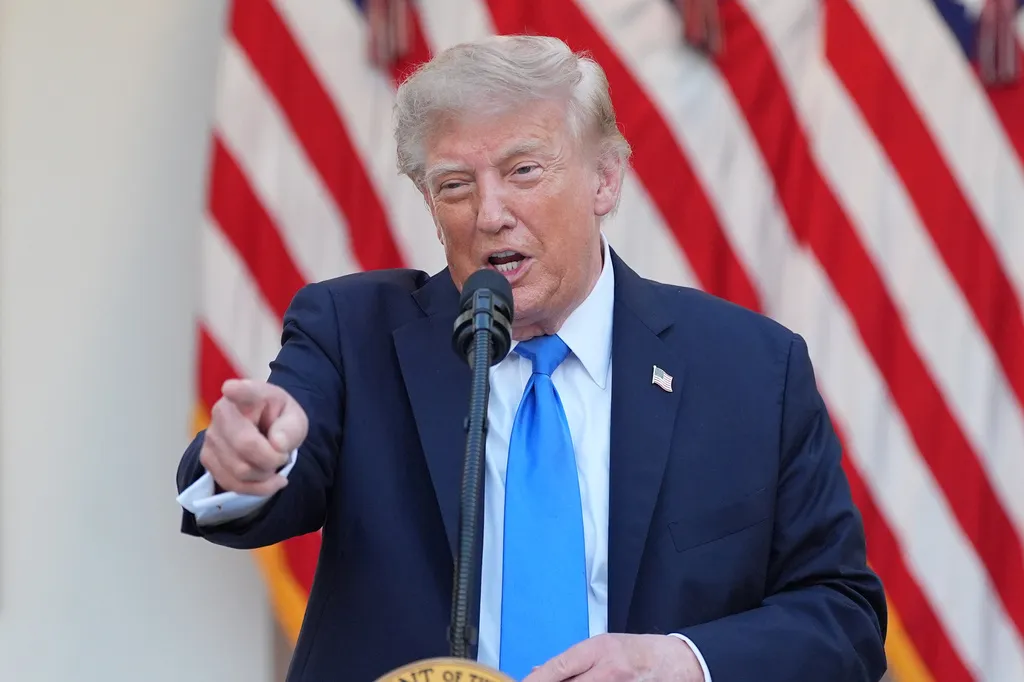
All 435 House seats, along with 35 seats in the Senate (including special elections in Florida and Ohio) , will be up for grabs in the midterm elections. President Trump’s name will not be on any of those ballots. Not a single one.
And yet just about every Democrat will be running against him.
Midterm elections are a report card on how the president is doing — and voters almost always decide the president, any president, isn’t doing a good enough job. That is why the president’s party almost always loses seats in Congress.
And as the midterms approach, this president’s report card doesn’t look very good . Most Americans give him low marks on just about everything. His approval numbers are under water on foreign policy, on healthcare, on immigration and on the economy, the single most important issue in this and most elections. And then there’s the war the president said would be over in a few weeks.
So 2026 isn’t exactly shaping up to be a banner year for the Republican Party.
But Democrats have problems of their own.
They like to say that theirs is a “big tent” party, one that welcomes candidates with all sorts of opinions and views. Fair enough. Except this year the tent has quite a few people in it whose views Americans probably won’t like — assuming Republicans are smart enough to tell voters what those views actually are.
It’s not exactly breaking news that the energy in the Democratic Party is on the left. Candidates espousing one version or another of socialism have won primary elections, and not only in deep-blue places like New York City.
Republicans will undoubtedly try to make the election about what the Democratic Party’s hard left believes — that America isn’t particularly exceptional, that much of its history is ugly and perhaps irredeemable, and that the country needs to be fundamentally changed.
Let’s just say it’s not exactly an upbeat message.
So the midterms may come down not to which candidates voters like more, but which side they detest less: the party that welcomes, however grudgingly, democratic socialists into their big tent along with their message that can sound like America needs a complete overhaul — or the party of Donald Trump, with all the chaos that implies.
Which brings me to another question: Are Republicans better off if Trump leaves the White House, hits the road, and campaigns for Republican candidates — or if he stays put in Washington, and to the extent he’s capable, doesn’t make waves?
The argument for sending him out on the road is obvious. He can rev up the Republican base and encourage Republican voters to turn out. Without him on the campaign trail, the thinking goes, some of those voters might just stay home. So he is constantly telling Republicans: “ Pretend, please, that I’m on the ballot .”
But there’s a problem. Trump doesn’t just rev up Republicans. Nobody energizes Democrats more than he does. The more Democrats see him on their local newscasts, the more likely they are to get angry — and angry voters have a funny habit of showing up on Election Day.
It’s true that Democrats don’t need much encouragement this year to get off the couch and vote, such is their fear and loathing of the president. But what about that crucial bloc of voters — independents? They often decide close elections — and they’re hardly charter members of the Trump fan club.
There’s another problem. When Trump headlines a political rally, you sometimes get the impression he has forgotten why he was there. He rambles from one subject to another, inevitably goes off script, and too often says something outrageous that becomes the news of the day.
And suddenly nobody is talking about the Republican candidate he supposedly came to help.
That’s the Trump paradox for Republicans: The man who may be best at getting their voters to the polls may also be the man best at getting everybody else there, too.
My vote? With only a few exceptions, I think the president should stay in Washington and — for a change — concentrate on what voters actually care about, like grocery and gas prices, instead of golden ballrooms and majestic arches.
If he shows up to support a Republican in a tight race, there’s a good chance swing voters will do what swing voters do: Swing the other way.
Sometimes the best campaign contribution a president can make is knowing when not to campaign.
Bernard Goldberg is an Emmy and an Alfred I. duPont-Columbia University award-winning writer and journalist. He is the author of five books and publishes exclusive weekly columns, audio commentaries and Q&As on his Substack page .
Topics in this story
Gathered from external sources. Rights to this text belong to whoever originally published it.