‘You Can See Everything’: Questions left unanswered by Elizabeth Holmes doc
One of the film’s stranger aspects is Holmes agreeing to film her and her family before she went to prison.
Warning: This article contains spoilers for “You Can See Everything.”
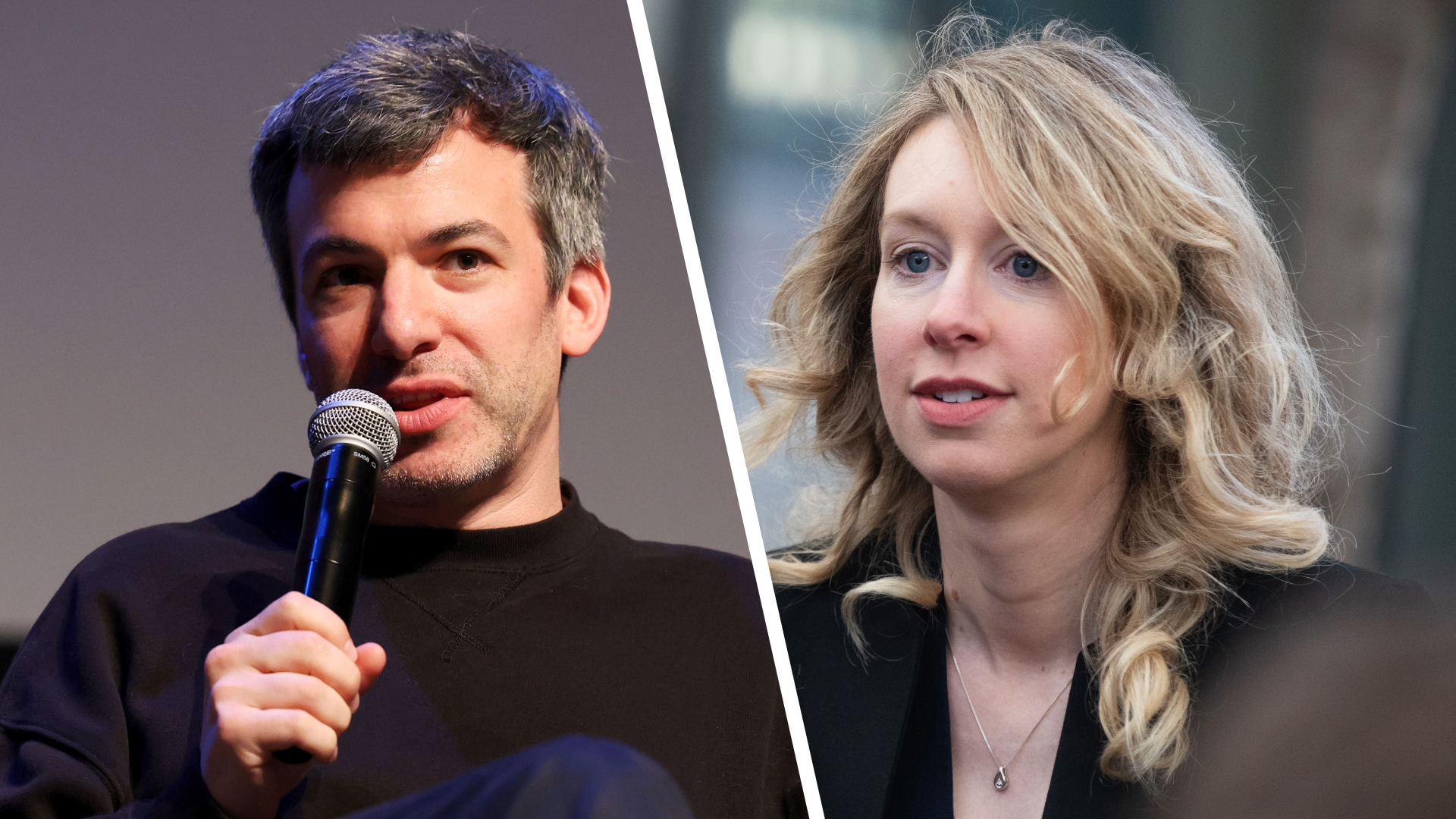
( NewsNation ) — When A24 released the trailer for “You Can See Everything,” Nathan Fielder and Lance Oppenheim’s Elizabeth Holmes documentary, future audiences wondered how Fielder got such extensive access before her prison sentence.
The nearly three-hour documentary offered some answers when it was released in theaters Friday, Oct. 16.
Despite its limited release, the film proved popular with audiences, grossing $15 million at the domestic box office in its opening weekend.
Even so, fans of Fielder, Holmes or both may leave the film with more questions than answers.
Why did Elizabeth Holmes invite Nathan Fielder into her life?
One of the film’s stranger aspects is Holmes agreeing to film her and her family before she goes to prison for defrauding investors out of hundreds of millions of dollars.
She claimed her health technology company Theranos had blood-testing technology that could perform several diagnostic tests with just one drop of blood.
Known for his socially awkward, cringeworthy comedic style — of which “You Can See Everything” has many examples — Fielder follows and eventually moves in with the Theranos founder and her partner, Billy Evans, 34 days before she began her 11-year prison sentence.
Fielder told Wired he joined the project after learning that Evans and Holmes had unsuccessfully pitched a documentary about their lives to the studio.
“Months later, I heard that had happened. So, I called A24 and said, ‘Well, could I meet her?’ That was the start of it all,” he said. Still, Fielder said he doesn’t fully understand why she agreed to let him chronicle her life.
“This is part of the mystery that, like, doesn’t make sense to me,” Fielder said. “I asked her that on, I think, one of the first days we shot. I still don’t fully understand it.”
He added, “That really messed with my head. Also, I got the sense very early that she hadn’t seen a lot, but she had seen some of what I did, and she had talked to people who had seen what I did. Billy had seen more.”
Evans offered an explanation on an episode of the “All-In” podcast, saying the couple agreed to do the documentary so people could “see who she is.”
Was Billy Evans trying to profit from Holmes’ story?
Holmes may seem like the documentary’s obvious “villain,” but some say that (dis)honor instead belongs to Evans, the father of her two children.
The film portrays Evans as controlling toward both Holmes and Fielder, from whom he essentially tries to grab directing duties.
In one of the film’s more jaw-dropping dramatizations, an actor portraying Evans explains he and Holmes would participate in the documentary if they received a share of the profits, which isn’t standard practice for documentaries.
A24 agreed to Evans’ demands, but Fielder wondered if Holmes, who wasn’t in the room when her partner made the demands, knew about his request, according to Fielder’s retelling.
Did Nathan Fielder and the audience get manipulated by Holmes?
The documentary presents Fielder and Holmes’ interactions as intense and strangely intimate. Fielder and Oppenheim use many close-up shots (almost too close) of Holmes’, Evans’ and Fielder’s faces.
The scenes in which the disgraced Theranos founder speaks one-on-one with “The Rehearsal” creator are especially uncomfortable, marked by awkward silences and intense gazes.
Throughout the documentary, Fielder appears unsure how to understand Holmes. Was she putting on an act to gain sympathy? Did she not understand she did something wrong? Does she not see that Evans’ strange actions during the documentary can be viewed as manipulative?
By the film’s conclusion, those questions remain unanswered, likely remaining with audiences long after the credits roll.
Topics in this story
Gathered from external sources. Rights to this text belong to whoever originally published it.