New virus detected in a tick invasive to the US. Should we be concerned?
Since first being discovered in the U.S. in 2017, the tick has spread to more than two dozen states.
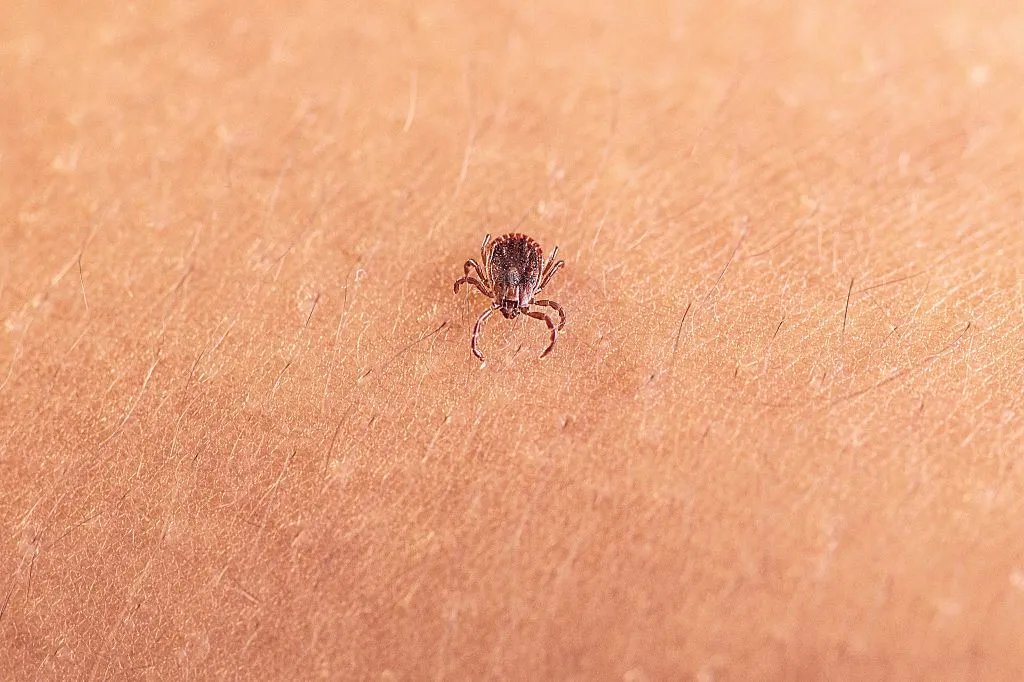
(NEXSTAR) – Ticks have been known to carry bacteria capable of causing illnesses like Lyme disease and a condition that can leave you allergic to red meat . Now, researchers have found a new tick-borne virus linked to an invasive species that has been spreading in the U.S.
The Asian longhorned tick was first discovered in the U.S. in 2017. It has since spread to more than two dozen states , from New York and Massachusetts south to South Carolina and west to Oklahoma and Missouri.
Female Asian longhorned ticks are able to lay eggs without mating, which allows them to spread quickly, Emily Struckhoff , an education program specialist with Penn State Extension’s Vector-Borne Disease Team, told Nexstar. Nearly all of the Asian longhorned ticks found in the U.S. have been females, she added.
Unlike other ticks in the U.S., the Asian longhorned tick has not been known to carry the bacterium responsible for other common diseases associated with the tiny pests. They do pose a serious threat to livestock by spreading bovine theileriosis, a potentially fatal condition .
In its native range in Asia, the Asian longhorned tick is known to transmit “a number of pathogens, both to animals and humans,” explained Dr. Douglas Norris , a professor in the Department of Molecular Microbiology and Immunology at the Johns Hopkins Bloomberg School of Public Health.
That includes Dabie bandavirus, or DBV, which has a fatality rate of up to 30% and “causes a lot of damage,” according to Norris. It was that virus that, in a sense, led researchers in China to discover a new condition, Asian longhorned tick nairovirus, or ALTNV.
What is Asian longhorned tick nairovirus?
As the researchers explained in their findings , published in the New England Journal of Medicine, they were reviewing patients at several hospitals in China who were presenting with symptoms of DBV but testing negative.
More than 15% of those patients ultimately tested positive for what has since been identified as Asian longhorned tick nairovirus, or ALTNV, researchers said.
By itself, ALTNV was found to cause flu-like illness with symptoms including fatigue, gastrointestinal issues, thrombocytopenia (or a low blood platelet count), and elevated aminotransferase levels, which can indicate liver problems . It was not found to have a higher mortality rate, however, Norris explained.
Patients who had ALTNV and DBV, which occurred in 38 of the more than 3,100 patients analyzed, more frequently experienced respiratory symptoms and renal impairment (or low kidney function ), researchers said. Seven patients who had both conditions died.
The tick is in the US. Should we be concerned about ALTNV?
Not necessarily. So far, according to Norris, the tick has not been known to transmit any diseases to humans in the U.S.
That may be in part because it hasn’t found a host carrying the same diseases it’s known to spread in its native range.
Ticks, as Struckhoff explained, “are not born with the bacteria or virus that causes [tickborne] diseases.” She pointed to Lyme disease as an example. It’s commonly spread by the black-legged tick, which has to “pick up that bacteria from the animals that they feed on.”
“We call those reservoir hosts,” Struckhoff said. Without hosts carrying the bacteria or viruses linked to certain conditions, the ticks can’t spread the above diseases.
That does not mean the Asian longhorned tick cannot spread disease in the U.S. While it “hasn’t been implicated in transmission of anything yet,” according to Norris, it is “competent for pathogens.” Among those are rickettsial pathogens – potentially the most common among those, especially for those living in areas with certain ticks, is Rocky Mountain Spotted Fever .
It’s also possible it, and other tick species, are carrying new conditions we have yet to identify, Norris said.
“We have several new viruses that were discovered simply because there were enough cases for people to think that it must be something else,” Norris said.
Regular tick treatments are considered to be effective against the Asian longhorned tick, according to the U.S. Department of Agriculture . If you suspect your livestock or pet may have been exposed to the invasive tick, you should contact your veterinarian.
Topics in this story
Gathered from external sources. Rights to this text belong to whoever originally published it.