911 professionals aren’t considered first responders — Congress should change that
While their locations may be safe, their jobs are anything but.
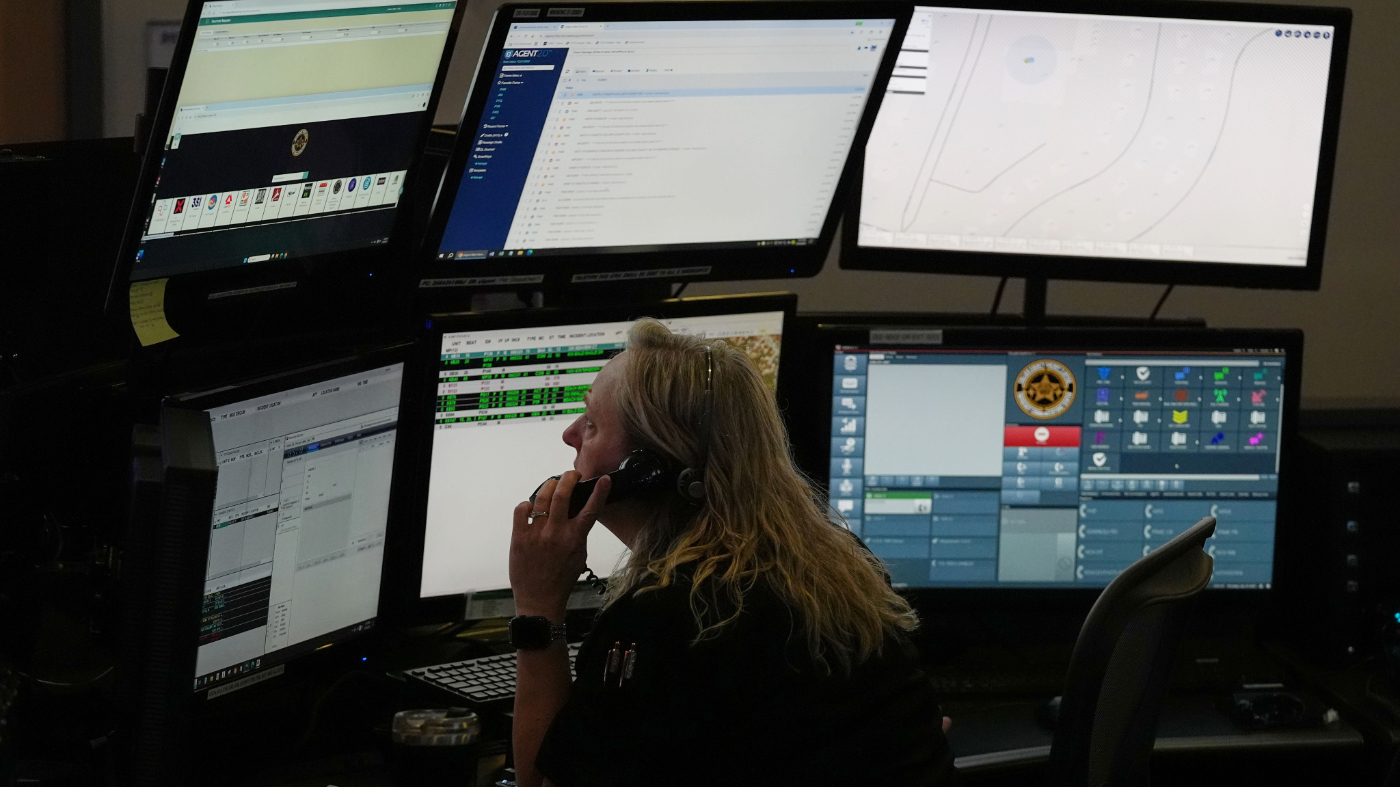
In 2019, Tim Teneyck, an Ohio resident, answered a 911 call from someone ordering a pizza.
“This is the wrong number to call for pizza,” Teneyck responded.
“No, no, no,” the voice on the line said. “You’re not understanding.”
Within seconds, Teneyck understood completely. Under the ruse of ordering a large pie with pepperoni, the caller was actually reporting a domestic violence incident. By cracking the code, Teneyck got the information necessary to facilitate an immediate and safe response .
About 450 calls are placed to 911 every minute in our country. As a researcher who has traced the nearly 60-year history of America’s 911 system, I have learned firsthand that 911 professionals like Teneyck are the ultimate first responders, saving lives and protecting health every day. But under federal labor law, they are improperly regarded as administrative workers.
The Senate has approved legislation that would reclassify 911 professionals as “protective service personnel,” a critically important reflection of their roles in our emergency response system. Taking this step should be a priority for Congress before this session ends.
The term “first responders” typically conjures images of police officers or firefighters racing toward danger, not individuals quietly answering phone calls. But while their locations may be safe, their jobs are anything but.
Nearly half ( 48 percent ) of 911 professionals report taking calls involving kidnappings or hostages. Forty-two percent have dealt with nonaccidental deaths and 37 percent have been exposed to situations involving serious assaults. Three in 10 have fielded calls regarding a suicide . When mass shootings happen, dozens of 911 calls come in waves, exposing call takers to a seemingly unending cascade of unimaginable horrors.
As one 911 professional put it, they answer calls “where a mother or father is hysterical or their teenager has hung themselves or overdosed; the female you get on the line who is literally in the middle of being beaten or raped—all those screams and visualizations get trapped in our head.”
The physical and mental toll this takes can be extreme. Compared to an average person, 911 responders are 10 times as likely to endure anxiety, post-traumatic stress disorder, suicidal ideation and depression. They have double the risk of mental health conditions compared to law enforcement officers. Yet they do not always receive proper training or support to handle these types of situations, which is devastating in its own right. In a survey, 5 percent of 911 professionals said they held themselves accountable for a tragedy that they believe occurred as a result of how they had responded to a 911 call.
Yet there has been little national effort to look after 911 professionals. My research reveals gender discrimination to be a root cause of these gaps in care and understanding.
Women were originally hired for 911 roles because they were considered quieter and better listeners than men. But entrenched misogyny also meant providing women with lower pay and fewer benefits. That imbalance remains. In stark contrast to their police officer and firefighter brethren, women today account for nearly 80 percent of 911 professionals. Sadly, they still face an unforgiving system.
Rep. Norma Torres (D-Calif.) — the only 911 professional serving in Congress — has described how during her tenure at a 911 call center, it was considered a punishment for a police captain to be transferred to work alongside her. Employees at 911 centers have reported that they are frequently called lazy or dumb . Shockingly, police officers routinely ignore 911 professionals — even refusing to answer their radios — making the task of protecting public safety even harder.
The misclassification of 911 professionals is directly related to gender discrimination. The Bureau of Labor Statistics and White House Office of Management and Budget classify 911 professionals as administrative workers. This aligns them with clerical assistants and receptionists — roles also disproportionately served by women — rather than police officers and firefighters. As a result, the highest-paid 911 professional earns about as much as the lowest-paid police officer. That also means many 911 professionals lack access to robust mental health supports and disability benefits they desperately need.
Eighteen states have stepped up to classify 911 professionals as first responders. That includes states like Washington and Arizona , where 911 professionals now have a path to access pension systems originally designated for other first responders, allowing them to retire at younger ages with full benefits. These laws also help states hire and retain more experienced 911 professionals.
The federal government must now follow suit. The Enhancing First Response Act passed the Senate unanimously on Sept. 10, 2025. It was one day shy of the 24th anniversary of the worst terrorist attack in our nation’s history, which was so devastating for 911 professionals and all of our heroic first responders. It is past time for the House to do its part. A bill that provides such considerable value without costing the federal government a thing should cross the finish line as soon as possible.
A 911 professional is “the first person you may speak to on possibly one of the worst days of your life.” At a bare minimum, the people answering those calls deserve our respect — from their callers, their colleagues and their country.
Rebecca Neusteter is the executive director of the Health Lab at the University of Chicago Harris School of Public Policy. Her book “ 911, What’s Your Emergency? The Promise and Peril of Crisis Response ,” publishes on Sept. 15.
Topics in this story
Gathered from external sources. Rights to this text belong to whoever originally published it.