Elections won’t fix America’s political divisions
If you think politics in America could not be more acrimonious than it is right now, don’t bet on it. It’s about to get much worse, unless we, the American people, do something about it.
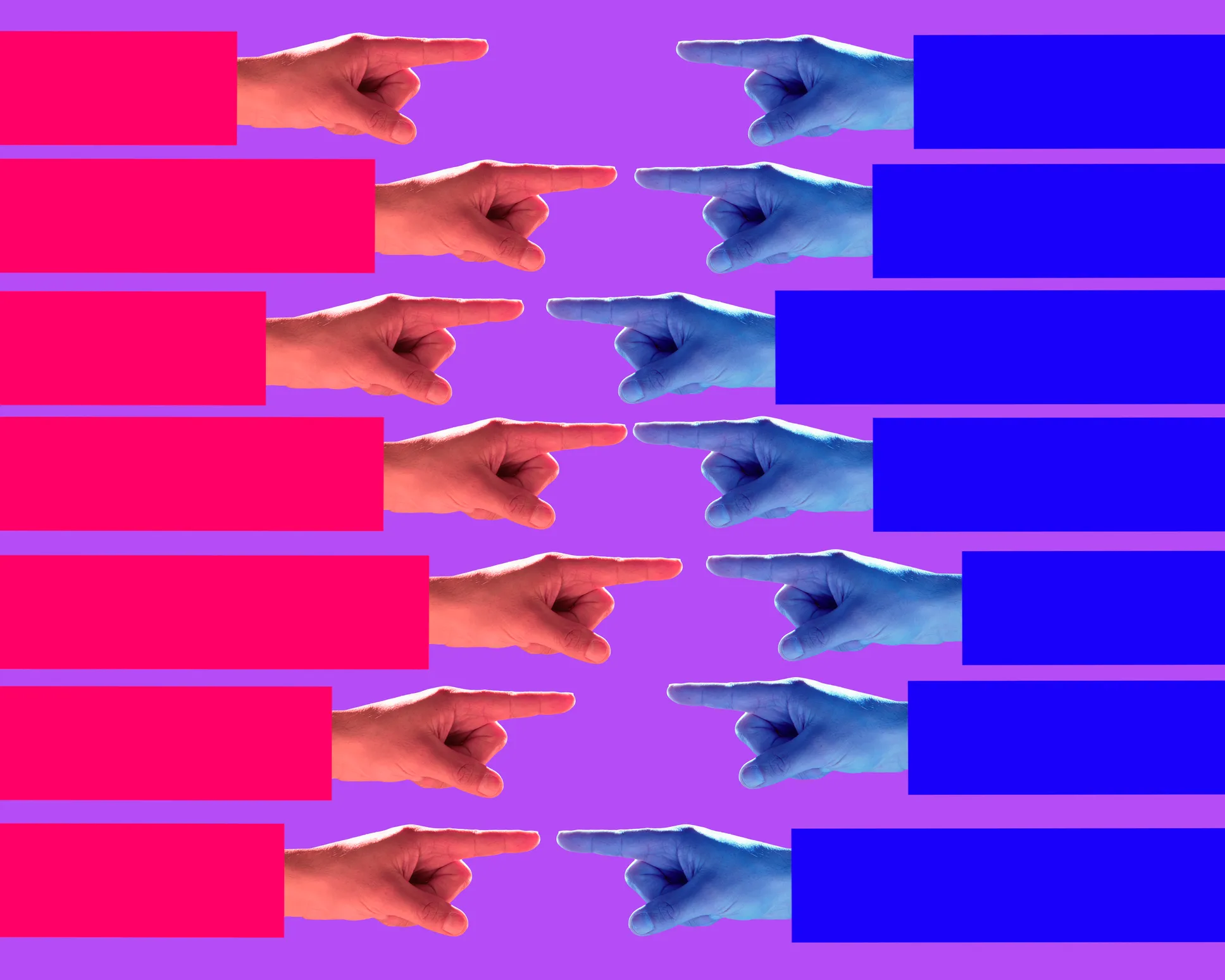
If you think politics in America could not be more acrimonious than it is right now, don’t bet on it. It’s about to get much worse, unless we, the American people, do something about it.
It is difficult to know whether the seemingly irresolvable partisan divide in Congress causes or merely reflects the divides in our society. Either way, there used to be a moderate middle occupied by liberal Republicans and conservative Democrats. This middle disappeared long before President Trump entered politics. By 2020, his fourth year in office, the nation’s 10 most polarized years had occurred over the previous 16 years, across both Democratic and Republican administrations.
The historical perspective can be helpful. America’s cohesion is not based on common ethnicity, religion or ancient history. It is based on the ideals of liberty, equality, God-given rights, and government with the consent of the people.
The social contract holds those ideals together day by day. It respects that common ground does not require common opinions. We don’t have to agree on everything. In fact, we never will — not in a democracy like ours that guarantees freedom of religion, thought and expression. Instead, the contract requires a shared allegiance to civic duty, civility and mutual respect. It not only allows but also celebrates the coexistence of diverse, even competing, ideologies.
The failure to honor that contract has previously split social cohesion. The Civil War was the most violent example. Americans united to help fight World War II, and enjoyed growing prosperity as we created the middle class in the post-war years. But it wasn’t long before events tested the contract again.
The Civil Rights Movement , whose roots were deep, won legal victories in the mid-1950s. Millions of Americans surged into the streets in the 1960s to demonstrate for civil and women’s rights, environmental protections and an end to the “endless” Vietnam War. It was a profoundly disillusioning period when the American people learned they could no longer trust the president of the United States. There was Watergate, but also the president’s decision, for political reasons , to prolong the Vietnam War long after he knew we could not win it. Tens of thousands of U.S. soldiers were killed as a result.
So, although Trump did not plant the seeds of today’s divisions, he has accelerated them with gross, escalating violations of the American compact, the Constitution, the law, and the norms that have sustained trust between a president and the people. He is working actively to undermine confidence in elections , the most fundamental tool by which citizens consent to and control government. We cannot predict exactly what Trump might do to maintain power during the final legal years of his presidency, but what we know of him tells us he would rather burn down the White House than be forced out of it.
This year’s midterm elections will not end Trump’s threats, heal the nation’s political polarity, or restore civility. Elections typically reflect the nation’s differences rather than heal them. Civil society is fragmented. Americans once joined unions, churches, service clubs, fraternal organizations and neighborhood groups. By 2024, an American Social Capital Survey found that fewer than one in five Americans participate in neighborhood, sports, workout and similar groups.
Change.org is a website that invites people to create and circulate petitions. As one such petition states: “We disagree on politics, religion, immigration, education, economics, and countless other issues. Yet beneath those differences, most of us want many of the same things. … Imagine neighborhoods filled with people who choose service over outrage, curiosity over assumptions, collaboration over division, and courage over complacency.”
It will take work. The Pew Research Center found last year that only 34 percent of Americans believe most people can be trusted, and only 44 percent trust all or most of their neighbors. On the other hand, three in four would water an absent neighbor’s plants or take food to a sick person. We see that spirit emerge during personal and collective disasters. Two-thirds of Americans believe they can learn something valuable by connecting with people who are different from themselves, and 70 percent feel they have a responsibility to make those connections. Asked why they don’t do it more, most cited a lack of opportunity.
Clergyman and peace activist William Sloane Coffin once wrote , “All human beings have more in common than they have in conflict, and it is precisely when what they have in conflict seems overriding that what they have in common needs most to be affirmed.”
November will change the composition of Congress. The 2028 election will produce a new president. But only the people can make the country great.
William S. Becker is co-editor of and a contributor to “ Democracy Unchained: How to Rebuild Government for the People,” and a contributor to “ Democracy in a Hotter Time .” He previously served as a senior official in the Wisconsin Department of Justice. He is currently executive director of the Presidential Climate Action Project.
Topics in this story
Gathered from external sources. Rights to this text belong to whoever originally published it.