FAA says proposed Trump arch will require ‘eternal flame’ on top to alert pilots
The Federal Aviation Administration (FAA) said Saturday that President Trump’s proposed Triumphal Arch in Washington, D.C., would require an “eternal flame” on top to alert nearby pilots. “The FAA’s determination includes conditions for the Arch to be appropriately marked with a non-standard eternal flame on top of the structure and floodlight projectors pointed towards the…
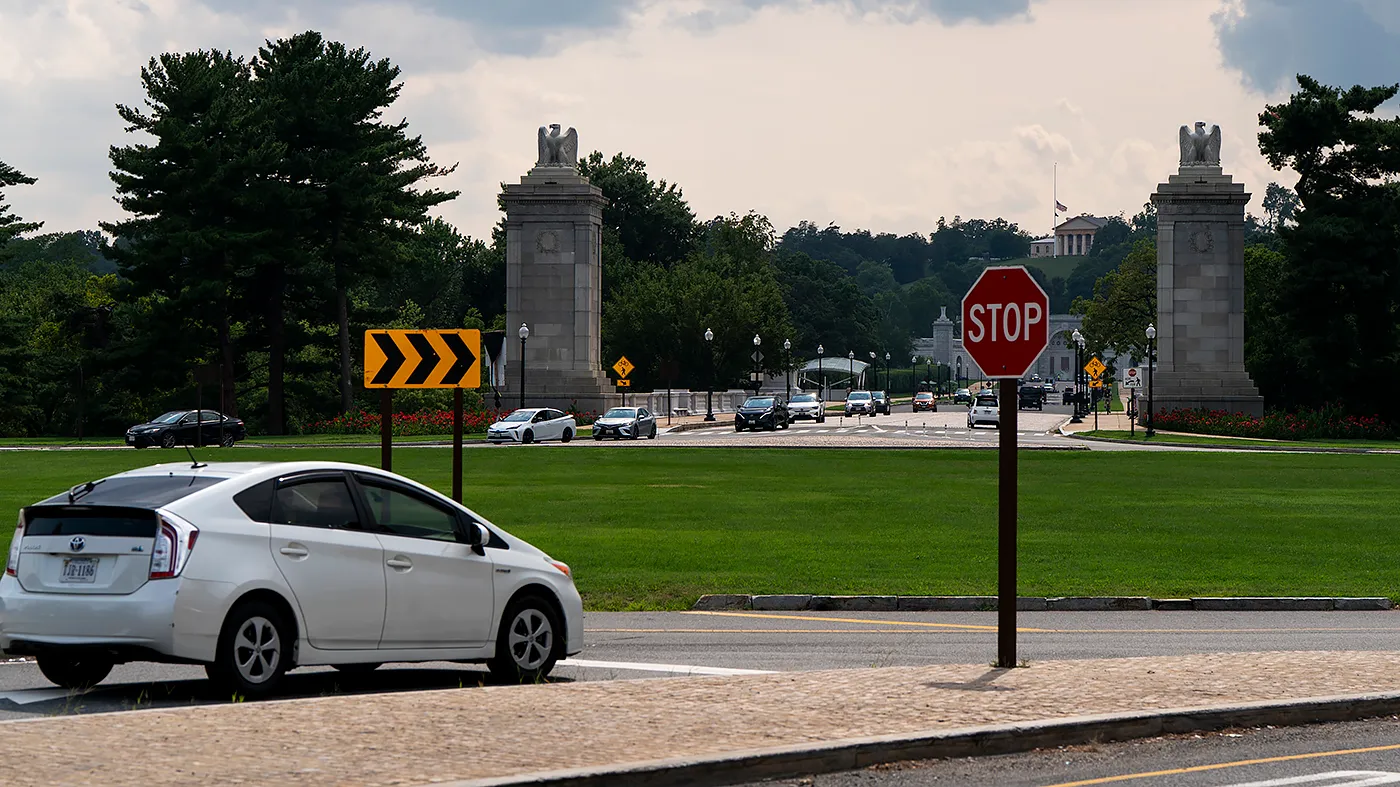
The Federal Aviation Administration (FAA) said Saturday that President Trump’s proposed Triumphal Arch in Washington, D.C., would require an “eternal flame” on top to alert nearby pilots.
“The FAA’s determination includes conditions for the Arch to be appropriately marked with a non-standard eternal flame on top of the structure and floodlight projectors pointed towards the Arch to make it noticeable for pilots,” an FAA spokesperson told The Hill.
The agency released a hazard study Friday that confirmed the Triumphal Arch “would not pose a hazard to aircraft” after a review by safety experts that examined “airspace, air traffic patterns and procedures around Ronald Reagan Washington National Airport, as well as operations at nearby military/public-use airports.”
The FAA previously stated the arch would need red obstruction lights, such as the light at the top of the Washington Monument, but said the structure no longer is required to have them in its hazard report, according to the New York Times .
A letter to the National Park Service (NPS) about the study also detailed that the searchlight projectors that would accompany the “eternal flame” should “provide an average illumination of at least 15 foot-candles (161.46 lux) over the top one-third of the structure.”
The proposed Triumphal Arch would become the largest in the world, towering over the Monumento a la Revolución in Mexico City, measured at 220 feet, and the 164-foot Arc de Triomphe in Paris.
It would be located along the Arlington Memorial Bridge, which symbolically represents the reunified U.S., connecting the North and South following the Union victory that closed the Civil War in 1865.
A veterans group launched a campaign last week against the arch, arguing it was “entirely inappropriate and borders on sacrilege to the men and women buried” at the cemetery to break the line of sight between the Lincoln Memorial and the cemetery with the arch.
A NPS assessment said in August that the arch would adversely impact dozens of historic sites around the city, including by obstructing views.
It listed nearly 40 locations across the city after the agency asked outside groups to comment, including the Pentagon, the Washington Monument, the U.S. Capitol, the National Mall Site, the Lincoln Memorial, the Robert E. Lee Memorial and Lyndon B. Johnson Memorial Grove.
Topics in this story
Gathered from external sources. Rights to this text belong to whoever originally published it.