The Movement: Conservatives make closing arguments against socialism
The final hours of the midterm season are upon us, and conservative groups fighting against the odds to preserve the Republican power trifecta in Washington are broadcasting their closing arguments, which equate Democrats with socialism, but are also bracing for a loss of power that seems more and more likely after the elections. “While we…
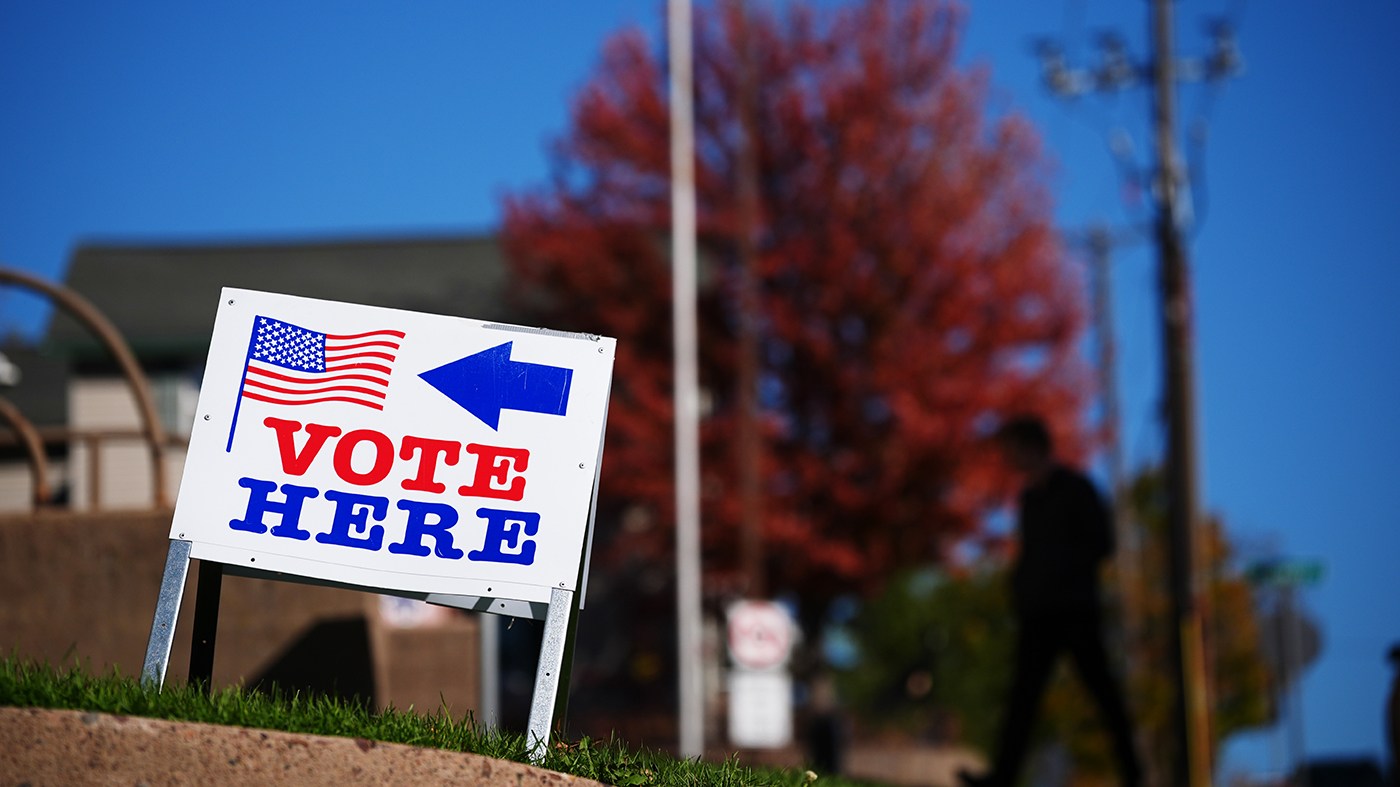
The final hours of the midterm season are upon us, and conservative groups fighting against the odds to preserve the Republican power trifecta in Washington are broadcasting their closing arguments, which equate Democrats with socialism, but are also bracing for a loss of power that seems more and more likely after the elections.
“While we hope Republicans maintain the House and the Senate, the results of election night don’t matter in the grand scheme of things,” said Douglas Blair , spokesperson for Heritage Action. “If Republicans win, we have to protect all the Trump admin’s accomplishments and follow through on a clear agenda to fix the American people’s concerns. If Republicans lose, conservatives will need to unite to protect the country from the radical, unapologetically socialist left.”
The anti-socialism push could stick as a defensive message for Republicans if they do lose their majority, much like anti-Trumpism has been a rallying cry for Democrats during their years out of power.
Bill Riggs , spokesperson for Americans for Prosperity Action, a conservative grassroots group tied to the Koch family, said mobilizing against socialism was a motivating factor for voters his group surveyed as Democratic Socialists of America-backed candidates began to pick up steam throughout the year.
“We saw warning signs this summer that 1 in 5 base Republican voters were at risk of either staying home or voting for the Democrat,” Riggs said. “Then the DSA agenda began to take hold on the left, and that opened the door to re-energizing those base voters and swing voters. That’s why our closing message is laser-focused on contrasting the harm of those socialist policies with a credible alternative to lower costs. That message has cut the at-risk Republican base in half, and it’s working in real time at the doors with swing voters.”
AFP Action’s last round of ads in Senate swing states centered around this approach, tying each Democratic candidate to the DSA’s policies whether or not that candidate aligns with them.
Senate Republicans, in a press release Monday, touted the accomplishments of the Republican-held Congress, including their signature tax cut legislation and progress on a bundle of conservative priorities like immigration enforcement, classically Republican ideals.
That list did not include some of Trump’s most prominent policies, including the Iran War and global tariffs. And some free-market conservatives noted that the GOP’s midterm approach bears more resemblance to the old-fashioned brand of Republicanism, at least in terms of economics, than it does to the tariff-happy, bigger-government agenda championed by Trump.
Trump, for his part, used a Monday speech to tout his renovations to D.C. landmarks like the Reflecting Pool, without much focus on the midterms beyond calling the Democratic candidates “extreme” and “the most dangerous candidates ever put up.”
He also repeated his promise to give $5,000 to every American if Republicans win, a proposal that blindsided congressional Republicans, who were generally opposed.
The Old-vs-New Right dynamic could be crucial for the next era of the Republican Party, either as it seeks to find its footing again after taking losses this year or charts a new majority era with the 2028 presidential primary on the horizon.
Republicans will need to unite around something, and the divisions in the party over economics, foreign affairs, family policy and countless other issues under Trump will need bridging on the path back to future power.
But those who want a restoration of traditional free-market, small-government conservatism are hoping their ideas have mass appeal that can course-correct the party. These closing arguments are evidence of that, they say.
“Despite countless keystrokes spent online, the so-called New Right’s arguments are almost completely absent from the Republicans’ closing message,” said Jonah Wendt, spokesperson at Advancing American Freedom. He mentioned the GOP ads during NFL games on Sunday that dug into the low-tax, free-markets approach, emphasizing a contrast between Republicans who will “cut your taxes” and Democrats who “will raise them.”
“With as much data as they could possibly have, campaigns, Super PACs, consultants and ad makers turned to traditional conservatism to make the case for voters to give the GOP a second chance,” Wendt added.
WILL REPUBLICANS KEEP THEIR LEADERS IN A MINORITY?
Speaker Mike Johnson (R-La.) is signaling he’s not planning on leaving his leadership role — or Congress — anytime soon.
That’s unusual. Typically, Republican leaders who lose their majority have stepped down and out of the body. But Johnson has hinted that he’ll bid again to be leader, even in a Republican minority, Trump has suggested he endorses the move .
His colleagues aren’t sure Johnson will go through with it, though, after three grueling years as Speaker when he struggled to unite a restive GOP conference and navigate a minefield of Trump policies, like the Iran War, that are unpopular even with many Republicans. Not to mention, his conference would still have to elect him.
“There’s certainly a lot less trappings and a lot less power, and also the caucus just tends to kind of want to clean some house. Like members just see it as an opportunity to just switch things up,” GOP strategist Amy Frederiksen told my colleagues Sudiksha Kochi and Mike Lillis .
The looming question of where Johnson will go will hang over the post-midterm leadership shuffle, especially if Democrats perform as well tonight as polls and analysts expect. Reps. Steve Scalise (R-La.) and Jim Jordan (R-Ohio), original candidates for Speaker in the race that elected Johnson, have downplayed their interest in the job but other sources told Sudiksha and Mike that both are privately angling for it.
If Republicans lose their majority, the blame could fall on Johnson, especially if there’s a blue landslide. But generally, Republican sources said Johnson was well-respected and had been seen as running a strong show amid a chaotic two years with razor-thin margins.
Meanwhile in the Senate, there’s little doubt that Majority Leader John Thune (R-S.D.) will run for another term, as he has said he plans to, even if Republicans lose the majority. He’ll also probably win.
Rep. Haley Stevens (D-Mich.), who lost to Abdul El-Sayed in the Democratic primary for Senate in Michigan, endorsed the Republican candidate, former Rep. Mike Rogers , over the weekend. It’s a stunning role reversal in a campaign cycle where many Republicans of all stripes have endorsed Democratic candidates for Senate, including GOP governors in Kansas and South Carolina . More here .
House Republicans are deploying staff around the country to add oversight to elections in battleground districts. The program runs every cycle, but this year’s is set to be “the most robust” as Republicans seek to hold onto their House majority. More here .
After the midterms come the lame-duck floor fights over what to prioritize, and it’s looking less likely that a reconciliation bill packed with GOP priorities will get across the finish line. Senate GOP aides threw cold water on that possibility, even while some Republicans in both the House and Senate are eager to stay in through the holidays to get it done. More here .
November 10-12: Conservative groups including Heritage, The Claremont Institute and the Conservative Partnership Institute gather at The Forum, a new national conference for conservatives featuring a range of speakers, including Scott Jennings , James Braid , Nick Freitas and Spencer Pratt . Details here .
November 18: The Foundation for Research on Equal Opportunity hosts Freedom & Progress 2026, a gathering of leaders committed to expanding opportunity through free enterprise, innovation, pluralism, and individual liberty. Details here .
Claire Cain Miller in The New York Times: We Called Back Young Men Who Voted for Trump. He’s Losing Them.
Amelia Davidson and Timothy Cama in Politico: Conservative climate movement faces a blue wave wipeout
Topics in this story
Gathered from external sources. Rights to this text belong to whoever originally published it.