Dirty Democratic political tricks abound
The article argues that Democrats have employed various controversial political tactics during the current election cycle, including alleged ballot stacking in Alaska and Montana and previous strategic spending patterns.
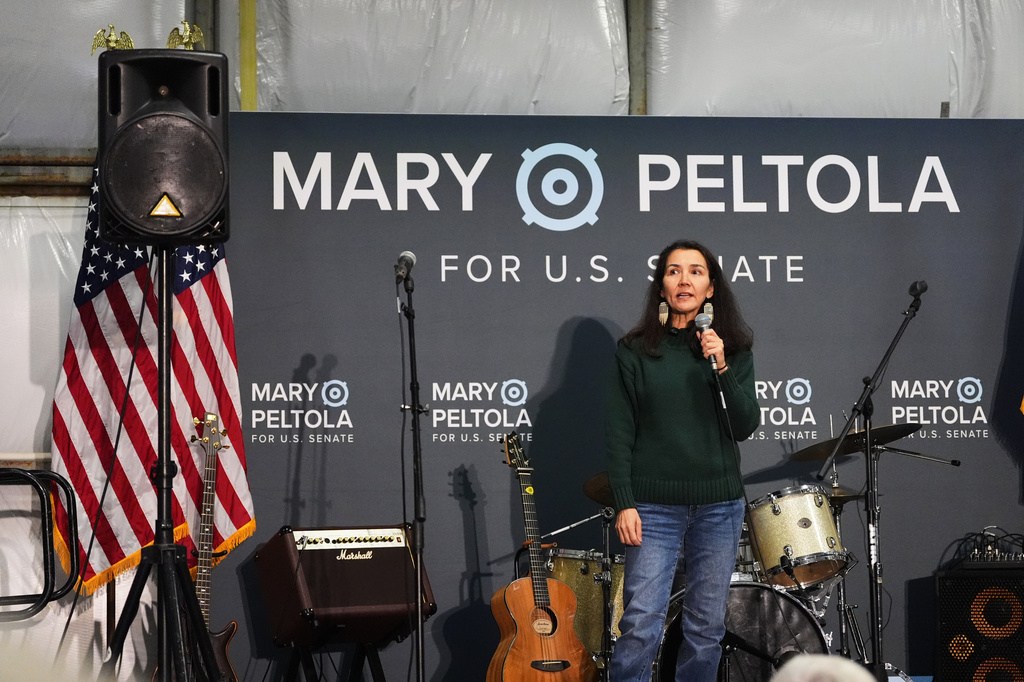
Democrats’ concerns about a growing threat to democracy — 85 percent in a recent Pew Research Center survey — would be more believable if they weren’t so actively engaged in political dirty tricks that undermine the democratic process. Their recent antics in the Alaskan Senate race may be the dirtiest in this election cycle, but there are others.
A New York Times investigation alleges that Alaskan Democratic Senate candidate Mary Peltola, who represented Alaska in the U.S. House of Representatives from 2022 to 2025, and her campaign operatives worked with the Democratic Senatorial Campaign Committee for months to find an Alaskan with the same name as the current Republican incumbent, Sen. Daniel S. Sullivan. And they found one: Dan J. Sullivan, who was allegedly persuaded to run as a Republican, but switched to “undeclared ,” for the U.S. Senate. He denies the allegation .
Alaska’s multiparty, ranked-choice voting system allowed the alternative Sullivan to make it to the general election. The Democrats’ apparent plan was to confuse voters in order to draw votes away from the incumbent Senator Sullivan, giving the victory to Peltola. Fortunately, the state has taken steps to ensure voters know which Sullivan is the incumbent Republican.
The Times explains that both Republicans and Democrats have engaged in “ ballot stacking ” — that is, persuading other, often unknown, candidates to run for office to draw votes from one of the leading candidates.
For example, the Wall Street Journal reports that in a 1998 U.S. House race in Georgia, Republicans ran a candidate named John H. Lewis, Jr., against the famed civil rights leader and Democratic incumbent Rep. John Lewis. But that was a Republican against a Democrat — it didn’t fool Democratic voters. The Democrat Lewis won in a landslide.
Both Peltola and the Democratic Senatorial Campaign Committee reportedly deny any involvement in recruiting the alternative Sullivan. But the Times investigation undermines that denial, shining a very awkward light on Democratic tactics.
That’s not the only instance of dirty Democratic tricks this election season. Montana is a very red state , and Democrats were looking for their best chance to beat the Republican candidate, Kurt Alme, a former U.S. attorney who’s running for an open U.S. Senate seat.
The Democratic candidate is Alani Bankhead, a woman of color, a retired Air Force lieutenant colonel and federal agent. As Bankhead told her story to This American Life , she had little money and support until positive ads started appearing, along with mailers and social media. She had no contact with or knowledge of the political action committee sponsoring the ads.
The ads greatly boosted her image, and she easily won the Democratic primary. Then the ads stopped, cold turkey. She didn’t know why.
It turns out that there’s an independent also running for the Senate seat — Seth Bodnar, a West Point graduate, former veteran and, importantly, president of the University of Montana.
Bankhead believes Democrats helped her win the nomination with the goal of getting her to drop out of the race so Democrats would back the independent, Bodnar. He is considered a moderate and the best option for beating Alme.
If that was the Democratic plan, it failed, even though there was a major public push to get her to drop out. Bankhead says she is the Democratic nominee and has no intention of dropping out. So far, the Republican candidate is leading in the polls .
Another dubious Democratic practice, which we mostly heard about in 2022, was Democrats spending millions of dollars backing far-right MAGA Republican candidates in their primaries. The goal was to get the most unelectable Republicans to win their primaries so the Democratic candidates would have an easier road to win in the general election.
The Washington Post reported on the practice in 2022, along with providing some of the ads. According to the Post, “Democrats have spent money to help a trio of further-right candidates win primaries in governor’s races in Illinois, Maryland and Pennsylvania.” They also used the strategy, unsuccessfully, in certain races in California and Colorado.
The Post says that some ads sound like attacks that the candidate was too conservative. But that was meant to draw the most conservative voters to those candidates, undermining any more traditional Republican candidates.
Of course, the dirtiest trick belongs to the 2016 Clinton campaign’s funding of the now-discredited “Steele dossier .” In 2022 the Federal Elections Commission fined the Democratic National Committee and the Clinton campaign $113,000 after it “found ‘probable cause to believe’ that both the campaign and national party ‘misreport[ed] the purpose of certain disbursements,’” according to Politico .
The recent tactics in Alaska and Montana may not be illegal, but they are slimy and cynical. Republicans at the state and federal levels are investigating. Sadly, the actions open the door for even more dirty tricks by both parties at a time when the last thing most voters want is dirtier politics.
Merrill Matthews is the Texas state chair of Our Republican Legacy.
Topics in this story
Gathered from external sources. Rights to this text belong to whoever originally published it.