What will winter be like near you? Here’s what the outlooks suggest
Will you need a parka and a shovel or an umbrella and a sweater this winter?
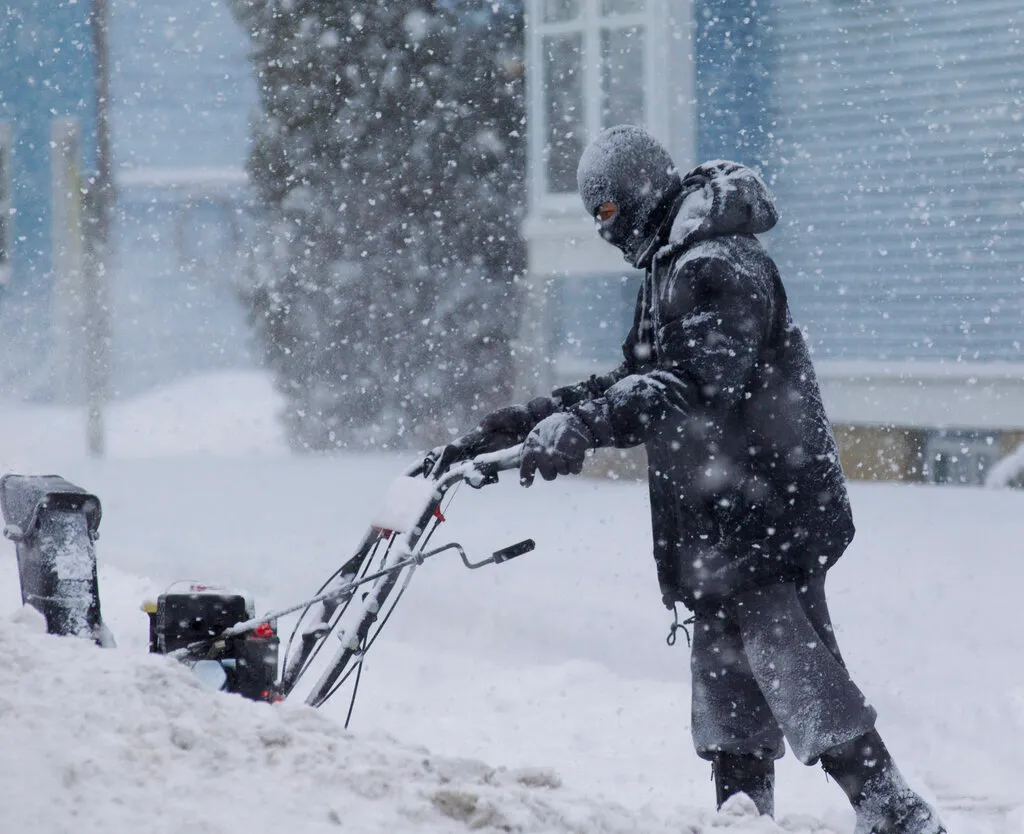
(NEXSTAR) – In life, there are few certain things, but we can guarantee at least one certainty: winter is coming.
Sure, the calendar shows it’s only the end of September. The leaves may only just be changing near you, and temperatures may still be tolerable without a jacket. But we’ve never been closer to the 2026-2027 winter season than we are now.
So what will it look like near you? That isn’t exactly a guarantee.
You could be buried in snow, battling frigid temperatures. Or maybe it will be a dry year with temperatures that don’t fall to total bitterness. It depends on who you ask.
The Old Farmer’s Almanac and Farmers’ Almanac have again released their extended forecasts for the impending winter season. The latter calls for “snow, sleet and surprises,” while the former suggests we will experience a mild winter with “colder, snowier spots.”
More specifically, the Farmers’ Almanac reports that its formula is predicting winter precipitation throughout the seven main regions of the U.S. In the upper Plains and Midwest, that’s “snowy” precipitation. It will be “wet” across the Gulf and southern East Coast and “wetter” in the South with “coastal storms” in New England.
Meanwhile, the Old Farmer’s Almanac’s outlook emphasizes mildness for most of the U.S. Only the Ohio Valley region and southern New England are forecast to have a “cold winter,” per the periodical’s formula, while Hawaii could be “cool.”
Most of the Plains will remain dry as the Pacific Coast, parts of the Gulf, and the Midwest are expected to be wet, according to the outlook.
Whether or not you believe these forecasts, research has shown only about half of the forecasts produced by the Farmers’ Almanac were correct. Both publications claim to be 80% accurate with their long-range forecasts.
“It’s more like a crapshoot of trusting something that far into the future since there are times the forecast is blown in the first 24 hours,” meteorologist Rich Segal, who recently retired from Nexstar’s KXAN, previously explained.
What about the National Weather Service?
The National Weather Service also offers long-range weather outlooks, but even those are subject to change. They also don’t predict specific events, like major winter storms.
“It’s just not possible to do that,” Jon Gottschalck, Operational Prediction Branch Chief at NOAA’s Climate Prediction Center, told Nexstar.
The Climate Prediction Center earlier this month released updated seasonal forecasts outlining what kind of broad weather patterns we can expect through the end of 2026 . For most of us, the outlook suggests we’re likely to see warmer-than-normal temperatures (unsurprisingly, thanks to the supercharged El Niño that could be sticking around ). A large band of states, primarily in the South, are leaning toward above-average precipitation from October through December.
The outlook for November, December, and January is about the same. A large swath of the U.S. is likely to see warmer-than-normal temperatures into the start of 2027, while an expansive band of states is leaning toward above-average precipitation. You can view the seasonal temperature and precipitation outlooks for November through January in the slideshow below:
NOAA, the Farmer’s Almanac and the Old Farmer’s Almanac do review some of the same factors. That includes what could become the strongest El Niño pattern we’ve seen since 1950 . The phenomenon is nearly certain to last into spring 2027 , according to the latest climate models.
As we head into winter, how El Niño plays out will be very different for the northern half of the country and the southern half . Broadly speaking, the northern states will be drier and warmer than normal, while southern states will be cooler and wetter.
“We can still get occasional shots of colder air that drop into the central U.S., and we’re still going to get cold air to go across the northern Plains, and yes, there’s still going to be at least some snow across the northern part of the U.S., but the overall pattern does not favor a whole lot of snow across the northern U.S.,” Brian James, Nexstar chief meteorologist, said last week.
So can you trust the almanac predictions? Ultimately, it’s up to you.
“While no forecast can claim perfect accuracy, our predictions have proven useful for generations of planners and outdoor enthusiasts,” Sandi Duncan, the editor of the Farmers’ Almanac, told Nexstar last year. “We continuously refine our method but acknowledge that Mother Nature always has the final say.”
Nexstar’s Alix Martichoux contributed to this report.
Topics in this story
Gathered from external sources. Rights to this text belong to whoever originally published it.