GOP efforts to lower gas prices derailed by Republican infighting
Republican efforts to reduce national gas prices in the weeks before Election Day were derailed in the Senate by infighting among GOP lawmakers and members of the administration who could not agree on how to ease consumers’ pain at the pump. The divisions within the Senate Republican conference over how to lower gas and diesel…
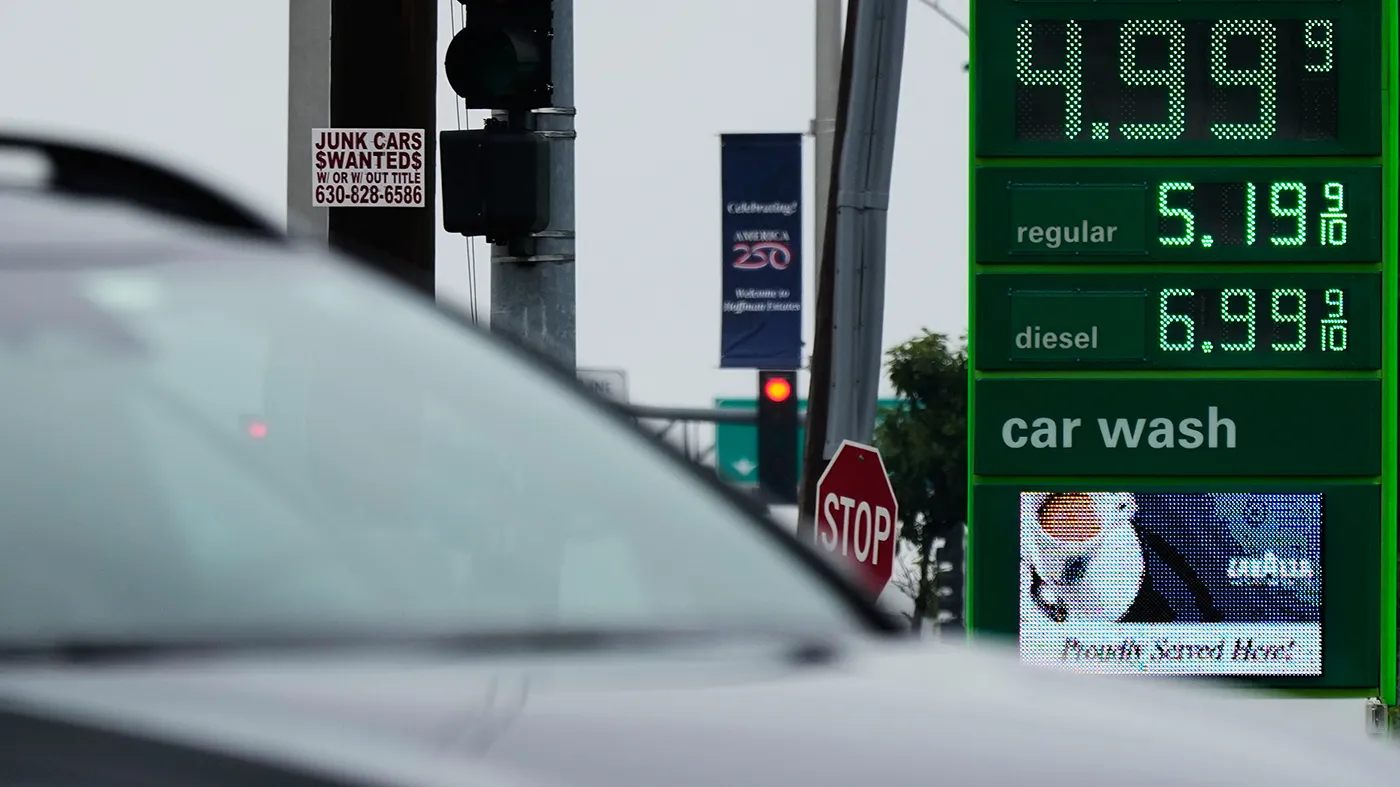
Republican efforts to reduce national gas prices in the weeks before Election Day were derailed in the Senate by infighting among GOP lawmakers and members of the administration who could not agree on how to ease consumers’ pain at the pump.
The divisions within the Senate Republican conference over how to lower gas and diesel prices — even if temporarily — were driven primarily by geographic differences.
Senators from oil-refining states shot down proposals from farm-state senators to ban the export of diesel or to loosen restrictions on the sale of E15 gasoline with higher ethanol content.
“You’re talking about regional politics, and it gets bogged down in the politics of energy, and the fiefdoms around it,” said Ron Bonjean, a GOP strategist and former Senate leadership aide.
There were divisions that went beyond geography, too.
Fiscal hawks torpedoed proposals to suspend the gas tax, even though their colleagues argued that doing so for a short period of time to bolster Republican candidates would have little real impact on the highway trust fund.
And lawmakers had less flexibility on some possible actions because of the depletion of the nation’s strategic petroleum reserve by big drawdowns to stabilize market prices during the Iran war.
The biggest problem, however, was that Republican senators didn’t see any proposal as likely to have a significant impact on prices before Nov. 3, when voters will decide which party controls Congress next year.
“It is almost impossible to federally reduce gasoline prices for consumers because the levers of power that can be used have very little effect on the prices,” Bonjean said.
The idea that appeared to have the most momentum was a proposal to impose a 90-day ban on diesel exports, which Sen. Chuck Grassley (R-Iowa) began floating before a Senate Republican leadership meeting in mid-September.
“We need to concentrate on affordability for this election. With diesel at $6, the best thing [President] Trump could do is follow what a Republican president did in the ’70s and a Democrat president did in the ’70s — when they were worried about the price of food, they put an embargo on soybeans and wheat — and [Trump] should put an embargo on diesel leaving the country,” Grassley told The Hill on Sept. 14.
Trump embraced the idea, but it immediately ran into heavy resistance from oil-state senators and oil companies, who argued that it wouldn’t cut diesel prices but instead might even push them higher.
“One thing we know for sure is that export bans don’t have a negative price impact, particularly with a commodity like that that’s globally traded and globally priced,” said Sen. Kevin Cramer (R-N.D.).
“If you restrict access to the global market for our diesel production, you literally disincentivize more diesel production in which case you end up with higher prices, lower supply,” he said. “You’re restricting your global supply, which has a global impact on prices.”
Cramer warned that a diesel export ban “most likely would” raise diesel prices, especially in California and the Northeast, which import diesel from foreign sources.
Sen. John Cornyn (R), who represents oil-rich Texas, dismissed the proposed diesel export ban as a “gimmick.”
The White House in late September floated a plan to ban diesel exports for 90 days, despite objections from Energy Secretary Chris Wright, who argued that “banning diesel exports definitely doesn’t work.”
Trump ruled out the idea last week before heading to Ohio to campaign for embattled Sen. Jon Husted (R-Ohio).
Earlier this year, fiscal hawks such as Sen. Rand Paul (R-Ky.) spoke out against a proposal introduced by Sen. Josh Hawley (R-Mo.) to suspend the gas tax.
The federal gas tax is 18.4 cents a gallon for gasoline and 24.4 cents a gallon for diesel.
Hawley argued it would give American workers and families “immediate relief,” but Paul and other budget hawks warned it would blow a hole in the highway trust fund.
Another proposal floated by farm-state Republican senators alarmed by the voter backlash to high gas prices was to allow permanent easing of restrictions on E15 gasoline, a fuel blend that includes 15 percent ethanol.
Sen. Mike Rounds (R-S.D.), who’s up for reelection this year, touted E15 as a way to knock down fuel prices.
“It would bring it down right now, some people think, as much as 30 cents a gallon — do voluntary E15 nationwide. It would be immediately available. It’s there now. It’s an American product,” Rounds told The Hill.
“The president could do that today,” he said.
Rounds also called for expanding refining capacity in the United States. But Republicans from oil-producing states argued that wider availability of E15 gas would hurt small- and mid-size oil refiners.
Senate Majority Whip John Barrasso (R-Wyo.) declared his opposition to what he called the “year-round E15 mandate” after Lee Zeldin, administrator of the Environmental Protection Agency (EPA), announced in March that the Trump administration would expand the sales of gasoline with higher concentrations of ethanol over the summer.
The fight will continue to play out during the lame-duck session of Congress after the Nov. 3 elections.
Campaigning with Senate Republican candidate Michele Tafoya in Minnesota this week, Senate Majority Leader John Thune (R-S.D.) said he was optimistic about passing legislation to boost the availability of E15 gas in the stalled farm bill.
“I intend and expect fully to get this done and get it across the finish line,” Thune said of the farm bill. “And it will include E15, exact version maybe to be determined.”
Thune’s comments were reported by local radio station WZFG’s “The Flag.”
Even so, GOP strategists are doubtful that Washington can do much to impact the price of gas unless Trump finds a military or diplomatic solution to reopen the Strait of Hormuz, which Iran has used to choke off much of the global oil supply.
“It’s very hard to predict where gas prices are going to be after the election but one could put money down it’s still going to be high,” said Bonjean, the GOP strategist.
He said, however, that prices could come down dramatically if Trump is able to eliminate Iranian threats to tanker traffic through the Strait of Hormuz using serious “military intervention” — something the president has alluded to in recent days.
Topics in this story
Gathered from external sources. Rights to this text belong to whoever originally published it.