Vulnerable Republicans divided over wisdom of Trump’s midterm convention
Republican senators and candidates have mixed feelings about President Trump’s midterm election convention, with many hoping that Trump can rev up millions of MAGA voters but worried of being tied to a president with a slumping approval rating. Party officials are promising a big turnout of Senate Republican incumbents at this week’s convention, which Trump…
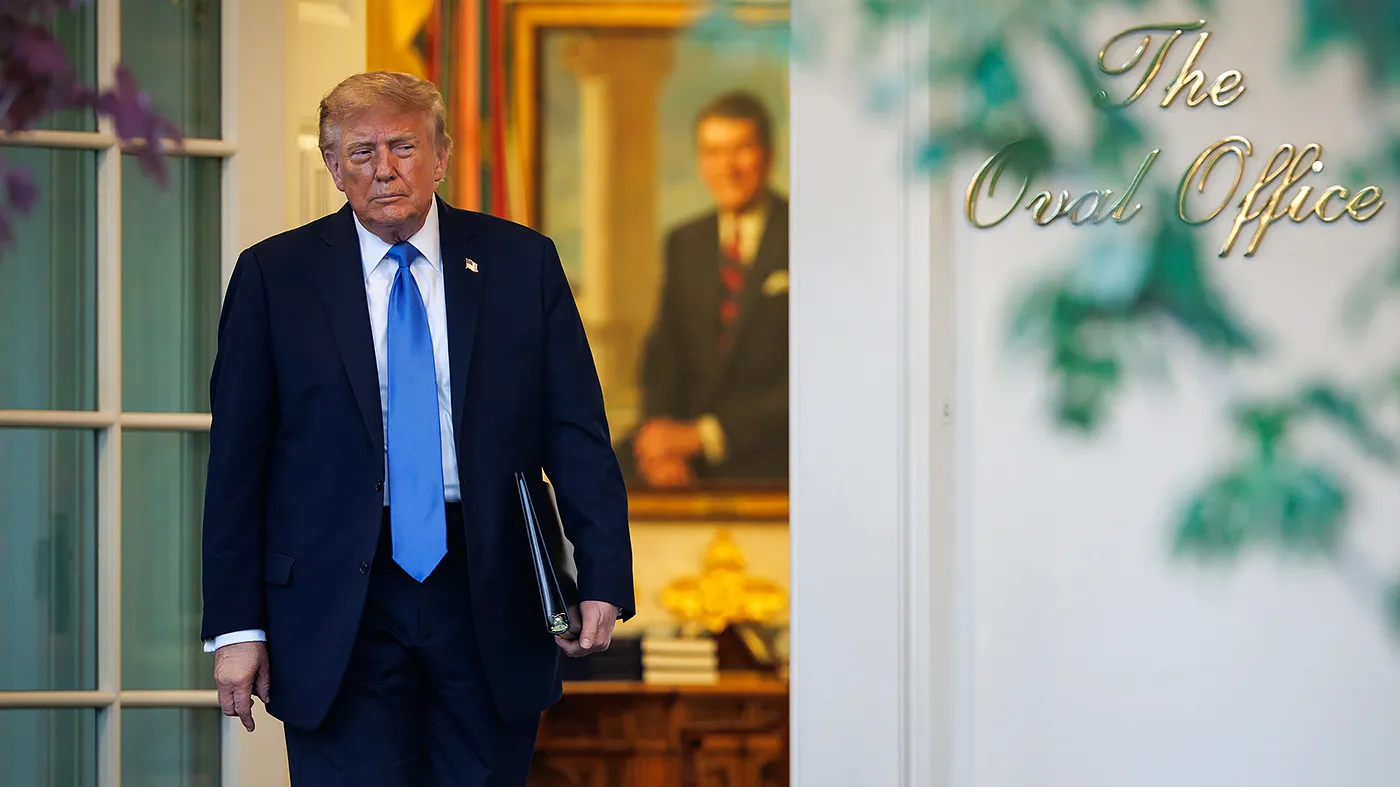
Republican senators and candidates have mixed feelings about President Trump’s midterm election convention, with many hoping that Trump can rev up millions of MAGA voters but worried of being tied to a president with a slumping approval rating.
Party officials are promising a big turnout of Senate Republican incumbents at this week’s convention, which Trump allies will host Wednesday and Thursday in Dallas, but GOP strategists are warning Republican senators and candidates in tough races to stay away.
They say GOP candidates in tough races this fall face a risk in letting themselves get more closely tied to the president only weeks before the election.
“Trump is an absolute albatross for Republicans running in tight races because he promised to focus on the economy and keep us out of foreign wars and the exact opposite has happened,” said a senior Republican strategist who requested anonymity to talk about Trump’s impact on the election.
“By having a Republican candidate attend the convention, you’re tying yourself immediately to the president,” the strategist added.
“You’re already defending a voting record that you may have in the House or Senate if you’re an incumbent and then on top of it, you have to defend anything the president says at the convention, anything anyone else says at the convention, because if you’re there, you’re tied to it,” the source said. “It makes it a lot easier to avoid headaches and issues that your opposition can bring up if you simply [do] not attend and focus on your campaign on the ground.”
Sen. Susan Collins (R-Maine), one of the Senate’s most vulnerable incumbents, has decided to stay away from the GOP gathering in Texas.
A spokesperson for Collins told the Portland Press Herald she “runs her own campaign independent of any national party schedule.”
Sen. Mike Rounds (R-S.D.), who may face a tougher-than-expected challenge in a Republican-leaning state, said his time is better spent meeting with constituents in South Dakota and that he won’t attend the convention.
“I’m back in the state of South Dakota,” Rounds said when asked about the convention.
“I do coffees. What I do is I go on out” and meet constituents, he added. “I think I’ve hit 14 different communities since I’ve been back.”
Asked if the midterm convention is a good idea, Rounds said, “That’s up to the folks that want to be there.”
“I’m not going to be there,” he added. “If I got time off, I try to spend it in South Dakota.”
Rounds’s independent challenger, Brian Bengs, released an Impact Research poll of 500 likely South Dakota voters last month showing him tied with Rounds, 44 percent to 44 percent.
While Rounds is widely seen as safe to win reelection, the poll underscores why Republicans aren’t taking any chances in a difficult election year for the GOP.
Trump’s trade war with Canada and his decision to allow the import of 300,000 metric tons of foreign-raised beef into the United States are unpopular with South Dakota voters.
Rounds said South Dakota ranchers viewed Trump’s decision to import hundreds of thousands of tons of foreign beef as a betrayal.
“The suggestion that they bring in 300,000 metric tons of beef is not a popular program. They feel just like the administration pulled the rug right out from underneath a lot of our farmers and ranchers,” he said.
Rounds said Trump is popular in South Dakota and folks “love the president” but “they’re hurt” and feel “let down” by the beef import decision.
A second GOP strategist who requested anonymity to talk about the midterm convention warned that Trump’s low approval numbers among independent voters is a “huge problem.”
“A lot of these close races will be decided by the independent vote,” the strategist said. “A lot of the more moderate Republicans are going to have to rely on the independent vote especially if Trump’s not on the ticket and not as many Republicans turn out.
“The independent vote is always important, but if it’s deteriorating, it’s not a good omen,” the source added.
Republican senators have agonized for months over polls showing independent voters shifting away from Trump and the GOP and toward Democrats.
A Civiqs tracking poll of registered voters across the country shows Trump is underwater with independents in key Senate battleground states such as Maine, Michigan, North Carolina, Ohio, Iowa and Alaska.
In Maine, for example, Trump has a 21-percent approval rating among independents and a 61-percent disapproval rating, according to the survey. In North Carolina, the president has a 28-percent approval rating among independents and a 65-percent disapproval rating.
In Ohio, the Civiqs survey found Trump with a 27-percent approval rating among independents and a 63-percent disapproval rating, while in Iowa it found Trump with a 24-percent approval rating among independents and a 66-percent disapproval rating.
Still, Republicans facing tough races this fall are hoping that Trump will drive GOP voter turnout and some plan to attend next week’s convention to help generate momentum and enthusiasm among base voters in their home states.
Sen. Roger Marshall (R-Kan.), who faces a tougher-than-expected challenge from Democrat Adam Hamilton, the founder of the nation’s largest United Methodist Church, plans to attend the convention in Dallas.
“We’re taking nothing for granted,” said Marshall, who expects Democrats to pour tens of millions of dollars into the race to boost Hamilton.
The Kansas senator said, “We need the president’s base to get out and vote.”
“There may be 200,000 people in Kansas that only vote when President Trump is on the ballot,” he said. “Certainly he needs to communicate to them that he is on the ballot, that if we lose the House it will just be one impeachment after another — his agenda is over with.
“I think it’s real important that he’s able to communicate and get that base fired up,” he said.
Marshall said voters are feeling the sting of high prices, which has become one of the biggest issues of this election.
“This is one of the strongest economies I’ve ever seen, but at the same time people are still stinging from four years of Joe Biden’s inflation,” he said.
“We saw the cost of housing, healthcare, childcare, property insurance go up 50 percent in some four years,” he added, noting the consumer price index — a key inflation gauge — shows prices are rising by more than 3 percent a year.
Even so, Republicans got some encouraging news Friday when the Labor Department reported that employers added 162,000 jobs in August.
Other Republicans in tough races expected to attend the convention include Ohio Sen. Jon Husted and Michigan Senate candidate Mike Rogers.
Topics in this story
Gathered from external sources. Rights to this text belong to whoever originally published it.