Put AI to work on America’s electric bill
Software can fix a lot of this — if lawmakers let it.
Electric bills are rising for too many American families. The average household is paying about 18 cents per kilowatt-hour this year . That’s up roughly 10 percent in just two years. In fact, from 2021 to 2025, residential electricity prices climbed nearly 30 percent , far outpacing the rate of inflation .
Like all kitchen table issues, those increased costs have a real-life impact, as every dollar spent on electric bills is one less available to put food on the table, fuel in the car or in the coming weeks, put Christmas presents under the tree.
And while there are obvious connections between rising costs like gasoline and the conflict in Iran , consumers are reasonably left wondering: What’s driving up my household electric bill? And how can we bring that cost back down?
A bill recently introduced in the Senate represents a crucial step toward doing just that by upgrading our existing power lines and using advanced computing to connect new generators to the grid faster than ever. And less than a week before Election Day, this legislation features something hard to find at this time of year: bipartisan consensus.
The Bipartisan American Affordability and Jobs Act of 2026 was introduced late last month by Sens. Shelley Moore Capito (R-W.Va.), Mike Lee (R-Utah), Sheldon Whitehouse (D-R.I.) and Martin Heinrich (D-N.M.) — the chairs and ranking members, respectively, of the Senate Environment and Public Works Committee and Energy and Natural Resources Committee.
It’s the most serious attempt at federal permitting reform in decades, tackling some of the key problems with federal agencies’ approaches to reviewing and approving projects to build and upgrade infrastructure, including the electrical grid.
As multiple studies have found, these permitting problems often add exorbitant costs and cause lengthy, unnecessary delays to energy projects. That ultimately reduces the amount of electricity available, which then drives up the price that consumers are forced to pay.
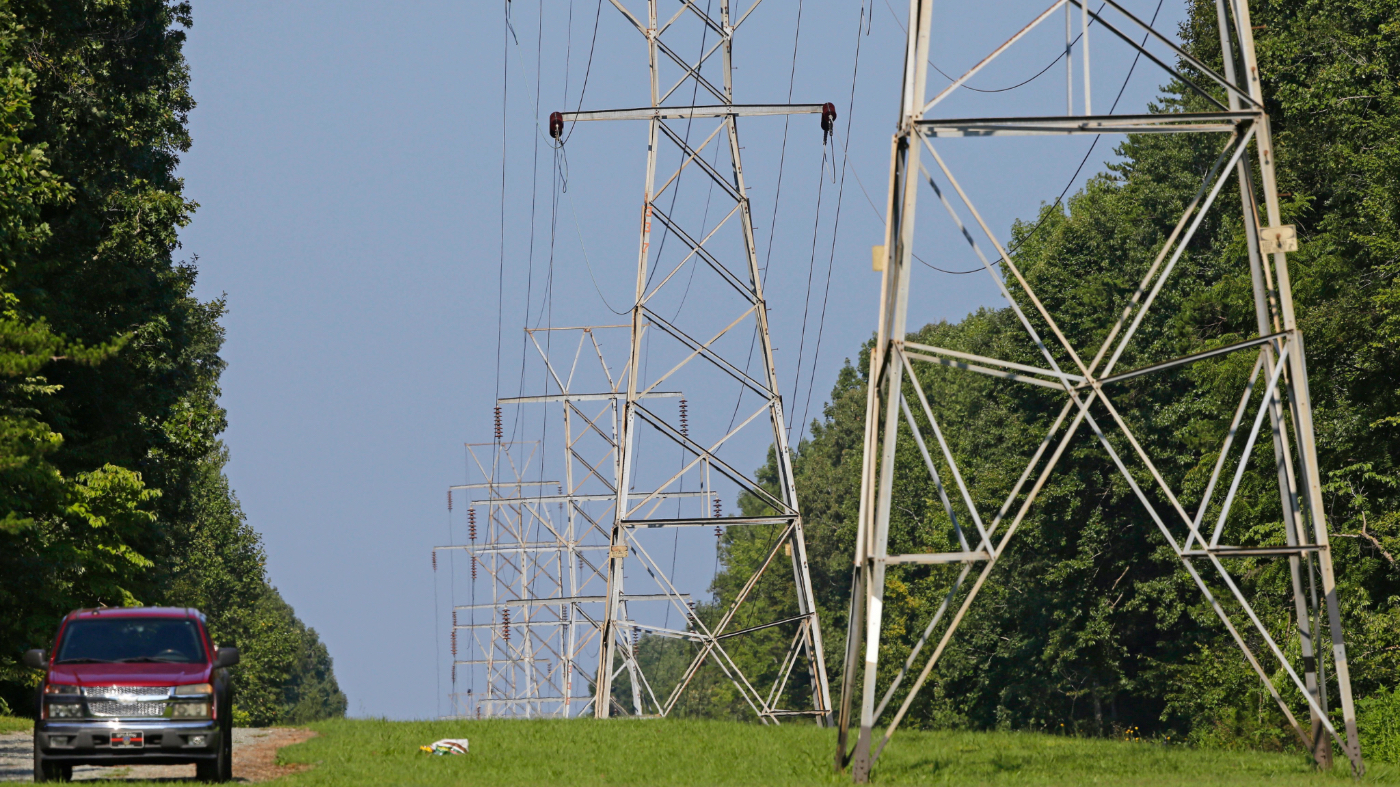
Consider how difficult it is to build new power lines to deliver electricity. Last year, only about 400 miles of new high-capacity transmission lines were finished across the country. That’s a far cry from the nearly 5,000 miles per year of additional capacity that industry analysts estimate we need to keep up with demand.
While that bottleneck deserves a solution, the act also paves the way for an easier fix: reconductoring, or replacing older wires on existing power lines with advanced ones that carry more electricity on the same route. Industry studies show that advanced conductors can effectively double capacity on most existing lines at less than half the cost per mile and a fraction of the time it would take to build new ones.
The Senate proposal would allow upgrades within existing power line corridors to skip full environmental and historic reviews. It would also have federal regulators require the utilities they oversee to use advanced grid technologies, including the best available wires, when they build or upgrade lines.
In energy policy, unlike with electricity, it is best to follow the path of least resistance. That should also be true for hooking up new energy sources to the grid.
Currently, before a new power plant can connect, engineers must study whether the grid can handle that additional power safely and determine what upgrades it needs. But those studies, which are part of the interconnection process, have become a bottleneck. The average project that came online in 2025 took about five years from request to operation . A decade ago, it only took three. The result? Over 2,000 gigawatts of proposed generation and storage are waiting in line, more than the entire installed power plant fleet today.
Software can fix a lot of this, though — if lawmakers let it.
Midcontinent Independent System Operator, which manages much of the electric grid and wholesale energy market across the Midwest, recently took a study phase that required 686 days and reran it with automated study software. That rerun finished in 10 days , including setup and debugging, with similar estimates of upgrade costs.
The Bipartisan American Affordability and Jobs Act would push the U.S. energy industry in that direction. It directs the Federal Energy Regulatory Commission to start a rulemaking so grid operators share and use artificial intelligence, machine learning and automation to speed up study results. It also requires that grid data be available in forms automated studies can actually use.
Of course, even as the legislation encourages using artificial intelligence to help bring down Americans’ power bill, the act ensures that AI doesn’t simultaneously increase costs. Under the bill, data centers would pay the full cost of the transmission they require , and the federal Energy Information Administration would begin tracking how much electricity data centers use to ensure policymakers and voters alike have visibility into their impact on the grid.
None of this will shrink anyone’s bill overnight. But getting more out of the wires we have and clearing away avoidable delays for new power are credible ways to dramatically ease pressure on American families in the years ahead.
To achieve the prosperity every American wants, our country needs a lot of electricity. Under the Senate’s new proposal, we can unleash more of it at lower costs to households nationwide.
Taylor Barkley is the director of Federal Government Affairs and Policy Advisor at the Abundance Institute.
Topics in this story
Gathered from external sources. Rights to this text belong to whoever originally published it.