Breast cancer prevention starts with knowing your risk
Rep. Julia Letlow introduced the Know Your Risk Act to direct the Department of Health and Human Services to create a universal breast cancer risk assessment tool.
My mother’s journey as a triple-negative breast cancer survivor showed me firsthand just how important it is to understand your own breast cancer risk.
A subsequent risk assessment revealed that I had a high probability of developing breast cancer, spurring me to take action and undergo a double mastectomy to reduce my future risk. While this was not a decision I made lightly, I welcomed the opportunity to take preventative action after learning about my high risk.
That experience reinforced my belief that every woman deserves the same opportunity to understand her risk and make informed decisions about her health. I believe such an outcome starts with creating a universal tool to assess an individual’s breast cancer risk.
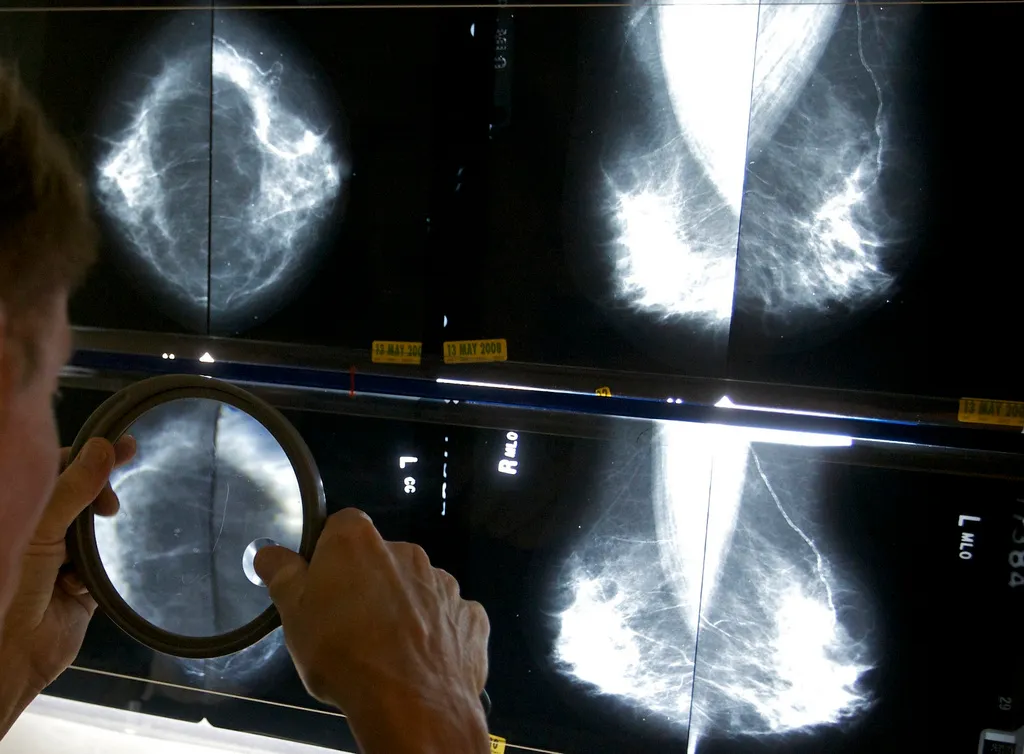
Breast Cancer Awareness Month is a time to celebrate significant progress in reducing breast cancer deaths , while also acknowledging the challenges that remain. With more widely available screening and detection services, women increasingly have more opportunities to identify risks and address a potential diagnosis early.
However, there is still more work to do to combat a disease that many of us know all too well.
In addition to continuing to close gaps in care in places like rural Louisiana, we must reduce barriers that prevent women from understanding their likelihood of developing breast cancer. This includes making available a universal risk assessment.
Risk assessment tools are valuable resources that evaluate an individual’s likelihood of developing breast cancer based on factors such as family history, reproductive history and lifestyle. But the proliferation of these tools, each relying on different metrics, has often created confusion.
Many women also report a lack of awareness about the value of risk assessments, according to research from the National Institutes of Health . A clear, go-to assessment, combined with greater education about its value, would help more women better understand their risk and take appropriate action.
That is what my recently introduced Know Your Risk Act aims to accomplish. My bill directs the Department of Health and Human Services to create a universal tool that Americans can rely on, while expanding access to risk assessment services through the National Breast and Cervical Cancer Early Detection Program.
The need for a more consistent approach is clear. There are currently dozens of breast cancer risk assessment tools on the market, with varying levels of accuracy and effectiveness. A more streamlined, evidence-based approach is needed.
For example, existing risk assessment tools are often used inconsistently in clinical settings. They are also available across multiple formats, including paper-based questionnaires and digital applications, and evaluate different populations in different ways.
A universal tool would provide women with clearer, more consistent access to information about their risk. It could also encourage more women at elevated risk to discuss preventative options with their doctors — decisions that could make a life-saving difference.
Early intervention played a crucial role in helping me understand my risk and guiding my decision to take preventative action. To ensure every woman has that same opportunity, our nation’s leading health agencies must work to ensure that no American is left in the dark about her breast cancer risk.
The National Institutes of Health’s newly established Women’s Health Division can play a key role in advancing research, as can emerging artificial intelligence tools. Women should also consult their doctors about mammograms and regular screenings to help identify potential concerns early.
Statistically, one in eight women will develop breast cancer in her lifetime, and early intervention can improve treatment outcomes and the odds of survival. Ensuring that every woman can access a reliable risk assessment is a crucial step toward better prevention and care. I will continue working to make that future a reality.
Rep. Julia Letlow represents Louisiana’s 5th District in the U.S. House of Representatives. She serves as vice chair of the House Appropriations subcommittee dedicated to healthcare issues.
Topics in this story
Gathered from external sources. Rights to this text belong to whoever originally published it.