Fake Mark Zuckerberg makes amazing case for free speech on Facebook
The last thing I expected was to be cheering a speech by an actor portraying Mark Zuckerberg defending free speech on social media, but that’s what happens in this trailer for “The Social Reckoning.”
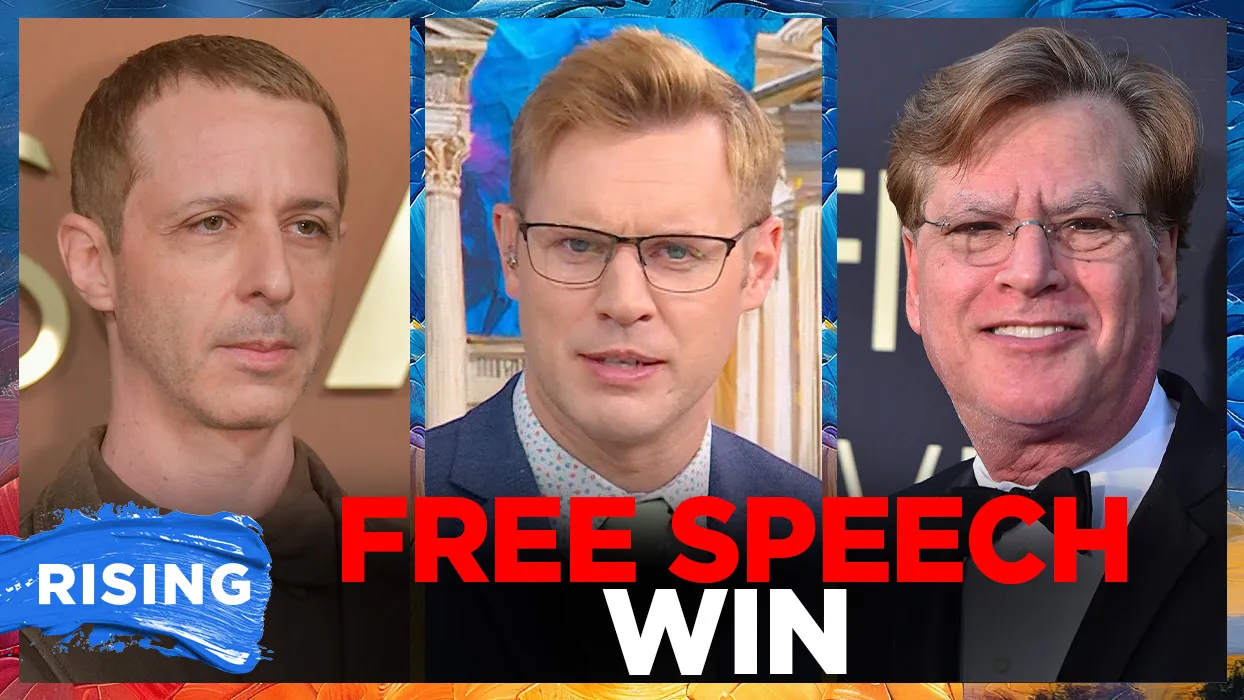
Let’s start off today with a little film criticism. It’s a movie I have not yet seen, but one that I’m starting to get a little excited for. The last thing I expected was to be cheering a speech by an actor portraying Mark Zuckerberg defending free speech on social media, but that’s what happens in this trailer for “The Social Reckoning.” Watch this.
Now, I was not expecting that I would enjoy “The Social Reckoning,” Aaron Sorkin’s upcoming film about how evil Facebook is, at all. It’s a sequel of sorts to “The Social Network” from 2010 — an enjoyable but flawed and unfair portrait of Facebook founder Mark Zuckerberg — and focuses on the so-called Facebook Papers, which most people barely remember today but involved whistleblower Frances Haugen publicly revealing that the company knew its social media products were harming some users, mostly teenage girls on Instagram. At the time of this news cycle, I deemed it a “ big fat nothingburger,” given the weakness of the evidence.
Now Sorkin, whose own politics seem to fall mostly in line with the sort of overly idealistic, bland, do-something liberalism that typified “The West Wing,” his best-known piece of entertainment, is a passionate detractor of Facebook and Zuckerberg. In 2019, Sorkin went so far as to write an open letter to Zuckerberg, in the form of a column for “The New York Times,” of course, in which he accused Facebook of “assaulting the truth.” Over the course of the last two decades, from “Network” to “Reckoning,” Sorkin’s nuanced but mostly negative representation of social media and its impact on society has morphed into blind hatred; his forthcoming depiction of Zuckerberg is intended as one-dimensional cartoon villainy.
Well, so much for those intentions. This certainly isn’t what Sorkin intended, but I found myself cheering Jeremy Strong’s Zuckerberg in that trailer you just watched. I agree with him completely, and I expect many of you do as well.
We don’t want the platform itself to be overly involved in deciding what is true and what is not, for the simple reason that this hasn’t worked very well in practice. There was a time when Facebook took dramatic steps to correct alleged wrongthink, empowering ostensibly independent (but in practice, extremely progressive) fact-checkers to police the site. This was a disaster that frequently resulted in legitimate political speech facing sanction.
Sorkin may not like it, but his side has lost this argument, and today the social media companies are less likely than ever to engage in heavy-handed moderation of political content. They trust the users to decide for themselves, for exactly the reasons Strong’s Zuckerberg lays out there. I take it that Sorkin thinks this is the villain’s perspective, but he may be surprised how many moviegoers disagree.
You see, we don’t want an aggressively regulated internet, any more than we want the government to slow down the tech sector, or stop building exciting new programs due to the misguided and hysterical paranoia of partisan actors. It’s time for us all to be pro-tech.
Now, I spent the weekend at a data center themed party , Data after Dark, in which we all came together to celebrate the awesome future that awaits this great country if we simply do what President Trump has suggested: let data reign. The festivities were briefly interrupted by hecklers who stormed the stage and started shrieking hysterically about water usage, and other utterly discredited anti-data-center talking points. But much like the country’s water resources, our spirits were not depleted, and the party continued.
And here’s my point: In the same way that we now mostly laugh at the idea that Facebook is super dangerous, and we need to jettison our free speech culture so the government can protect us from so called misinformation online, in the coming years more and more people will see that this also applies to tech more generally: data centers, AI, etc. The future is bright, and getting brighter, though we will always have to deal with the naysaying of busybodies who are very sure you’d be better off if they shut it all down.
Robby Soave is co-host of The Hill’s commentary show “Rising” and a senior editor for Reason Magazine. This column is an edited transcription of his daily commentary.
Topics in this story
Gathered from external sources. Rights to this text belong to whoever originally published it.