The Memo: Trump’s media ban overshadows Xi visit as midterms clock runs down
The key moment of President Trump’s week did not come at the state dinner with Chinese premier Xi Jinping nor as the two leaders toured the National Archives. It came instead on social media. On Thursday afternoon, Trump proclaimed the arrival of Xi and his wife, Peng Liyuan, as “magnificent” but bemoaned the sparsity of…
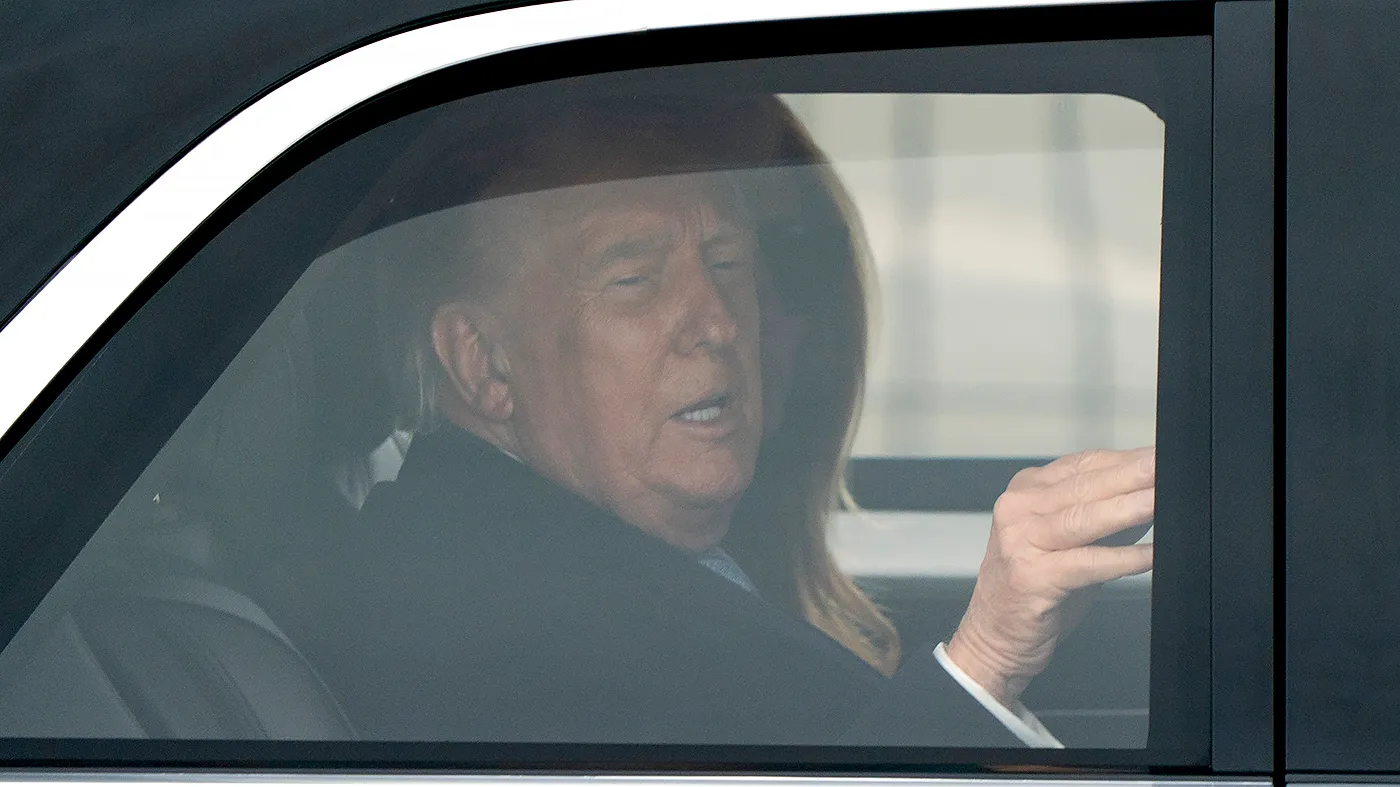
The key moment of President Trump’s week did not come at the state dinner with Chinese premier Xi Jinping nor as the two leaders toured the National Archives.
It came instead on social media. On Thursday afternoon, Trump proclaimed the arrival of Xi and his wife, Peng Liyuan, as “magnificent” but bemoaned the sparsity of television coverage.
Specifically, he alleged that TV networks “didn’t want credit to be given to ‘TRUMP’” and so “they refused to be there.”
But the claim was not true. The de facto TV boycott had been sparked by a decision Trump himself made — namely, to try to ban three news outlets from the White House because he didn’t like their coverage.
Those three organizations — CNN, MS NOW and Politico — are now back after U.S. District Judge Timothy Kelly, a Trump nominee, swiftly granted them a temporary restraining order.
Kelly’s ruling noted that the outlets are likely to succeed on the merits of their underlying case that Trump infringed upon their First Amendment rights.
It was a rare instance where a Trump attack on the media ended in a clear defeat for the president. And it added to a week that was a galling one for some Republicans, as the president blunted the impact of a major moment — the Xi visit — by his own actions.
Some might argue that Trump’s media ban created yet another distraction from his domestic difficulties. But there is a ready counterargument: An electorate that is shown, in poll after poll, to be discontent with the war in Iran, the economy and the cost of living, seems unlikely to be thrilled by a president pursuing vendettas rather than focusing on their problems.
Attacking the media and causing general uproar is something that Trump “did successfully for two decades, three decades,” said Tobe Berkovitz, a Boston University professor emeritus who specializes in political communications.
The problem, Berkovitz added, is that the main appeal of such tactics is to Trump’s most fervent fans and “even his base is shrinking. It’s not as large as it once was.”
Meanwhile, all this comes with fewer than six weeks remaining until Election Day in a midterm campaign where the GOP faces stiff headwinds.
Democrats have an 8-point advantage on the so-called genetic ballot question — when voters are asked which party they would prefer to see control Congress — according to The Hill’s data and polling partner, Decision Desk HQ (DDHQ).
Trump’s job performance is backed by only 39 percent of Americans in the DDHQ average, by comparison with 60 percent who disapprove.
The overwhelming consensus within the political world is that Democrats are likely to take control of the House, where Republicans currently hold a tiny majority. In the Senate, the GOP is feeling the pressure even in conservative strongholds like Texas, while Democrats who were once considered endangered — notably Sen. Jon Ossoff (Ga.) — look increasingly safe.
The bleak picture for the GOP is leading to some modest signs of dissent inside a Republican Party over which Trump has exercised a vise-like grip for most of his second term.
GOP Senate candidates in Iowa and Michigan have recently expressed dissatisfaction with the way the war in Iran is dragging on.
Meanwhile, Sen. John Kennedy (R-La.), who is not up for reelection this cycle, lamented to reporters at the Capitol this past week that his party needed to do more to address voter concerns about the cost of living.
“We haven’t done a damn thing and it’s biting us in the ass right now,” the famously vivid Kennedy said.
It all adds up to a landscape where a Trump fight with the media, overshadowing the Xi visit, seems ill-advised.
To be sure, there is a different case to be made, both on Trump and Xi, and in relation to the midterms.
Trump’s loyalists could argue that the visit helped foster warmer personal relations between the two leaders. Thursday’s state dinner put major U.S. business figures, including Sam Altman, Tim Cook, Jensen Huang and Mark Zuckerberg in the same room as the Chinese leadership.
Trump himself, in another social media post Friday afternoon, insisted his meeting with the Chinese premier and his wife had been “one of Friendship, Strength, and Success, for both China and the U.S.A.”
He also highlighted two meetings set for later this year — in November in China and at a Group of 20 summit in Miami in December.
It’s also certainly plausible that the Xi visit, even if it had gone off optimally, would have made little difference to the domestic political picture.
As for the midterms themselves, it’s possible that GOP expectations have fallen so low that even tepid results could be claimed as some kind of escape from a worst-case scenario.
More concretely, Republicans hold out hope that they could hold a top Democratic Senate target like Maine and even take some seats off the opposition party in states like Michigan, New Hampshire and perhaps even Minnesota.
But a Trump campaign schedule that next week takes him to the deep-red redoubts of Alabama and Oklahoma tells its own story.
Democrats, for their part, are perfectly content for Trump to attack the media or engage in other furors, since they believe the blizzard of controversies deepens the impression that the president is cut off from voters’ concerns.
“He has traditionally been a person who believed that all press is good press,” Democratic strategist Basil Smikle Jr. said of the president.
“But I think there are diminishing returns to that when we have reached a point of lack of attention to what voters really care about and outsize attention toward punishing people or focusing on the Kennedy Center and other physical spaces.”
Smikle added: “It just makes it look like there’s a disconnect.”
The Memo is a reported column by Niall Stanage.
Topics in this story
Gathered from external sources. Rights to this text belong to whoever originally published it.