America needs an ironclad, bipartisan commitment to press freedom
Donald Trump’s long-running conflict with the American news media has reached a point that demands a broader response.
President Trump’s long-running conflict with the American news media has reached a point that demands a broader response. I’d like to offer a proposal.
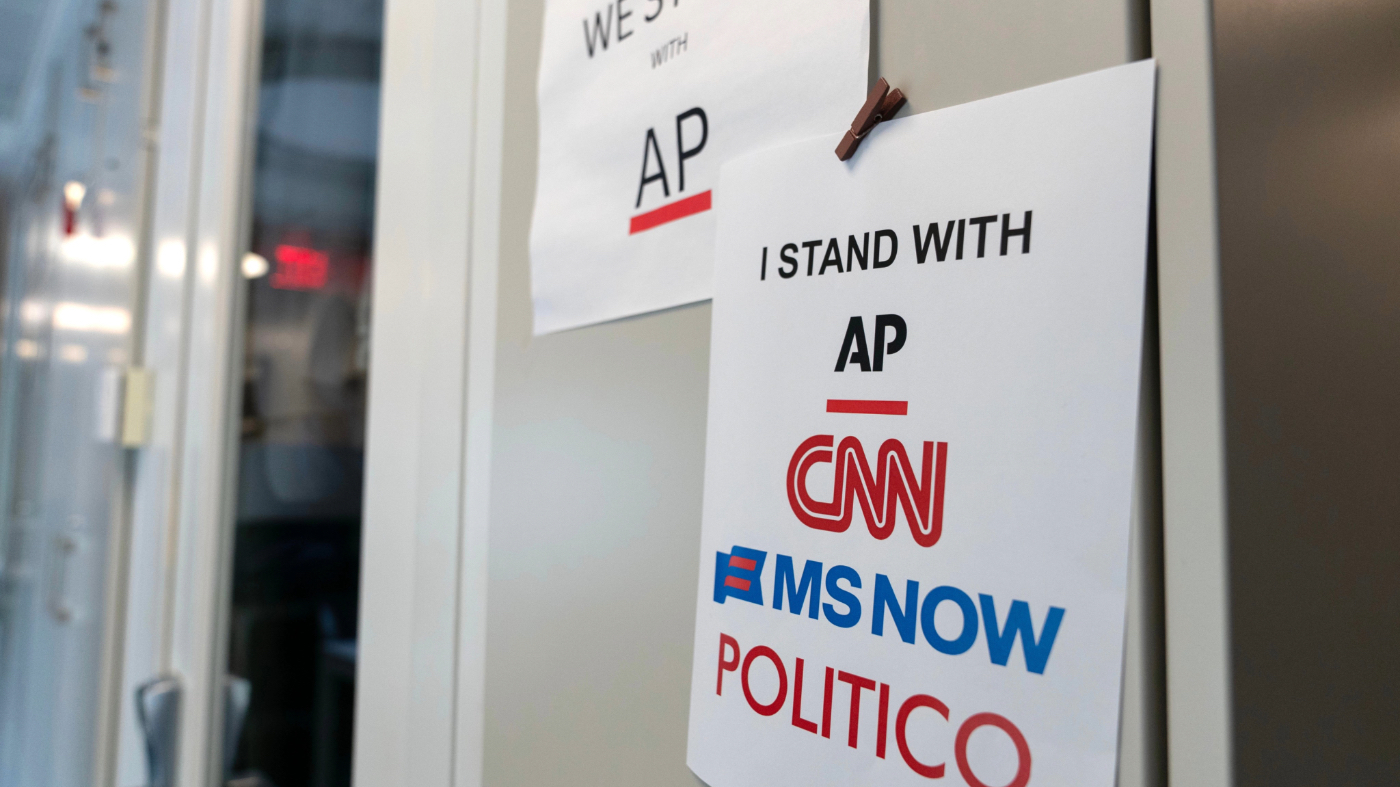
The immediate crisis is the White House’s exclusion of CNN, MS NOW and Politico on charges of peddling “ fake news ,” and the remarkable decision by ABC, CBS, NBC and Fox News to refuse to replace CNN in the presidential television pool.
A federal judge has now ordered the administration to restore the three organizations’ credentials temporarily, finding they were revoked without adequate due process. Yet reporters were still being denied entry the next day, prompting another emergency appeal to the court.
By Friday, the presidential television pool was back in place and the legal wrangle was largely resolved. But the larger issue was not. Conflicts involving press credentials, government terminology, Pentagon reporting rules and federal leverage over media companies have repeatedly raised the same question: How much influence should a president have over the institutions responsible for independently covering him?
The answer now has to come from more than courts and news organizations themselves. Political leaders should be asked to put their names behind a short, bipartisan statement of principles on presidential press freedom, circulated to every member of Congress, governor, current Cabinet member and living former Cabinet member.
Such a statement would provide a simple test that survives the politics of the moment. A Republican can believe CNN treats Trump unfairly and still believe a president should have no power to punish CNN for its journalism. A Democrat can despise Fox News and still recognize that a future Democratic president should have no power to exclude Fox. Press freedom is durable only when its defenders extend it to journalism they dislike.
The television networks have provided an example. CNN was scheduled to provide pool coverage when the White House barred it. ABC, CBS, NBC and Fox could have accepted CNN’s slot. Instead, they declined, transforming another Trump-CNN confrontation into a dispute over the institutional independence of the television press.
There is instructive symmetry in Fox’s participation. In 2009, the Obama administration reportedly attempted to exclude Fox News from a pool interview with a Treasury official. Other networks objected and the administration relented. Seventeen years later, Fox is standing alongside those competitors when a Republican administration excludes CNN. The politics reversed; the institutional interest did not.
That solidarity also creates a dilemma. The president requires continuous independent coverage. The entire press corps cannot crowd into the Oval Office, board Air Force One or accompany a motorcade, so a handful of journalists witness events on everyone else’s behalf.
A prolonged suspension of that system carries its own danger. The White House increasingly becomes the source of the pictures and sound through which Americans experience their president. The press must defend its independence without surrendering its role as an independent witness.
News organizations can continue covering Trump wherever access remains available, expand sharing of video and reporting and create a consortium involving networks, wire services, newspapers and digital outlets. When official White House footage becomes necessary, broadcasters can identify it as government-produced material.
Fox and Newsmax joining would make such an approach more powerful without requiring them to endorse CNN’s journalism. They need only maintain that news organizations share an institutional interest in keeping decisions about journalism outside presidential control.
The warning signs have accumulated for years: Trump’s “ fake news ” obsession, the Associated Press access dispute over “Gulf of America,” new Pentagon restrictions on reporters and battles with media companies facing federal decisions .
Seen separately, these episodes can look idiosyncratic, even absurd. Seen together, they raise a serious concern about using government power to shape who can cover the government and on what terms.
That is why the response should extend beyond journalism. The proposed statement should be narrow enough to attract people who disagree about almost everything else. Its purpose would be to establish a rule for presidential power, not adjudicate the merits of CNN, Fox, Trump or or any particular story.
Its central principle could be simple: Regardless of which party controls the White House, the president should respect the independence of established news organizations and the press arrangements through which they cover the presidency. Officials who believe reporting is inaccurate should answer through facts and argument. Ordinary press access should operate according to consistent standards, not presidential approval or disapproval of editorial decisions.
Republican signatures would carry particular significance now, just as Democratic signatures would under a future Democratic administration confronting conservative media. The statement’s strength would come from assembling a visible group across parties and administrations willing to endorse the same institutional rule.
It should be difficult for any public official to explain why a president of either party should be able to penalize established news organizations because he dislikes their coverage.
Trump will eventually leave office, and the presidency will pass to someone else. The precedents surrounding presidential power will pass with it. Whatever comes from last week’s court fight, the principle should survive it. Presidential power over the press is not ultimately about the media. It is about those the media serves: the people.
Dan Perry is the former London-based Europe-Africa editor and Cairo-based Middle East editor for the Associated Press, the former chairman of the Foreign Press Association in Jerusalem and the author of two books.
Topics in this story
Gathered from external sources. Rights to this text belong to whoever originally published it.