We analyzed Judge Reyes’s record in Trump cases. Here’s what we found
The Trump administration wants to boot U.S. District Judge Ana Reyes from the battle over East Potomac Golf Links, insisting she has shown open hostility. President Trump called her a “crazed lunatic” on social media. The appointee of former President Biden has been assigned nearly a dozen lawsuits challenging major Trump administration actions, The Hill’s…
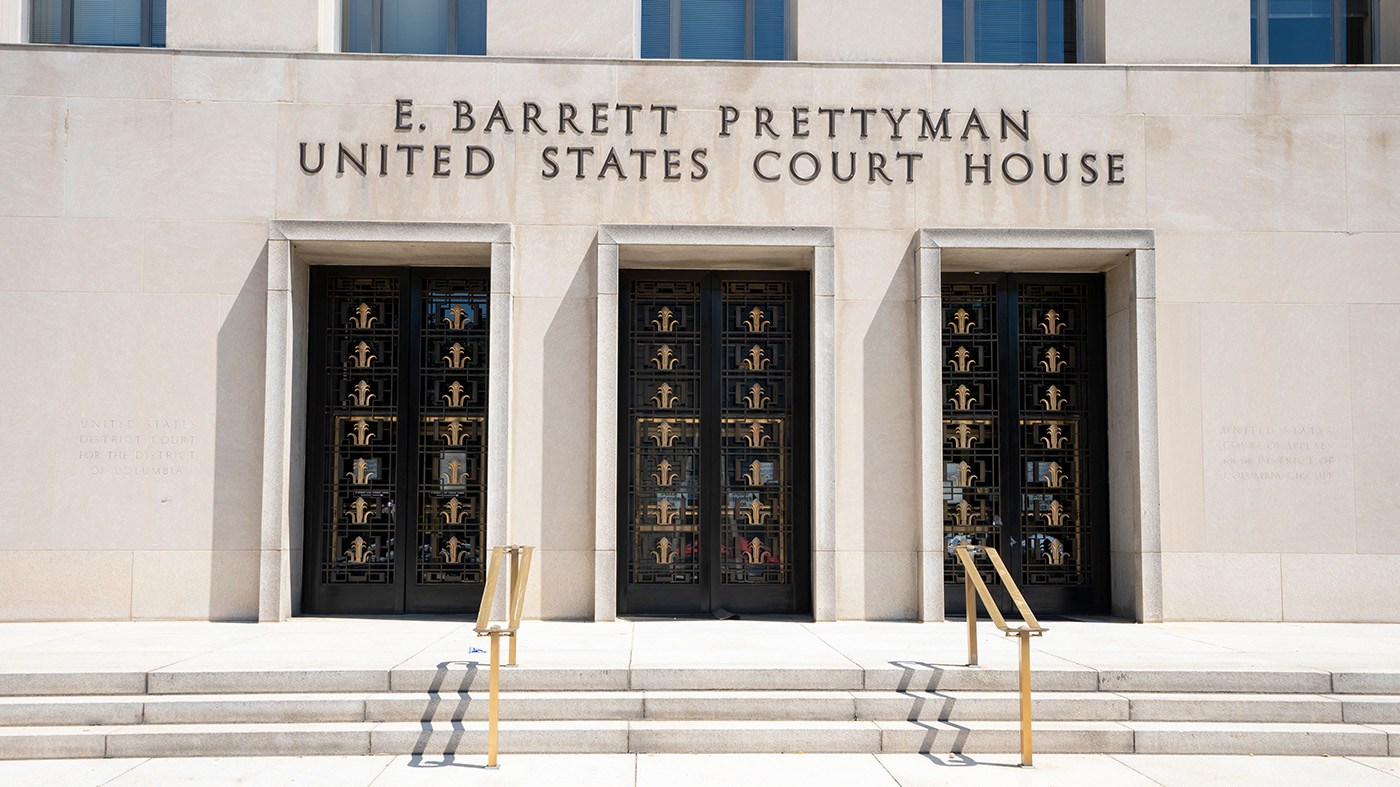
The Trump administration wants to boot U.S. District Judge Ana Reyes from the battle over East Potomac Golf Links , insisting she has shown open hostility.
President Trump called her a “crazed lunatic” on social media.
The appointee of former President Biden has been assigned nearly a dozen lawsuits challenging major Trump administration actions, The Hill’s analysis of the judge’s docket shows.
It is true that Reyes has sided against the president on other issues. But she hasn’t always given plaintiffs what they’ve asked for.
Here’s how her record actually stacks up:
In February, Reyes blocked then-Department of Homeland Security (DHS) Secretary Kristi Noem from ending temporary protected status (TPS) for Haitians, only to be overruled by the Supreme Court.
TPS protects foreign nationals who cannot safely return to their home countries because of armed conflict or other temporary conditions. It prevents deportation and provides recipients with a pathway to work authorization. The administration said the program had been abused and had looked to cut off most of the 17 participating countries.
Reyes found that Noem’s revocation of Haiti’s status was likely motivated by anti-Black animus, pointing to how Trump called the nation a “s—hole” country, among other comments.
“Whatever the context and at whatever level of sensitivity one considers them, the statements are what they are: unmitigated expressions of animus towards nonwhite foreigners,” Reyes wrote at the time .
The Trump administration took her ruling all the way to the high court and won.
In a 6-3 decision along ideological lines, Justice Samuel Alito said the TPS statute barred Reyes from considering many of the challengers’ arguments. As for the animus argument, Alito said that was likely to fail, too.
“None of the cited statements by either the President or the Secretary was overtly racial,” Alito wrote.
DHS office closures: Ruled in Trump’s favor
Reyes never stopped the administration when a human rights group sued in the early months of Trump’s presidency over the planned closures of three DHS offices focused on individual liberties.
Reyes declined to issue an injunction after the administration reversed its plans. The human rights group kept pushing, raising concerns that one of the offices was still not carrying out its responsibilities, but the judge refused to intervene.
The parties have now indicated they’re working toward a potential settlement to close out the case.
Transgender troops ban: Ruled against Trump
The Trump administration is currently asking the Supreme Court to review Reyes’s block of the Pentagon’s ban on openly transgender troops serving in the military.
Reyes — who oversees two lawsuits against the policy — blocked it universally in the early weeks of Trump’s presidency. An appeals court limited her ruling so that the Pentagon can implement its policy for new recruits, but it still can’t do so for existing troops. Trump wants the Supreme Court to overrule Reyes entirely.
The justices are on track to consider taking up the administration’s appeal at a closed-door meeting later this term.
“The contrary conclusions of the courts below are irreconcilable with this Court’s precedents governing military deference and gender-identity discrimination,” Solicitor General D. John Sauer wrote in the administration’s petition filed in August.
The Supreme Court already handed the government a win last year by temporarily agreeing to lift a Seattle-based judge’s block on the ban. Now, the battle is back, this time in Reyes’s case.
D.C. police takeover: Almost ruled against Trump
In August 2025, Reyes was assigned District of Columbia Attorney General Brian Schwalb’s (D) lawsuit that challenged the administration’s takeover of the city’s police force.
Trump had declared a crime emergency to assert control of the force as he separately deployed National Guard troops into the city, which remain today.
Reyes hastily scheduled a hearing. She was on the cusp of declaring that the administration had unlawfully taken command when the Justice Department agreed to back off the takeover.
D.C. dropped its case, so officially, the judge never ruled on the city’s arguments.
Inspectors general: Ruled in Trump’s favor
Trump fired inspectors general at various government agencies in the first week of his second term without notifying Congress, as required by law.
Eight of them quickly sued, and their case went to Reyes. She spent nearly six months working on her decision.
The judge ultimately agreed Trump violated the law, but she found she had no power to reinstate the inspectors general. In an opinion invoking the Watergate scandal, she repeatedly criticized Trump.
“They deserved better from their government. They still do,” Reyes wrote.
Iranian immigrants: Ruled in Trump’s favor
In July, the Iranian American Legal Defense Fund sued the State Department and DHS over what it says is a policy of providing the Iranian government with information on Iranian nationals seeking asylum in the U.S. It wants to block the sharing.
Reyes declined the group’s request for an immediate injunction after a hearing earlier this month.
The Justice Department is expected to mount an effort to dismiss the lawsuit in the coming weeks.
Reyes oversees one of two lawsuits filed by Mary Comans, the Federal Emergency Management Agency’s (FEMA) former chief financial officer who was fired last year.
Comans was terminated after she distributed roughly $59 million to New York City under a federal grant program that provides funds for housing migrants. The city faced controversy for using the funds for hotel rooms for the individuals.
Reyes hasn’t yet ruled on the government’s effort to toss the lawsuit. Meanwhile, another judge who is overseeing Comans’s other suit issued an order formally clearing her name last week.
Airline labor mediator firing: Suit dropped
Deirdre Hamilton’s challenge to her firing from the National Mediation Board last October also went to Reyes’s chambers.
The board works out labor disputes in the sensitive airline and railroad industries.
Federal law required Trump to have valid cause to fire Hamilton. But similar to his firings at other independent agencies across the government, Trump didn’t claim to have cause.
Instead, he argued the firing protections violate the separation of powers, saying he should be able to sack those officials at will.
Reyes put Hamilton’s suit on hold as the Supreme Court looked at the issue in a separate case, which involved the Federal Trade Commission.
After the justices endorsed Trump’s theory and cast aside a 91-year-old precedent that laid the groundwork for the firing protections, Hamilton voluntarily dropped her lawsuit two weeks later.
It wasn’t the only suit on which Reyes never ended up ruling.
The judge was set to handle three organizations’ challenge to a new Department of Housing and Urban Development (HUD) policy revoking the 30-day notification requirement before federally subsidized tenants can be evicted.
HUD subsidizes several million households, and the groups said the change was unlawful and could put recipients at risk.
Reyes had set a March 24 hearing to listen to their arguments. But beforehand, HUD indefinitely delayed the new policy — saying it now just a proposal — and the groups dropped their case.
Topics in this story
Gathered from external sources. Rights to this text belong to whoever originally published it.